
Active Matter: Review on Linux and Steam Deck
Gaijin Entertainment is a famous publisher and developer that you probably know if you have ever played stuff like War Thunder, Enlisted or Crossout.
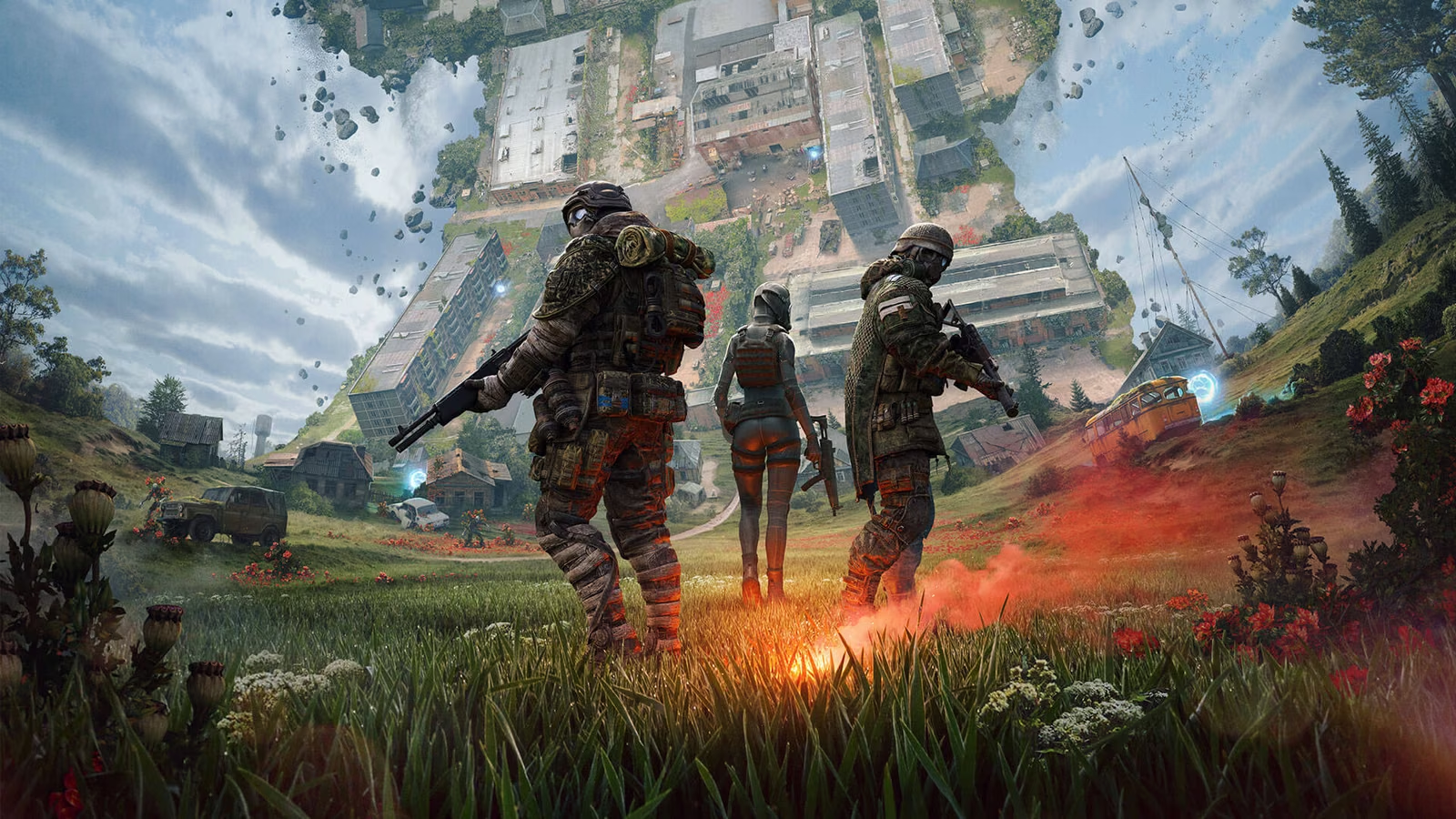
So, Gaijin has just launched their new title in September 2026, and it’s a “multiverse extraction shooter”. Yes, that’s a genre nowadays! And we are talking about it also because it has a native build for Linux that runs pretty well. More on that later. Rather than a full review, I plan to share my impressions of the game so far. I have not been able to spend much time in PvP mode (probably not enough players in my time-zone) so this will deserve a follow-up article later on.
What Active Matter Is
Active Matter is not free to play. You have to purchase the game once, and there are some additional monetization schemes along the way, but with the regular edition you can start playing anyway. It is a military extraction shooter from Gaijin’s internal studio Matter Team, and it’s available on Steam and also released for PlayStation 5 and Xbox Series X|S since the first day it was out.
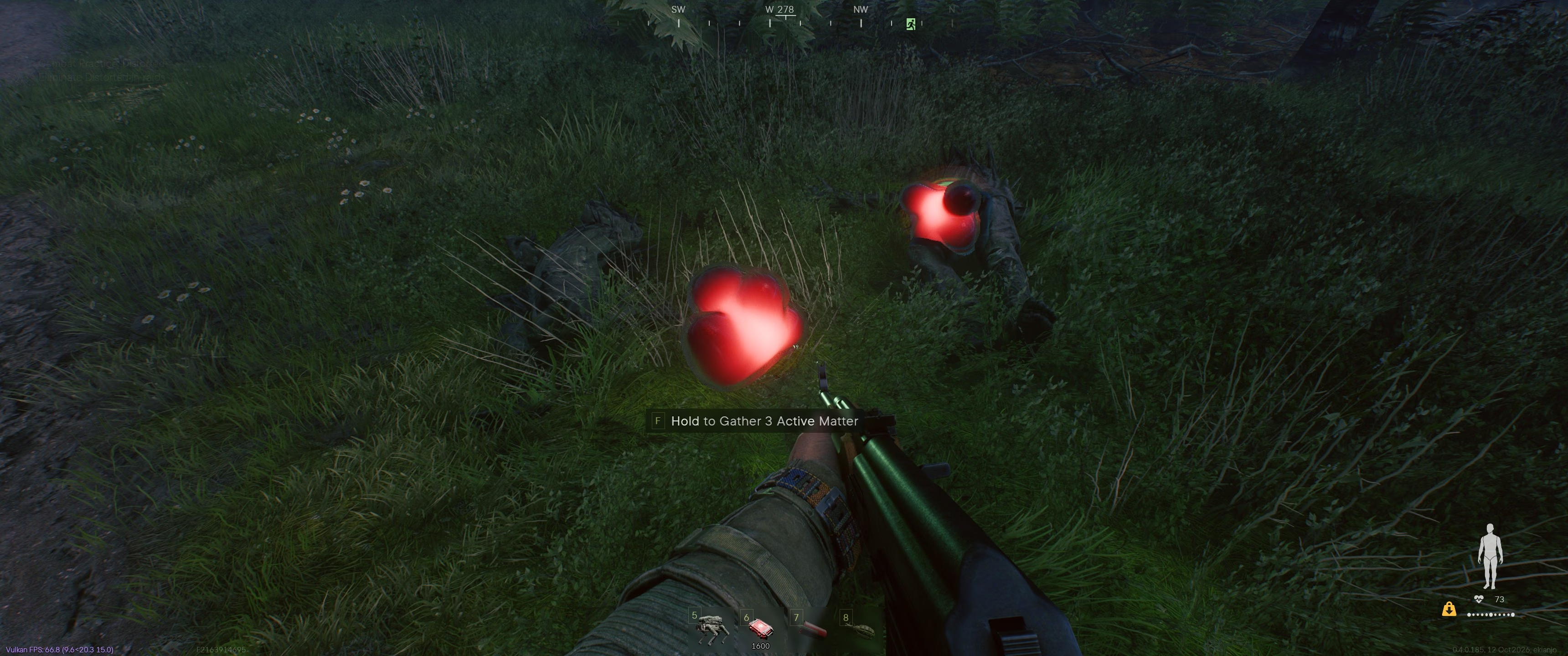
You play the role of operatives who fight over active matter, a substance that bends time and space. In practice you load out for raids into quantum-unstable zones (you will encouter disruptions, disturbances in each area), harvest matter, kill strange stuff, grab loot, and extract before the zone collapses. By the way, active matter looks like some red glowing shapes that you can collect on the ground:
In many ways the often seen moniker “STALKER meets Escape from Tarkov” is deserved. It’s as if you took STALKER and turned it into an extraction shooter, with horror elements baked in. This will hit you hard when you start wandering around in the extraction zones.
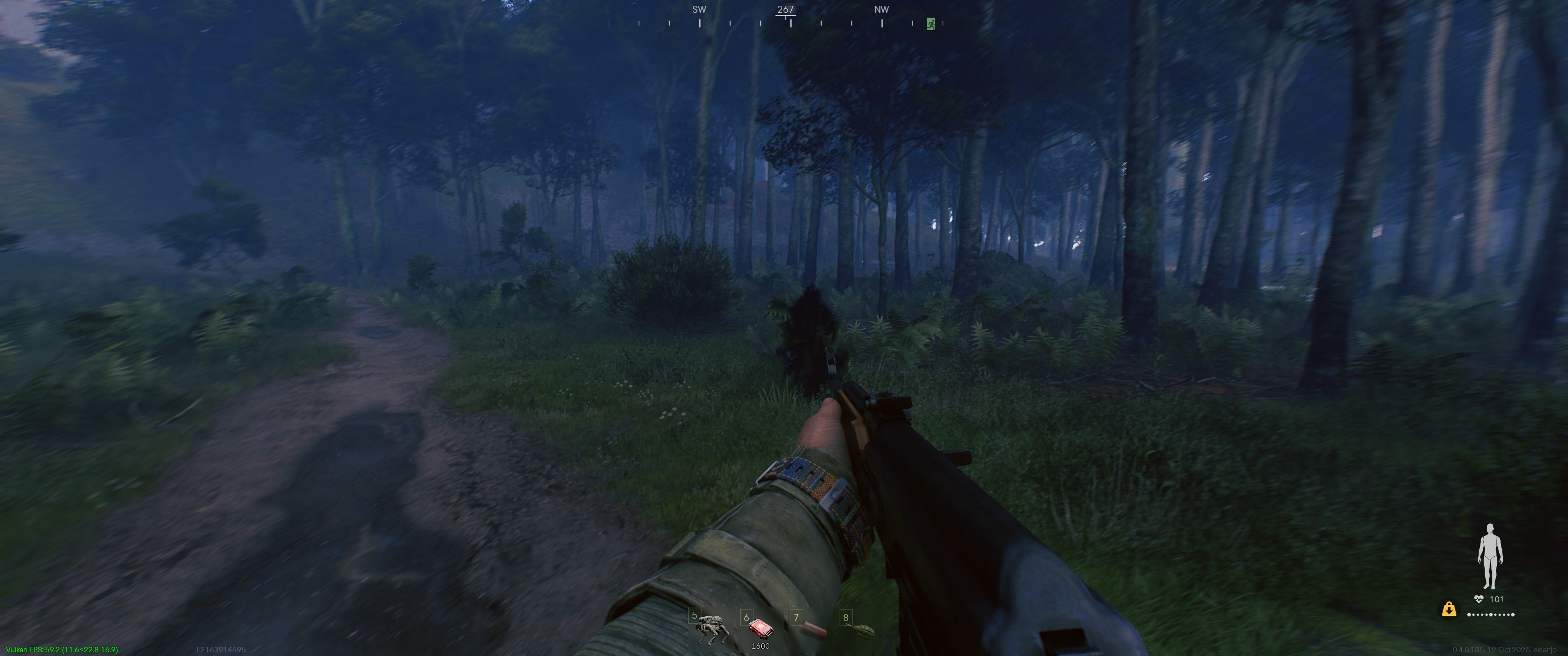
The first monsters you encounter are usually just sitting around in places you don’t expect, and you don’t realize they are monsters until you come too close to them! There is some kind of flower-man bullshit that is really scary: they look like a regular flower tree (orange-colored) from afar and before you know it, you see that tree running to you and slashing at you, and then running around you in circles to attack again and finish you off. That had me jumping in my seat. Of course, the effect is strongest at first. Next time, the acute fear is gone but the stress of meeting them again is very real.
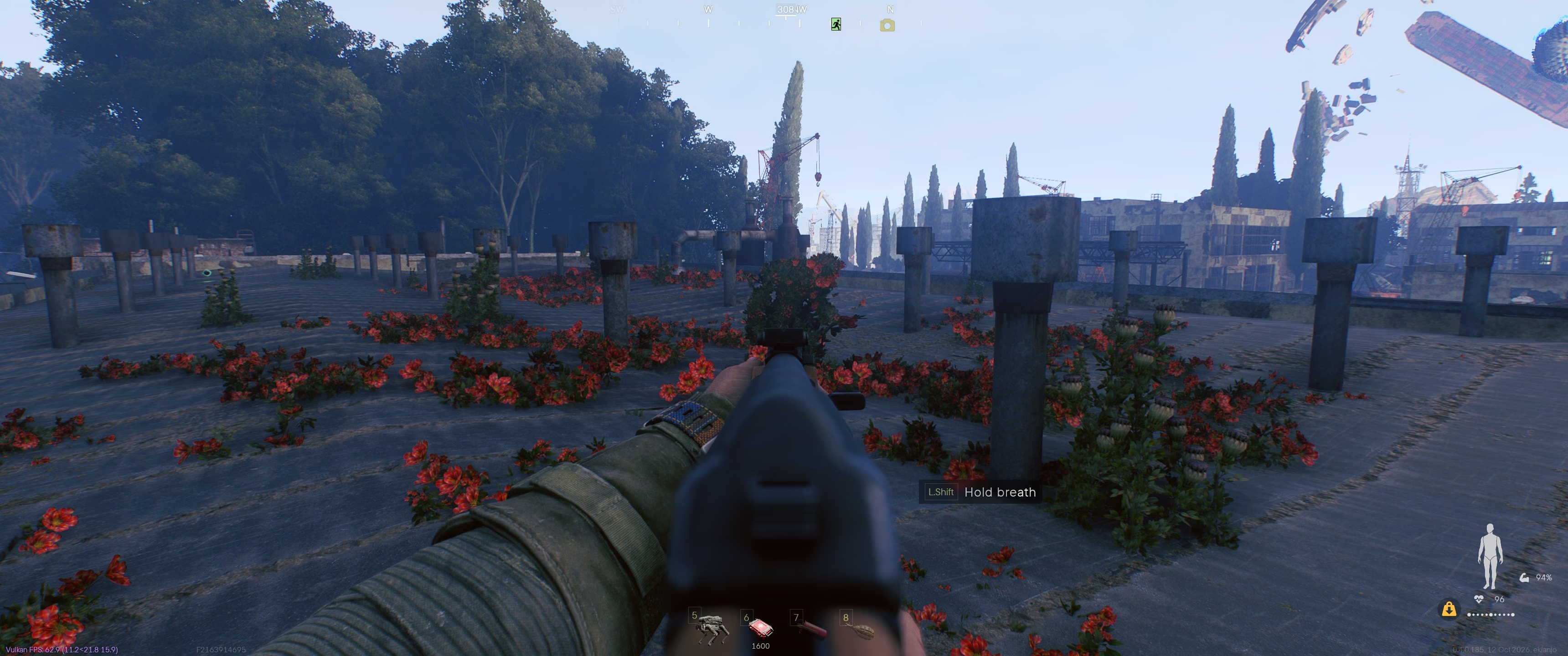
Anomalies are not just monsters: they can be some kind of balls of energy bouncing around, and attacking you if you come too close to their territory. Anomalies can also lift objects, like vehicles, off the ground, making them formidable adversaries.
The game has two different modes. You can do PvE and PvP. For an extraction shooter, that is kind of unusual. Even more so here since the PvE mode lets you upgrade your character in the same way you would upgrade when doing the PvP mode. And the PvE mode is not just a side dish, it is brutal as well. So you can get all the tension of the extraction without having to wait in lobbies and fear bad match-making.
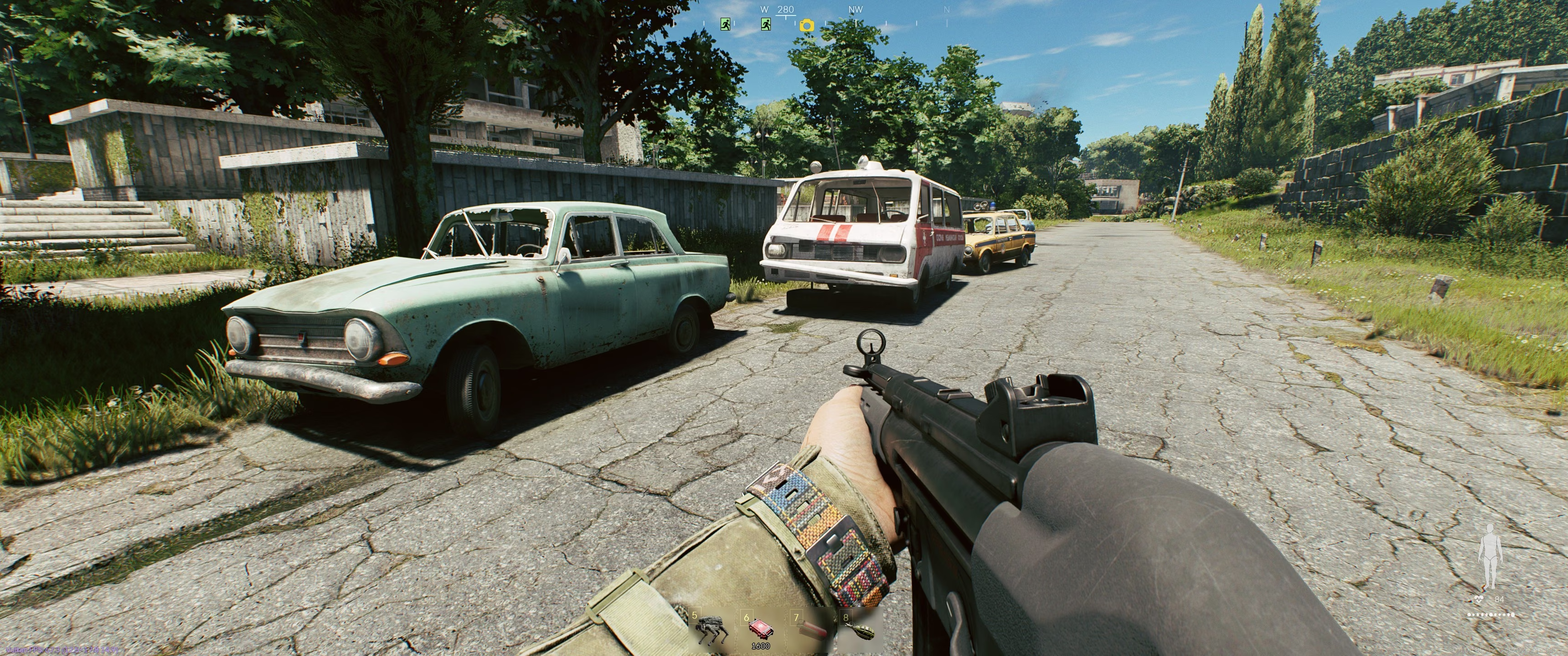
The graphics are very, very good, and play a huge role in making the world believable and creepy. The sounds are straight out of Silent Hill, with strange unusual sounds when some anomaly is around. When it comes to fighting monsters, since you can’t reload very fast, you will alternate between shooting a few times praying that you hit them, and running away for your life while monsters are chasing your ass. It’s about trying to find some space to reload and face them again. This will make you sweat for real. Thanksfully the enemies are not super smart and sometimes run around without seeing you even though you are not even hiding. That’s for the better.
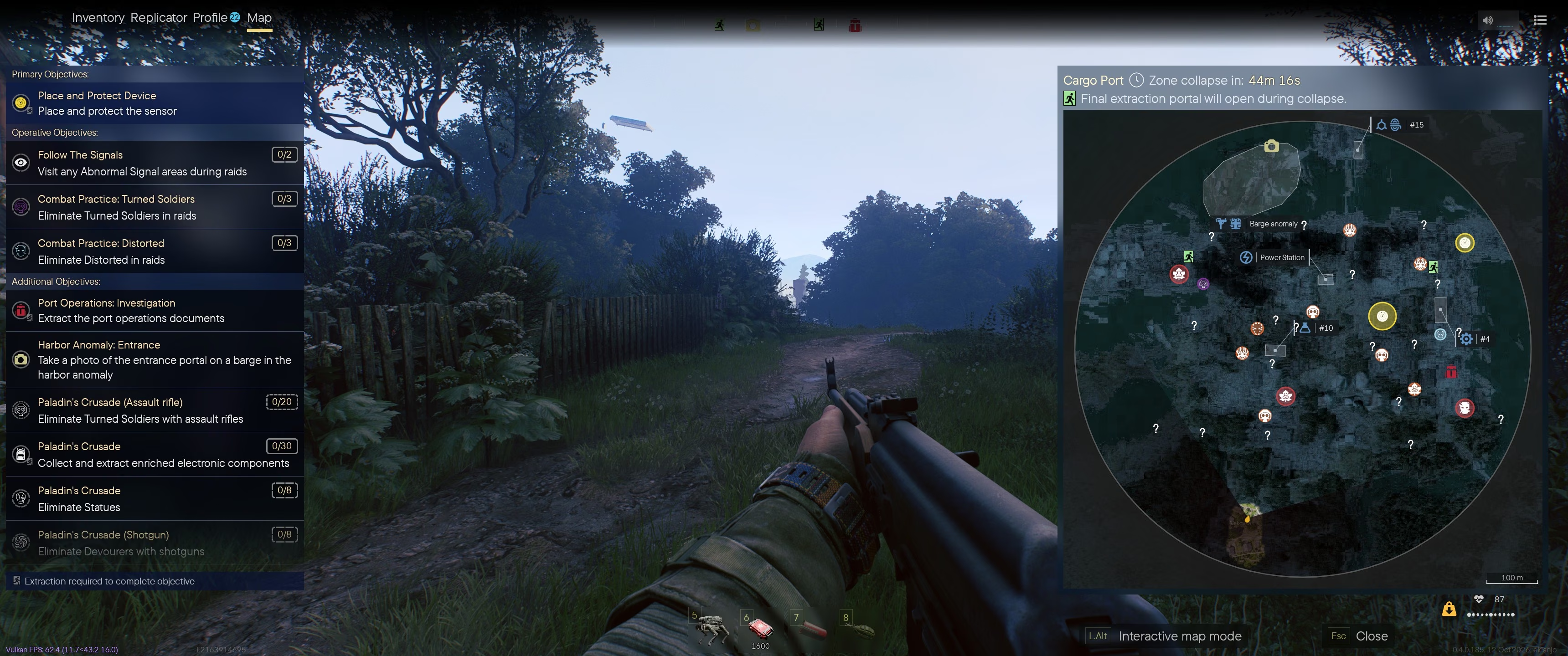
The maps are pretty big and look quite different from one another. There are some areas as well where the gravity inverts which makes for an inception-like effect. Really cool. The exploration is worth it in itself. There are a lot of places to visit and you can enter into many builds and interact with quite a few objects, like tables, desks, and containers, to loot some more stuff. Killing enemies, completing objectives, bringing back loot all contribute to raise your status after the raid, which in turn gives you points to spend on skill tree.
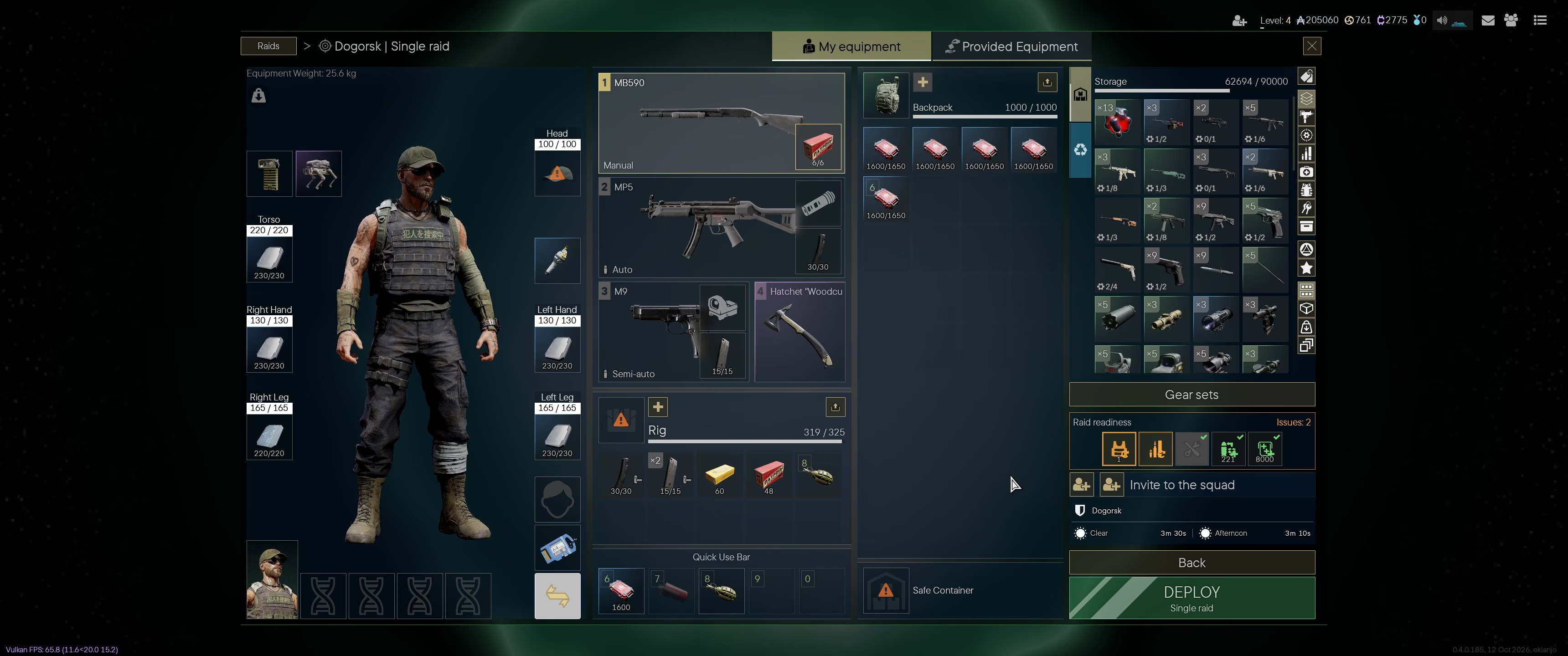
There’s a huge amount of guns and ammos and diverse equipment you can select and purchase, this would deserve a dictionary in itself. Ammos are kind of scarce in the game. They are not sitting around in convenient places all the time, which means you really need to be careful before engaging in a gunfight. This makes encounters more interesting: you don’t have to default to fighting.
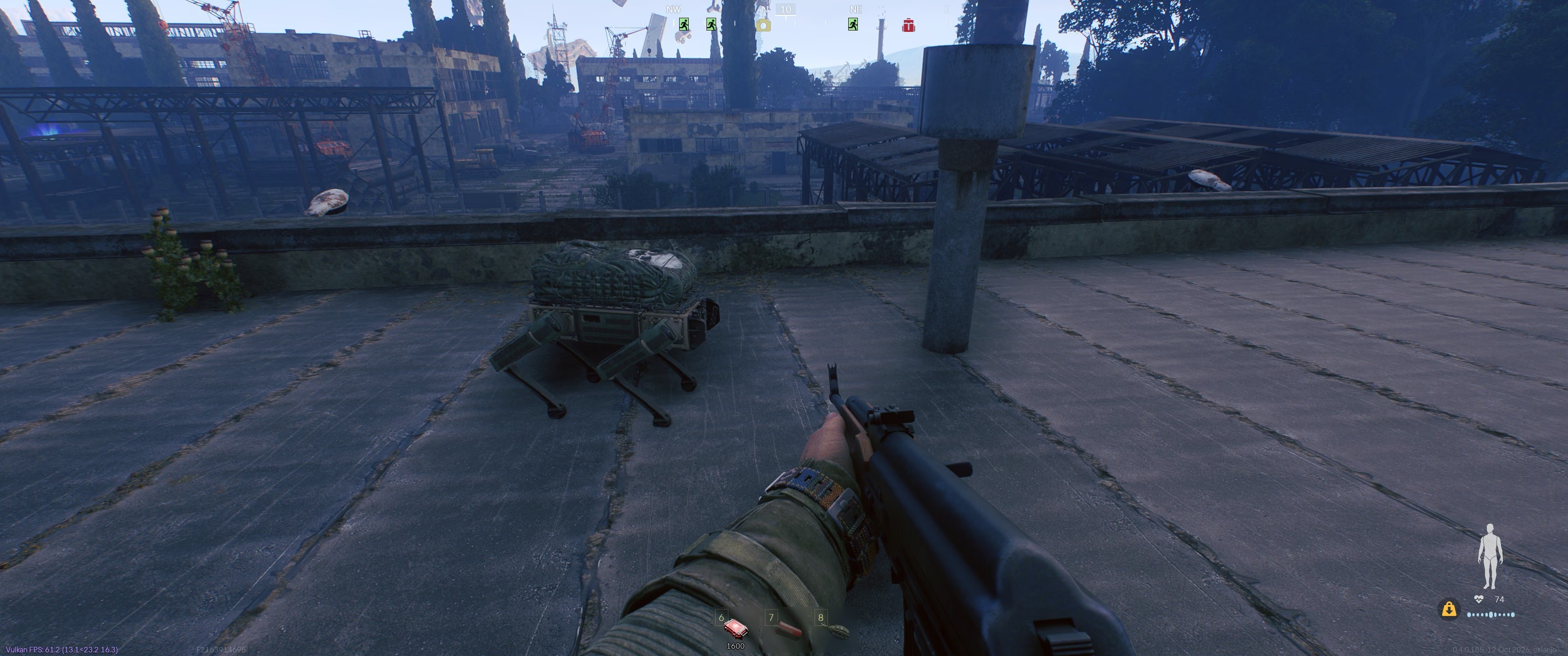
You can even summon a robot dog (Boston Dynamics?) who will follow you around and carry some additional inventory. It can be reprogrammed to charge into ennemies as well. A welcome idea.
What Should be Improved
The number of points you receive at the end of a raid depends on the edition that you bought. The deluxe edition giving you more experience! The Deluxe and Advanced bundles listed on Gaijin’s site include Body Sleeves such as Reaper, granting permanent passive buffs like faster reload and healing that cannot be earned in game, plus an extra objective slot that lets Deluxe owners farm XP at double speed. This is not really compatible with the logic of full-priced PC games.
The second big issue happened during the launch itself. Gaijin did not wipe the progression from its external beta testers when Steam went live, so day-one raids mixed brand-new players with months-old veterans carrying permanent skill-tree buffs. So you had brand new players getting hammered by max-level players on day 1. Not really fair.
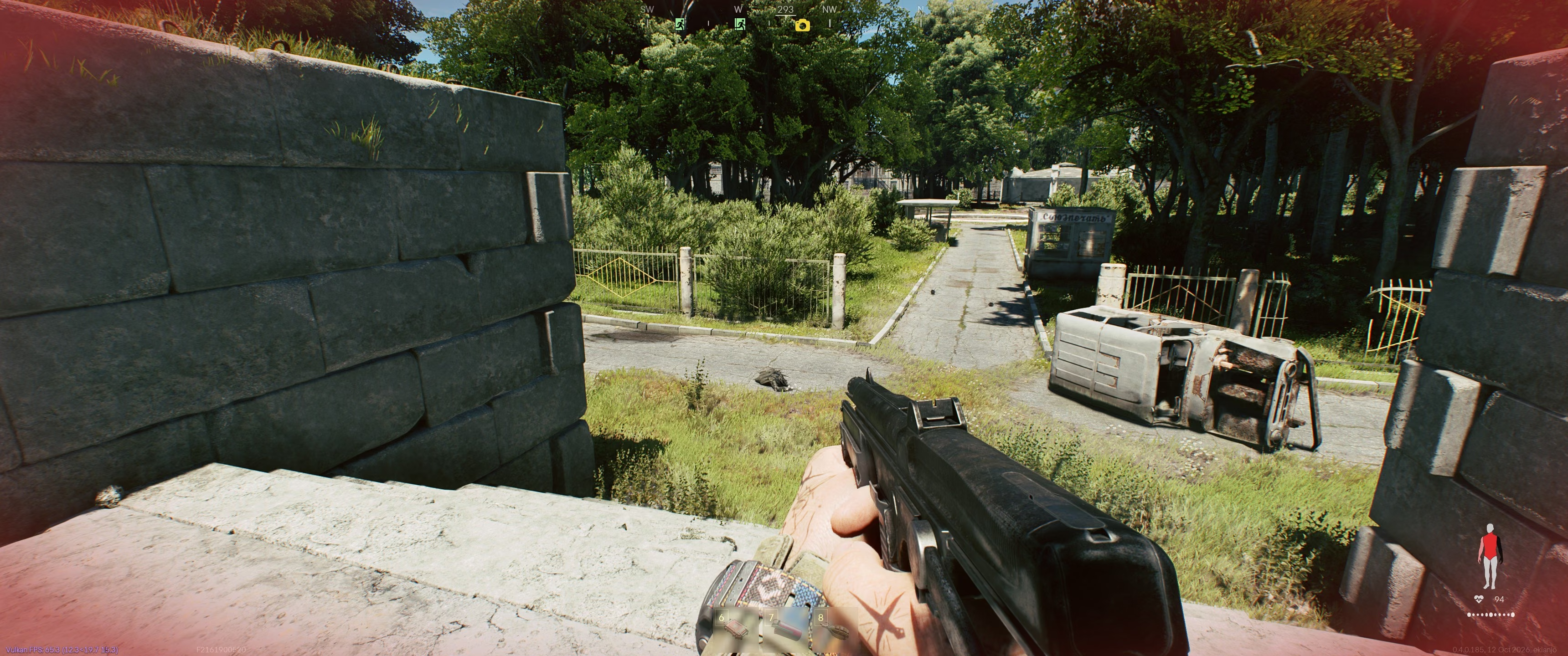
Besides these glaring issues, there are a few problems in the game itself, such as the UI not being super intuitive, and having way too many menus and info displayed at once. The inventory screen is a serious offender, there had to be a better way to design it. But that’s pretty much it. The rest of the game and the core mechanics are quite solid.
Linux and Steam Deck
It uses Gaijin’s proprietary Dagor Engine, the same technology that powers War Thunder and Enlisted. It has a native Linux build with fairly feeble requirements. This game is so well optimized it can run on a potato. The native Linux version has excellent performance and works fine on Linux without Proton needing any involvement.
On the Steam Deck, the game runs decently enough, at about 40 fps more or less. It’s very enjoyable during exploration, but fighting in close quarters is a challenge on this device. I don’t think you can ever be on the same level as someone who plays on a big desktop enjoying a wider field of view and 120 FPS. For a game where PvP is a thing, that’s going to be somewhat of a problem. Even in PvE, melee fights are very dangerous on the Deck and your best choice is the run away and attack from a distance. The frame-rate and the nature of the portable controls play against you. So far the game is not yet rated for the Steam Deck, and I would say it should be marked as “playable”. Controls work well, but deserve some remapping (back buttons should be used as additional shortcuts, they are not used by default), and the text can be quite small in a few menus, like the loadout screen where you select your inventory.
So I would say, it’s playable on the Deck, but not as enjoyable.
What Gaijin Has Done Since Launch
An extraction shooter lives and die on its player base, and the launch period will result in a clear verdict not so long from now. Right now the game has reached a stable user base oscillating between 6 to 9k on a daily basis.
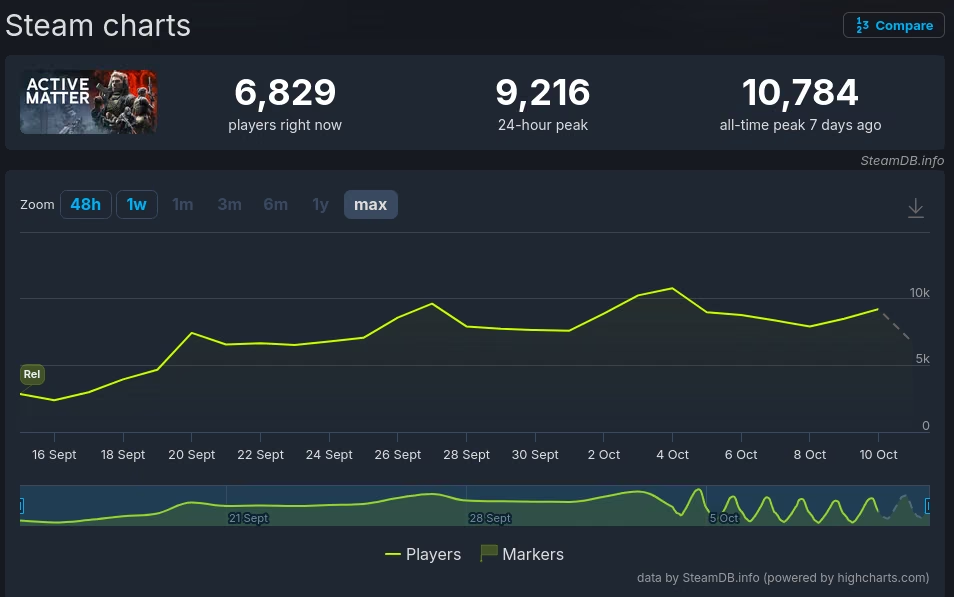
It’s somewhat growing slowly but it’s too early to say if this will sustain or flatten out. Those numbers are good enough to fill the player queues in dense areas like the US and the EU, and are therefore healthy is they can be maintained. Now, it’s nowhere near the top of the line in this kind of category, but the game is not priced as AAA either so this may just be exactly what they are aiming for.
The developers have been very active to adress a bunch of issues since release (just before posting this article there was yet another update), in the hundreds of tweaks and bug fixes. And some Steam reviewers who had a somewhat negative first impression mentioned that they felt that the devs were listening and adressing some of the points raised by the community around the game. They did not address, however, the artificial paywalls of the more expensive editions…
Verdict
It’s a bit early, but the game is impressive in many ways. It’s fun, stressful and manages to keep you on your guard at all times. It benefits from years of experience from Gaijin when it comes to large scale games. It reimplements successfully the recipes from other extraction shooters, while managing to feel very unique in its style and atmosphere. Most of the complaints are around the PvP mode and this is something you can avoid while focusing on the PvE side of things.
Graphically it feels like something running on Unreal 5 (in a good way) but without the bad performance we had been used to: it runs perfectly even on somewhat mid-range machines and the Dagor engine is very convincing. On the Deck this is clearly one of the most beautiful shooters available out there, but know that you will be fighting the controls on this device. On desktop, it’s a lot of fun, and I am going to go back at it.