
Thunder Hoop Collection - Review on Linux and Steam Deck
One of my earlier memories of video games was choosing an arcade machine that would make my coin last longer. If possible a game that was enjoyable to pass the time. That usually meant Metal Slug. I only finished that game years later when it came out for console with infinite continues. I guess not finishing a game with a single coin makes me a casual, but I am glad that I could finally enjoy the full story and experience everything the game had to offer.
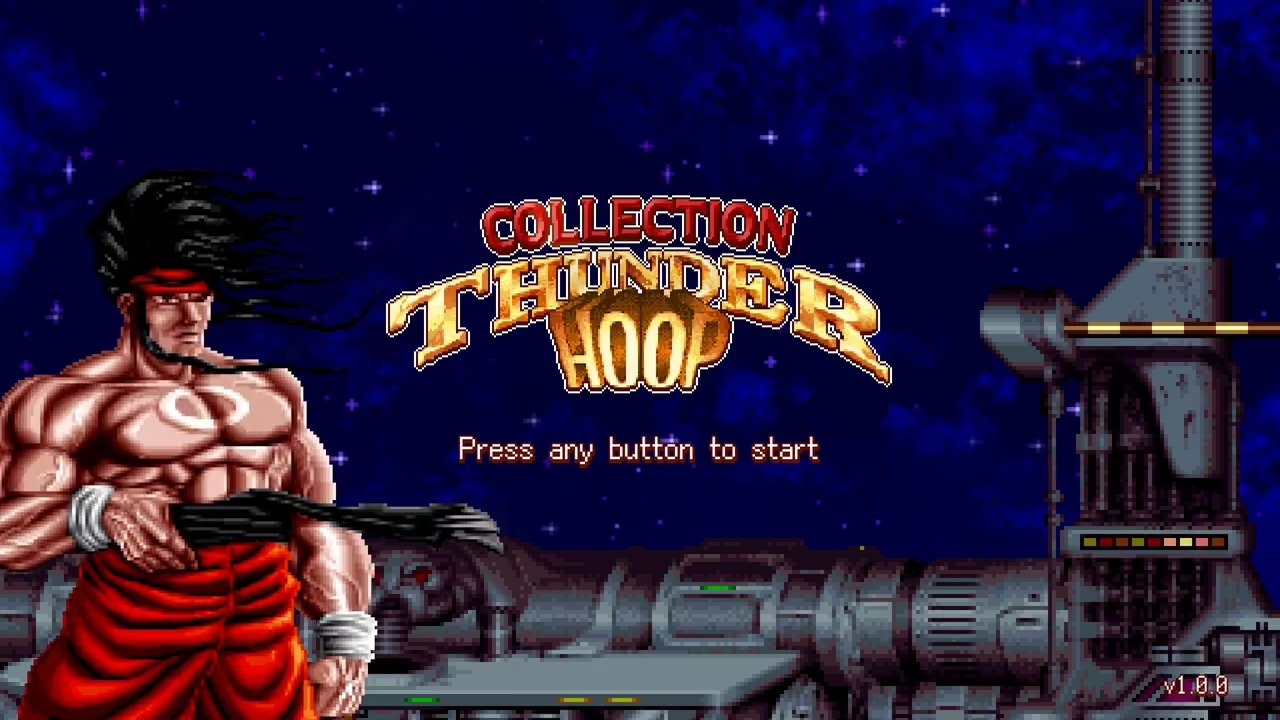
I don’t have a memory of Thunder Hoop in the arcades nearby the outskirts where I grew up, but from what I read it seemed to be popular in some places. Made in 92 by Gaelco, a Spanish arcade game company that proceeded to make Thunder Hoop 2 or TH Strikes Back in 94. Both titles make this collection put together by QUByte Interactive a Brazilian company that has been dedicating their time to revive some obscure arcade titles through its product line QUByte Classics.
Arcade Emulation
For one, I am glad to be playing this with an emulator.
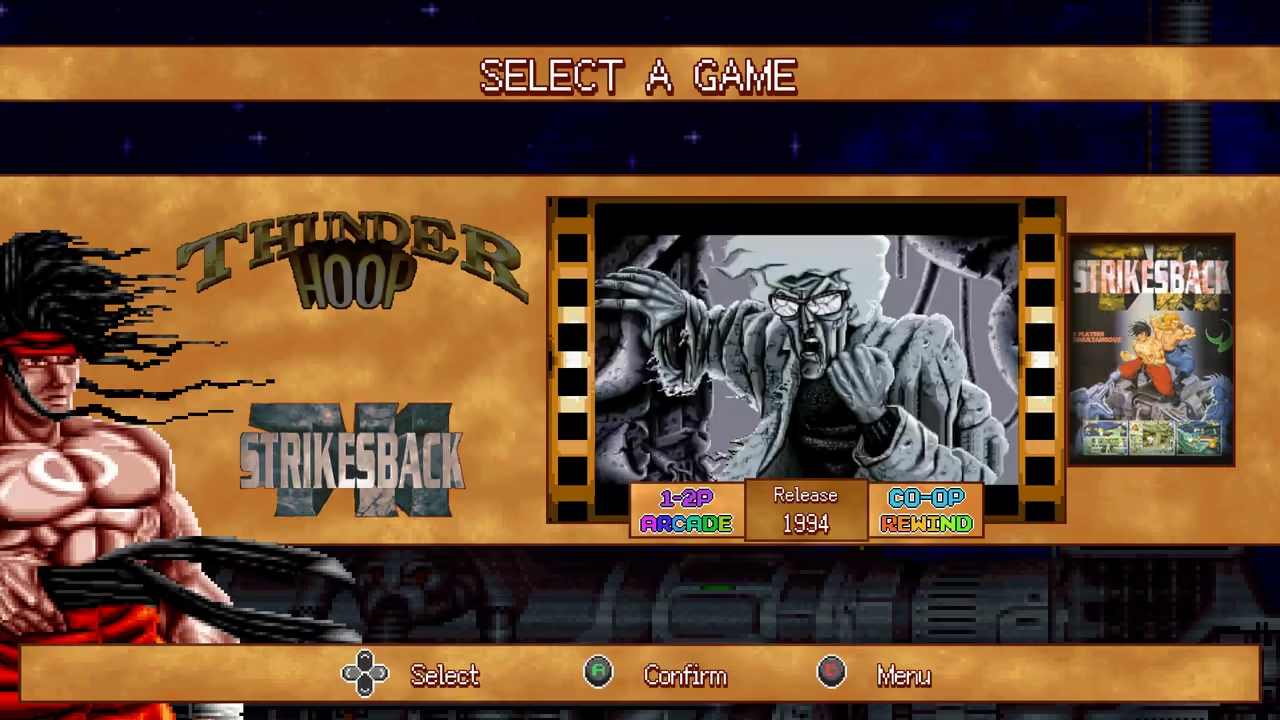
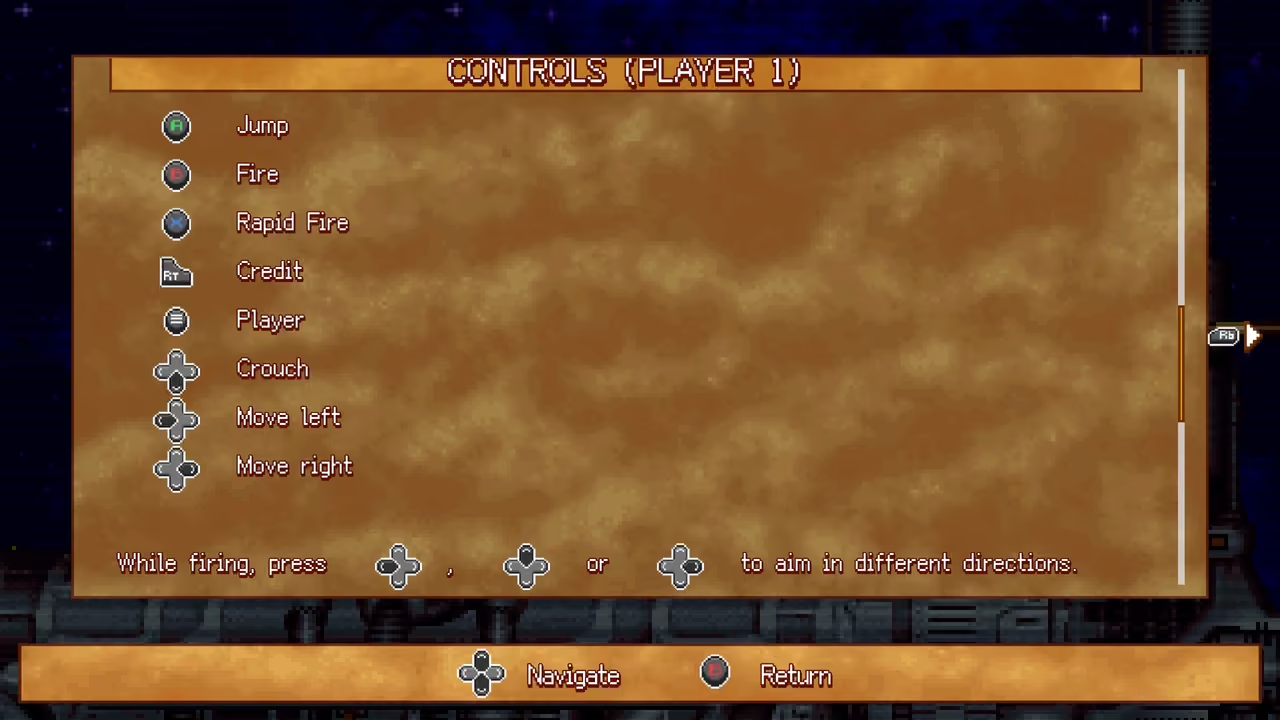
Thunder Hoop follows the same greed for your coins as other arcades from that time. While not a pixel perfect kind of game, it can be tough. It takes a while to get used to enemies’ behavior, leading to a lot of premature deaths. Here you can set the difficulty, how many lives you get per coin, and you can add as many coins as you need. By accident (it is clearly described on the Store page but, well) I learned I can rewind time too, by just holding a button. There is also a save/load option, that you can use from the pause menu at any time. Those options make the game much easier to beat, and, more importantly, help you with time management, as you might not be able to commit a couple of hours in each game session.
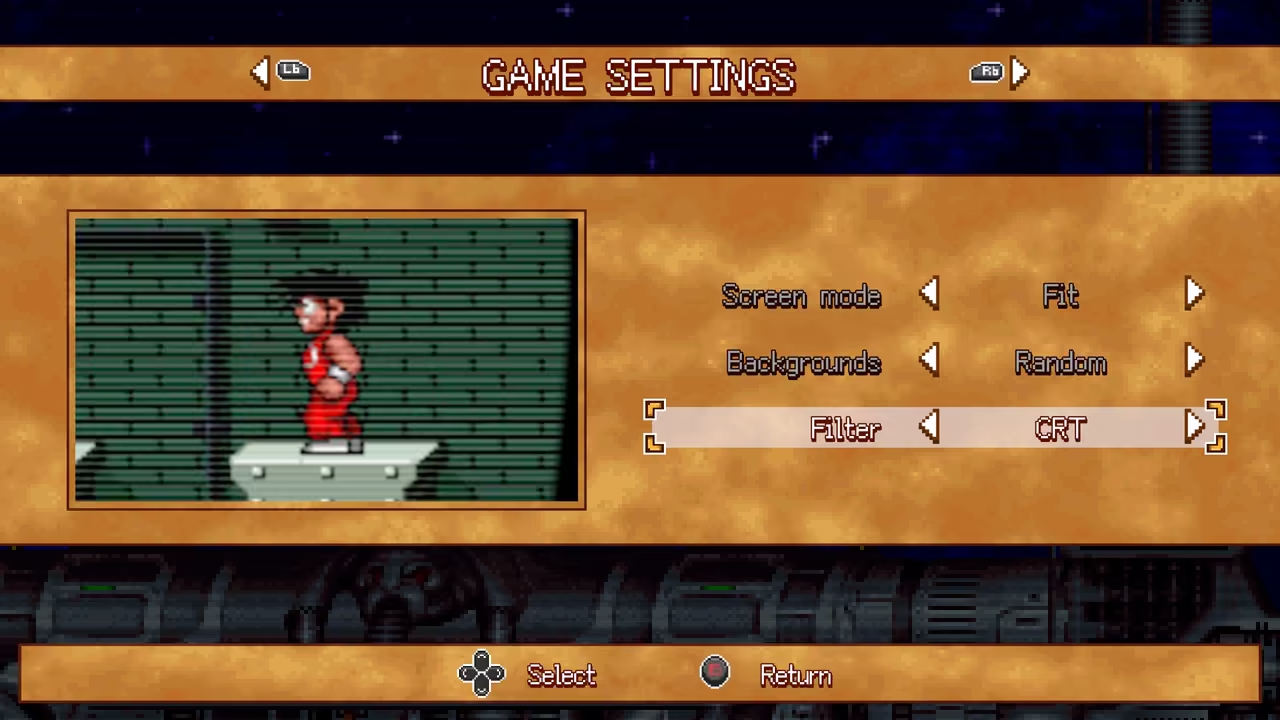
The emulator seems to be an Unity Engine wrapper around the ROM, with some Epic Services SDK that I am not sure what it is doing. It provides good out-of-box experience to play the game, including special filters like scan line and CRT.
One thing I have never experienced with emulators of older hardware was slowdowns. I imagine that is something related to Unity (or the Epic Service thing), as I experienced technical problems like that with recent titles made with the engine, but it is hard to say without debugging options.
I miss tweaking and debugging options found in dedicated emulators. When I set options that I liked in Thunder Hoop Collections, it would cut out the top and bottom parts of the screen, like the score and part of the timer. Also, I could not change those while in the game, making tweaking a chore of leaving the game, changing something, opening the title again. Last, the edges of the screen were not visible, covering high scores, lives and time markers. I bet it was something that I did, I don’t know what and it is really weird that such an option might exist in the first place.
Some retro collections on Steam allow you to get the ROM files and put them wherever you please, like Retro Arch. Here it is not that straightforward, as the ROM files are obfuscated in Unity files and you will need special tools. That said, when I reflect on the time I spent on emulators versus playing the emulated games on Steam with a click of a button, realistically, I am more likely to play this game with the fewer steps needed before starting.
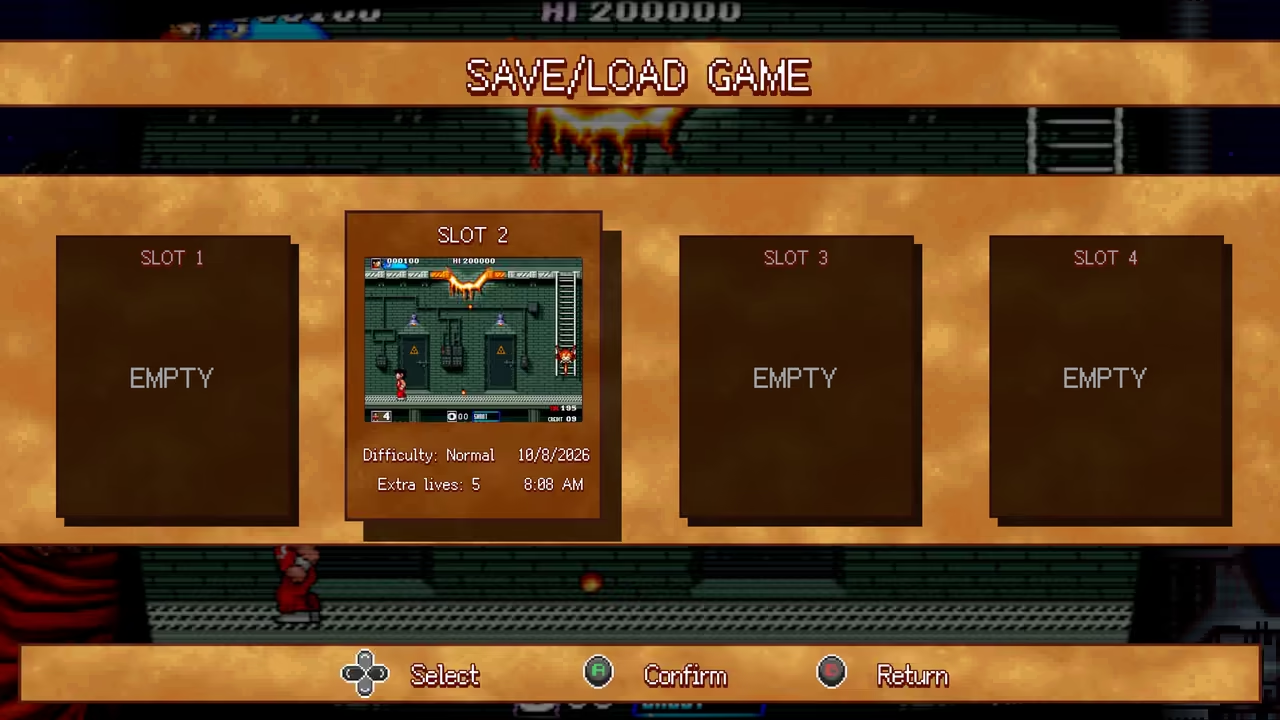
With Thunder Hoop Collection, I just press play on Steam and the emulator opens. Then I get to pick which title I want to play: Thunder Hoop, or Thunder Hoop 2 (TH Strikes back). Then I am ready to go. The titles, while sharing a similar name, are quite different from each other’s.
Thunder Hoop
You are a boy, probably named Hoop, fighting this weird dude who is creating monsters. You use your controller to move around and aim. You have one button to jump, one to shoot, and one to shoot continuously. I am not sure if the last one was part of the arcade, but the fact that you just have to hold a button to keep on shooting will not hurt the life span of your controller’s buttons.
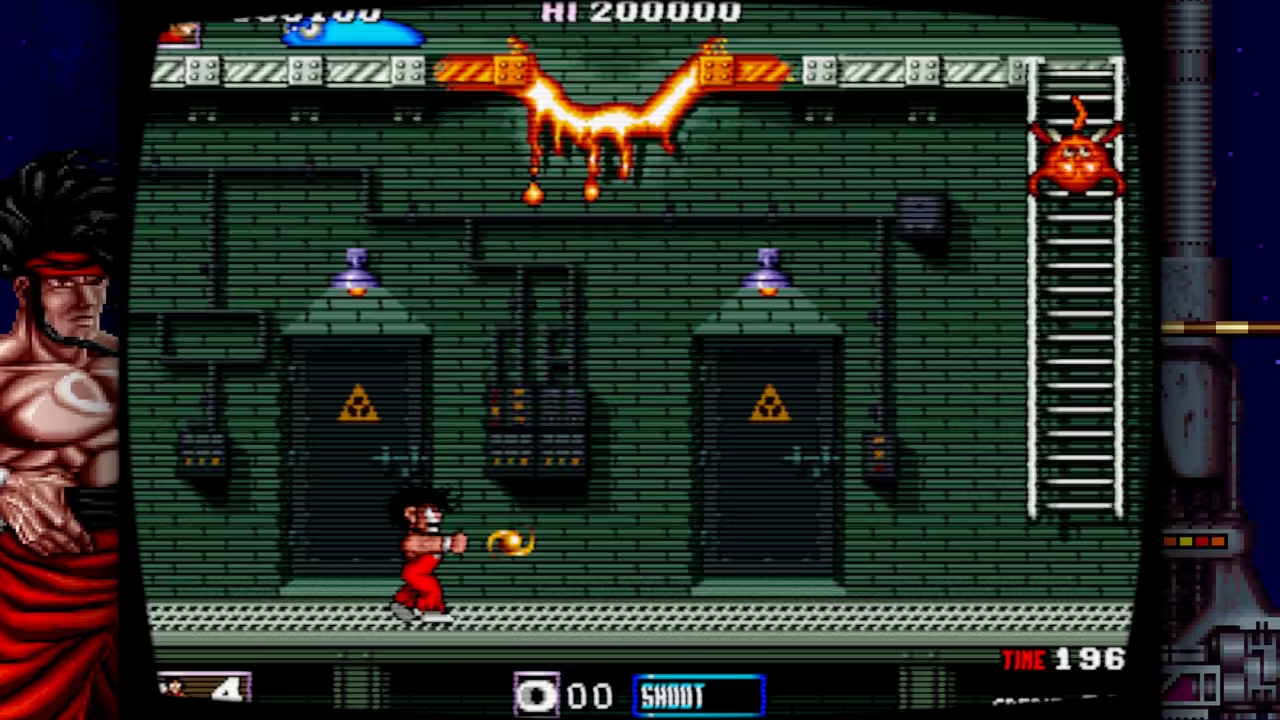
The pixel art style reminds of earlier Japanese platform shooters, with strong colors and expressive design. I quite enjoy how the monsters feels unique in both art, animation and behavior and how intense the protagonists looks in each action. The chiptune audio is good, and this is true for both music and sound effects. And you bet you are going to get hit with a different tune when you get to the bosses, seconds before a boss enters the scene.
The very first room gives you an idea what to expect from the game. You see level hazard in the shape of metal melting dropping from the ceiling, and an enemy blocking the ladder. Once you avoid the danger and reach for the ladder, a green monster pops out of thin air very close to you, with barely no time for you to shoot. I bet this monster is the one that earned most coins for Gaelco, just like the starting Goomba in Super Mario Bros.
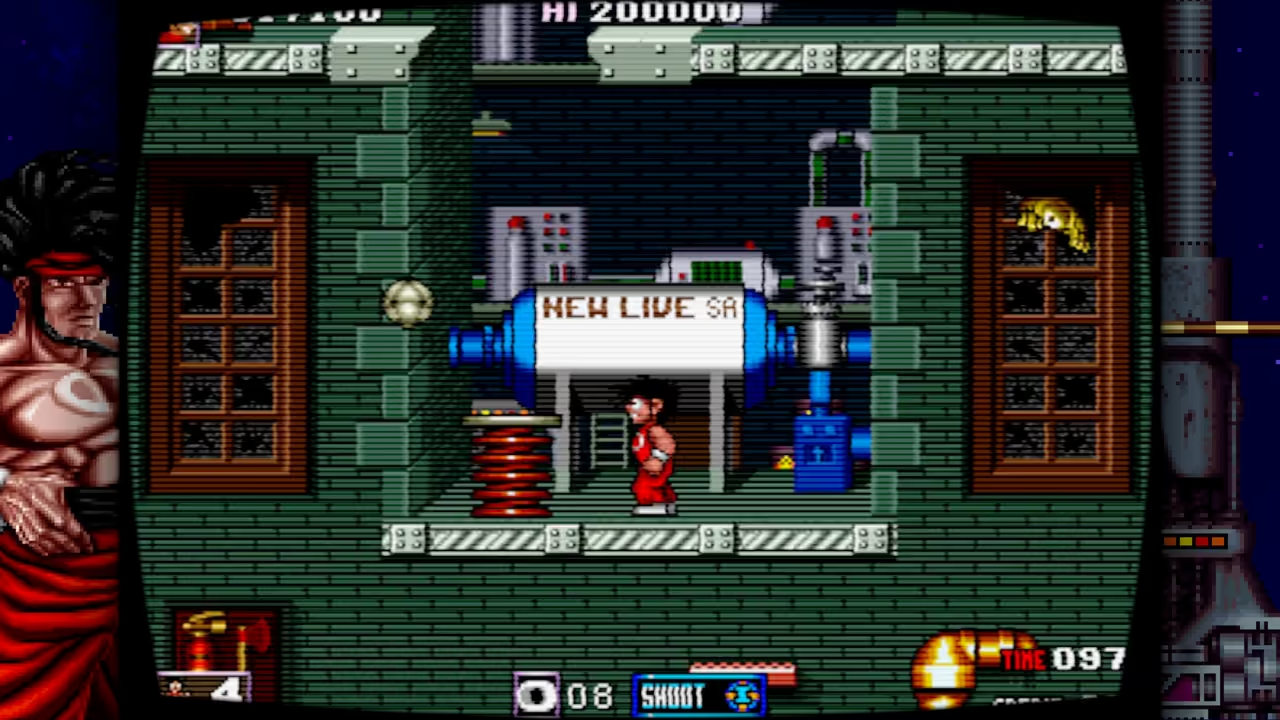
Except for the green dude, most monsters are predictable in the game, even the ambushing kind would give you a clue. That’s also the case of most environmental hazards. Because of that, the game feels a little more like a sequence of puzzles than a pure action shooter. Well, a puzzle where you need to move precisely, have good reactions, and shoot fast.
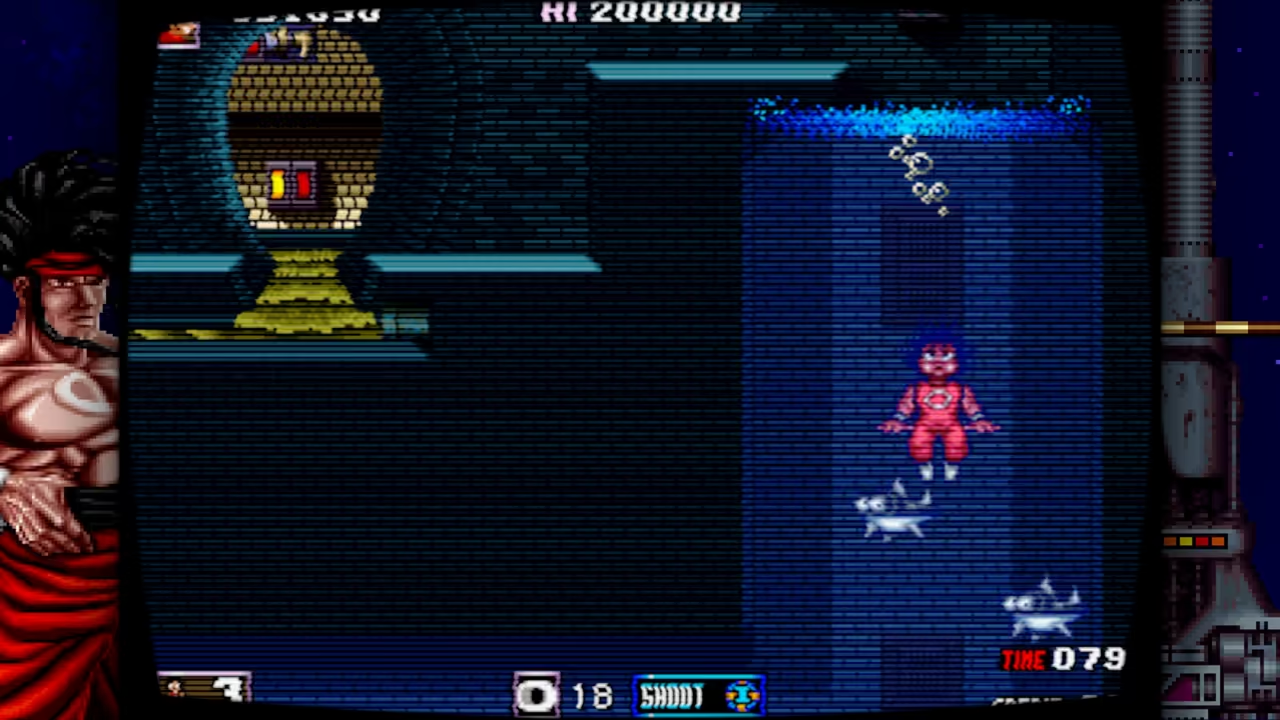
The game is not a single- side-scroller. In every map you will go up, down, left, right and so on. The game also allows you to go back, as it is necessary to avoid some monster attacks or just to find a better place to jump onto a higher platform.
You will die in one hit. Monsters might take multiple hits depending on the power-ups you collected. Bosses will appear with a health bar, and it will take a while to both learn their behaviors and how to defeat them. One thing I miss, is the level preparing you for the boss fight, not present here.
Common at the time, games would require fewer mechanics early on and ramp up as you progress, and in each level the boss would require those mechanics. Here, from the start to the first boss the game says: these are the buttons, use everything from start, figure out the rest yourself. But again, some games are for your enjoyment, others are just gunning for your coins.
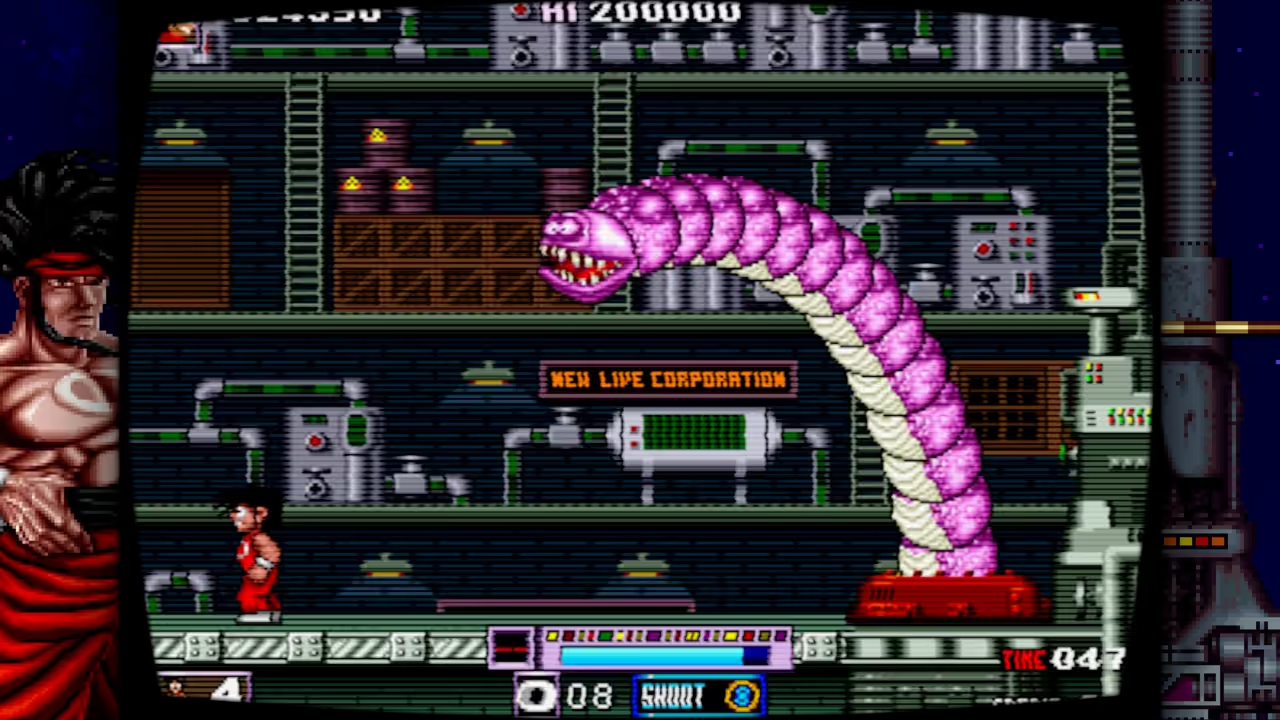
My first death in the game (read as: first death I could not solve by rewinding) was because I timed out! When it gets to 0, you lose one life and respawn on the last checkpoint. It happened at the first boss, and I started again right before the boss’ room and the timer was properly reset. Another common thing in arcade games to part you from your coins. At least here I did not have to play the whole level again.
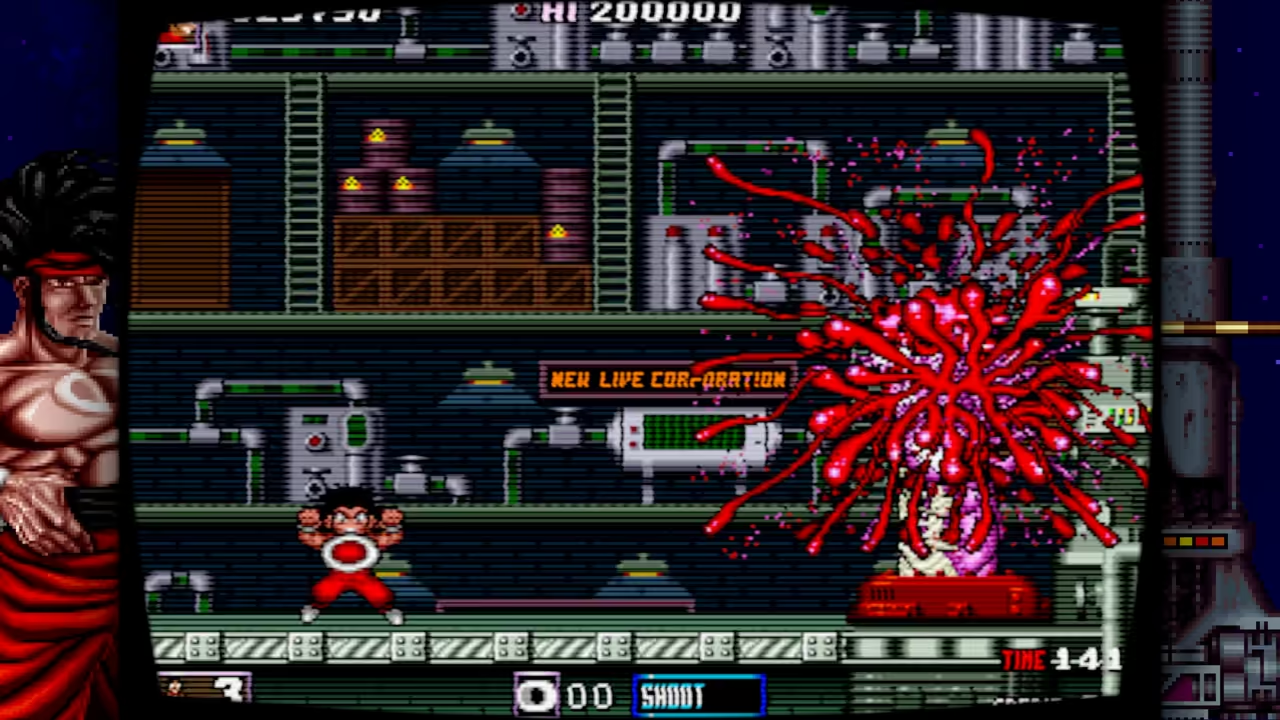
While I learned there is a way to disable the timer thought the emulator menu, it gave me a hint of the intended way to play the game. I don’t need to kill every monster, unless I am trying to beat the high score. There is no benefit in killing them besides making move forward easier. Some monsters are there to block your path, bullet sponges to waste your time, but in some instances, moving forwards is even easier if you jump on their heads to reach higher and farther away platforms. Jumping might kill them, but it usually takes more hits than by shooting them directly.
Some monsters are there for you to use as platforms, even during boss fights. The second boss was easy thanks to those pinky cats that I accidentally jumped on top, allowing me to target the boss’ head with little effort (besides the effort of keep hopping on the cat).
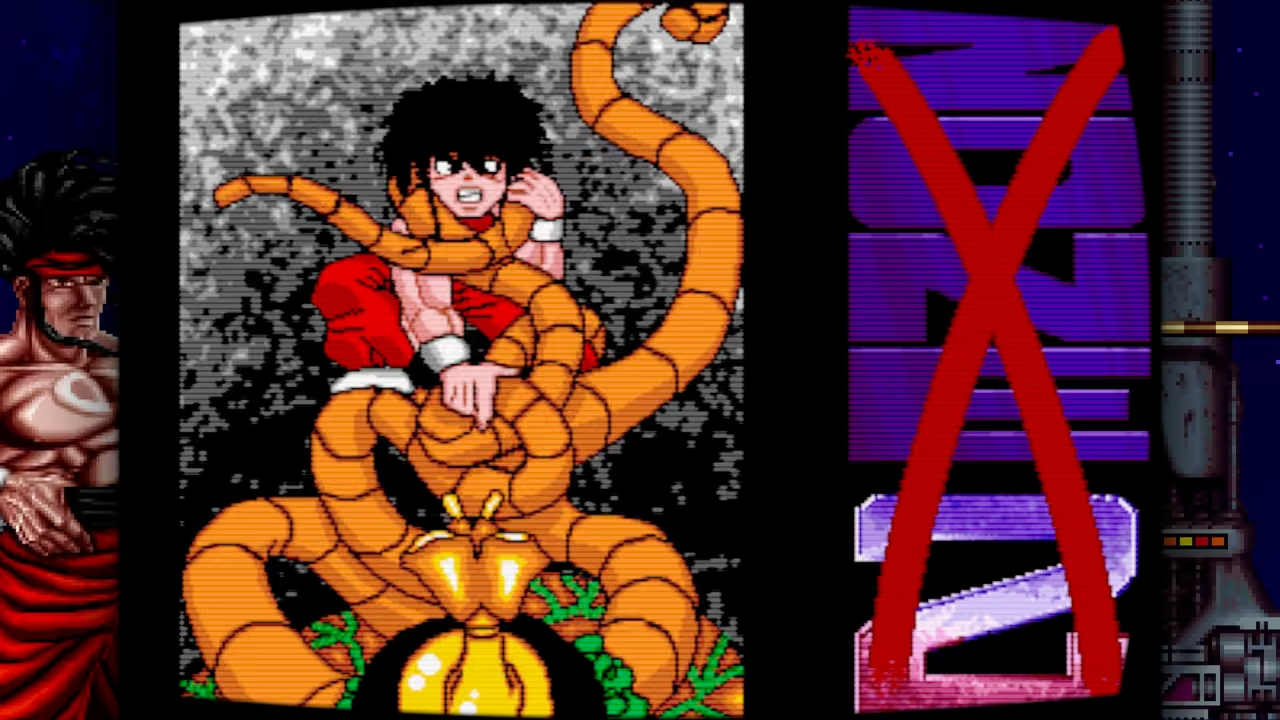
I quite enjoyed Thunder Hoop despite knowing I would not be able to finish the first level without mortgaging my house during the good old arcade times.
Thunder Hoop 2 (TH Strikes back)
While carrying the name of its predecessor, name-drop here and there, and basic controller input, Thunder Hoop 2 feels like a completely different game.
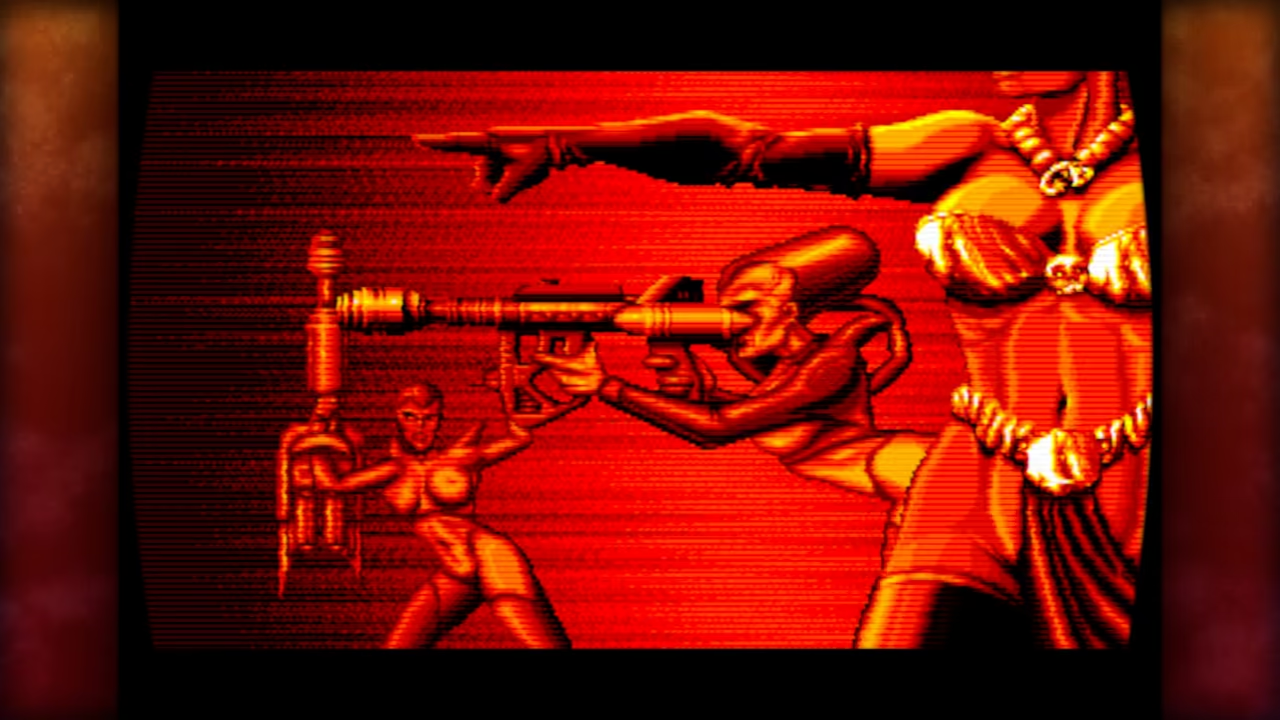
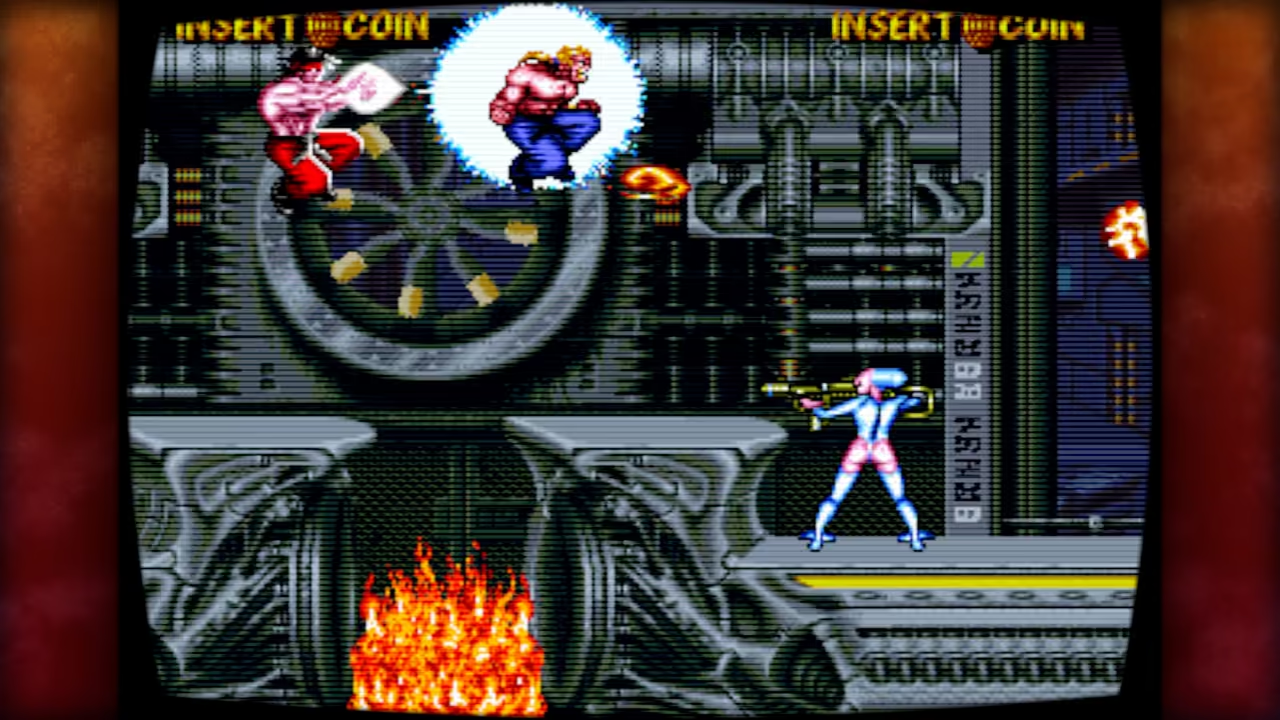
Mechanically it plays more like a side-scroller action shooter, you move to the right and shoot things that appear. Technically it has way more enemies on screen, not like in a bullet hell shooter, but it is a lot busier than the first installment. You also can play coop with a second controller.
The art is completely different: they went for a more 80s action hero theme. Hoop and friend are adults now. You can see more of the bulge of their muscles than the expression on their faces. However the enemies are a let-down. There are some enemies that you might imagine as references to the first game, but only if you squint really, really hard. With more small details in them, yet less expressive, they lost a bit of their personality. Now, most enemies look like scantly clad women with different cloth colors. When you hit them, they will go into a weird pose, inflate, then explode.
It felt like management tried to get more teenagers to play the game by showing more skin. Maybe trying to get that Heavy Metal art vibes. But it does not reach even He-Man level from the 80s, it only comes out as chauvinistic.
To be fair, not all monsters are terrible. The boss fights are fun and require some strategy. Usually involving a better use of the scenario while predicting their patterns.
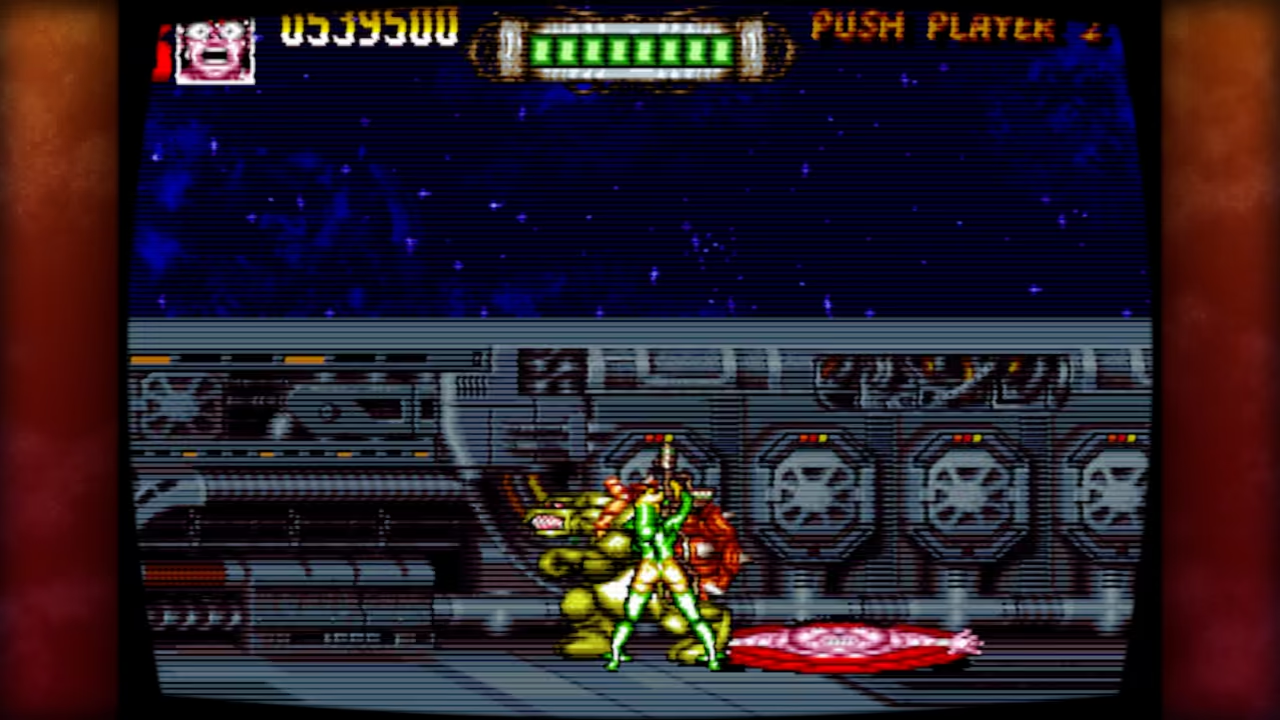
The level art is cool, I like the details and animations. But the level design is a bit uninspired most of the time. There are some highlights here and there, as I did enjoy the second boss fight. There, you have to alternate between staying on the floor and hanging on a pipe while they catch fire, but overall it is mostly 2 layers where you stand on top, or at the bottom of the screen.
It is a lot easier than the first title. No time requirements in this one, but there is also no turning back: you just move right. The monsters are more lenient, and the level’s hazards more predictable. You also get power ups that let you take more damage.
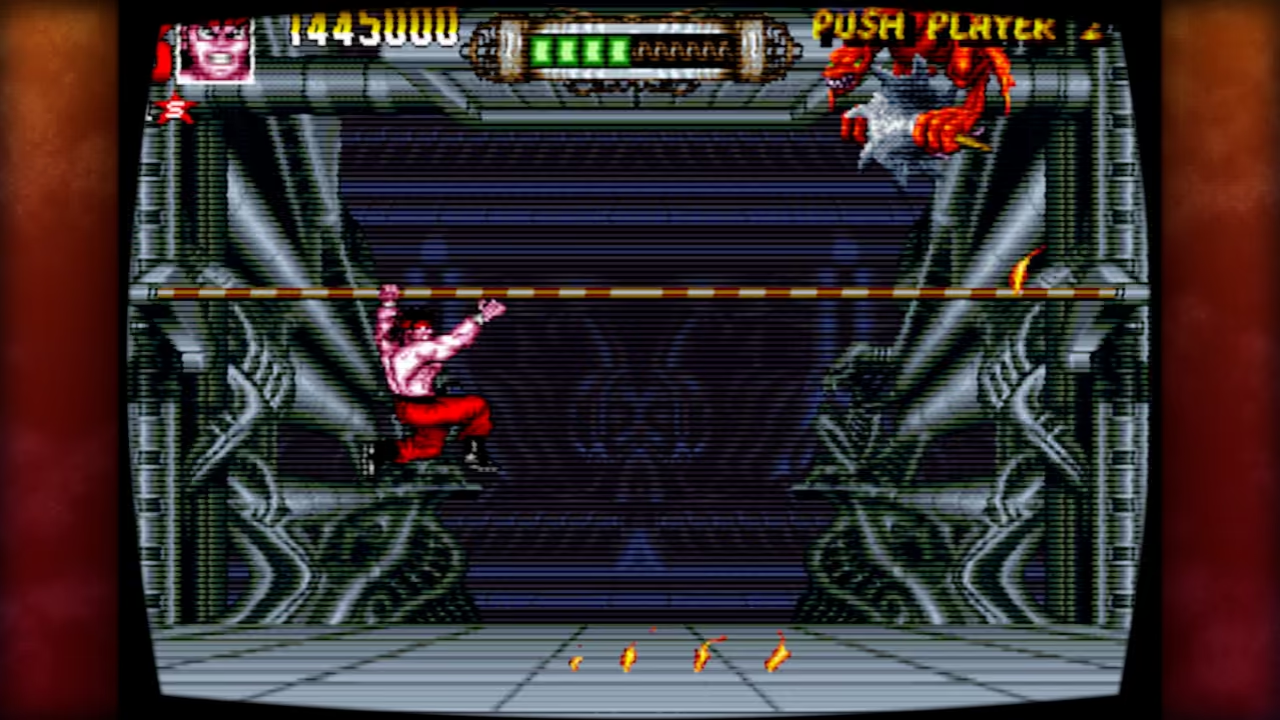
Some damages play an animation rather than killing you. I think that was another highlight for me. The animations were fun, from grabbing your feet and hopping when stepping on fire, to becoming a flat mass with a huge face when getting stomped by a boss.
While I progressed farther with a single coin, and this game looks technically more complex than the previous one, I had less fun than with the first game.
Overall
Thunder Hoop Collection works well with controllers, and I had no problem on the Steam Deck besides some slowdown on the second game, that also occured on my desktop. Steam says its compatibility is Unknown, but I think it is playable.
I do like the starting point QUByte Interactive’s emulator provides, and it will provide a satisfactory experience for the majority of players. But I wish there are more options like what we can find in modern and better performing emulators.
Today we have way more predatory monetization than what happened in the arcades. Playing on an emulator solves some of those problems, but it does not solve game design issues.
While Thunder Hoop was an interesting experience, I think there’s a reason it did not reach the arcades where I grew up. It had to compete with some power houses of well-known IPs, and better designed games released at the same time. Arcades used a lot of floor space for every single game. It would be hard to make a lot of money when competing with the likes of X-Men, Street Fighter, Mortal Kombat, Alien vs Predator, and many others. Not sure why they did not make it to consoles in the end, as games like Contra were quite popular.
I found it weird that they used AI-slop-style for the banner of the game, when the game has good pixel art in the first place (that were used as base for the banner). The original would make more sense to advertise a pixel art game. I was afraid I would see more of that odd style inside the game, but there was none. I am glad that I tried the game despite the banner.
I can recommend if it was one of your favorite titles, or you just want closure in finishing it after parting from a lot of coin from the arcade days. But if you are looking for a first arcade experience you might want to look elsewhere and start with more popular titles from that era.
Thunder Hoop Collection is available on Steam.
Note: Key provided by the publisher.