
STEINS;GATE RE:BOOT Review. Yet Another Remake?
It’s going to be somewhat of a long story.
First encounter
I have a strange history with Steins;Gate. I came to Japan shortly before the Xbox 360 was released and this is the first console I got at the time. Yeah, once upon a time I took some distance with PC gaming for a few years, as unlikely as it may sound. This was almost the kind of perfect storm for the machine. In 2007, Microsoft invested heavily in Japan despite the bad sales of the original Xbox with the intent to capture the a good share of the console market. And they put down top dollars to get a lot of developers to make exclusive games for the Xbox 360. Japanese developers. So for a couple of years, you had a ton of Japanese games showing on Xbox 360, either as exclusive or as cross-platforms versions. And in Japan if you had the Xbox Live, you could download new demos all the time to try the new titles coming out. And of course, videos of upcoming games. And I distinctly remember seeing the trailer for Steins;Gate at the time, having no idea what the hell it was. Yet another visual novel? A port from another platform? While it remained imprinted in my mind, I never paid further attention to it then.
Turns out Steins;Gate was an Xbox 360 exclusive after all, which sounds almost unbelievable nowadays for a Japanese visual novel, but that’s how far Microsoft ventured out of their way to win the hearts and minds of Japan back in the days. Spoiler alert: Microsoft was not successful. The Xbox 360, while perfoming better than the original Xbox, was crushed by the Playstation 3 in no time. I have no sympathy at all for Microsoft so I don’t really care either way, but I respect them for trying like they did. It’s the best shot they had at it.
Now I guess this means no american console will ever sell well in Japan. If Microsoft can’t do it despite the avalanche of dollars spent in Japan, nobody else can.
Second encounter
A few years later, I had one close friend (very much into everything Japanese) recommending Steins;Gate, knowing that I would probably like it. This was sometimes after 2010 while I can’t remember the exact year anymore. To give you some hint about what to expect, it is a science fiction visual novel. taking place in the early 2000s, where a group of students discover technology that gives them the means to change the past. The protagonist, Rintaro Okabe, runs a small, quirky invention club in Akihabara (the electronics town in Tokyo) called the ‘Future Gadget Laboratory’. By pure chance, he discovers that his latest creation has the ability to send emails to the past. Did he manage to invent something like a… time machine?
This is as pure of a visual novel as it gets. Don’t expect much interaction, apart from clicking the button for the next line or voiced dialog. It has some very few interactions now and then, though. Sometimes you get a phone call from someone, and you can decided to ignore it, or answer it. Other times, you get text messages on your phone, and you can decide to answer in one way or another (usually only 2 choices). Such decisions that seem completely random, will actually have an impact in the later part of the game, and unlock different endings.
Because the game was such a massive hit (for a visual novel), it led to a late-night anime show in Japan. As usual, the anime did its work to increase the notoriety of the game. The anime aired in 2011 and while I probably watched it a little later, I did watch it with devotion in a very short time.
Perfectly executed. And excellent intro song, of course. The original visual novel released on Xbox 360 has a lot of fluff and fillers. The anime manages to capture the gist of the story, make it go much faster, and still remain fairly faithful to the characters and storyline. The kind of TV Show you don’t stop watching once you start. The game has since then been ported to numerous formats (I think it also made it to the PSP at some point). Steins;Gate even got an “Elite” version a few years back that abandoned its unique look to use the drawing style and cutscenes from the anime instead. I was never too interested in that one but that’s yet another way to experience the story.
There has been prequels and extended storylines too (franchise milking) in the same universe but that’s for another time.
Why a Reboot?
Steins;Gate Re:Boot has been in development for a fairly long time, and is developed by MAGES and published by Spike Chunsoft. I have covered Spike Chunsoft’s ports before, most notably the Danganronpa titles which at one point got Linux builds via Abstraction Games. That history matters here because Re:Boot is not getting that treatment on day one. This is a game that will require Proton to work. But more on that later.
Steins;Gate has sold more than 4 million units worldwide since its initial release. For some reason I expected that number to be much higher, because I know many people talking about it. But this is a good reminder that even the most successful visual novels don’t sell as much as you’d think they could, and that I probably live in a bubble. The reboot was announced during the STEINS;GATE series’ 15th anniversary concert “STEINS;GATE 15th Live: One World.” in 2024. You can find the whole event on youtube actually!
Steins;Gate Re:Boot was originally announced for release in 2025, but was delayed to 2026. And then the news dropped about the final release date:
“The official website for MAGES.’ Steins;Gate Re:Boot game revealed on Thursday that the game will launch on PlayStation 4, PlayStation 5, Switch, Switch 2, Xbox Series X|S, and PC via Steam on August 20.”
A pretty good line-up at launch. So many platforms!
So why did we need a reboot? Well, I can think of several reasons:
- Easy money: milk the franchise to the max, with remasters every 10 years. Absolutely no risk, medium-reward kind of thing. Very predictable. Helpful to fund other games or let the president buy a new house.
- New generations don’t know it yet. Something that most people who get older kind of forget, there are new people coming on the games market every year and who have never heard of Steins;Gate. Bringing a booster on the market is a way to make sure it’s visible to new gamers.
- Consoles. The PC version will probably work forever, but new consoles don’t have the luxury of being able to run the older version by default so a Reboot also acts as a port for the new machines. Kind of related to the previous point: reaching more gamers.
- Upgrades and refresh: the graphics from the original look somewhat unusual (even at the time), and it’s a good time as any to make them look a little more modern without going the Elite way.
Let’s look at what is new under the hood. This is not just a simple port, they have done quite a lot of work.
What is actually changing
The reboot is not a cheap remaster. The feature list from the official site frames it as four pillars:
- The story has been refined to be more evenly paced, and easier to read. They also added a brand-new worldline and ending. I have no seen it, so I can’t comment, but that new worldline has apparently some good length to it.
- All voices and music were newly recorded. And the in-game background music has been remade by composer Takeshi Abo. I did not notice a major difference vs how I remembered them. The voices, however, are quite different. Almost shockingly. I could immediately tell that they were not the same as in the original game. The main protagonist’s voice, Houin Kyouma (aka Okabe) still works well. However I was quite disappointed by their choice of voice actress for Makise Kurisu. She definitely sounds worse than any of the versions we have had the chance to hear before (anime or visual novels). This is a let down as she is one of the most important characters in the story. Other characters are fine for the most part.
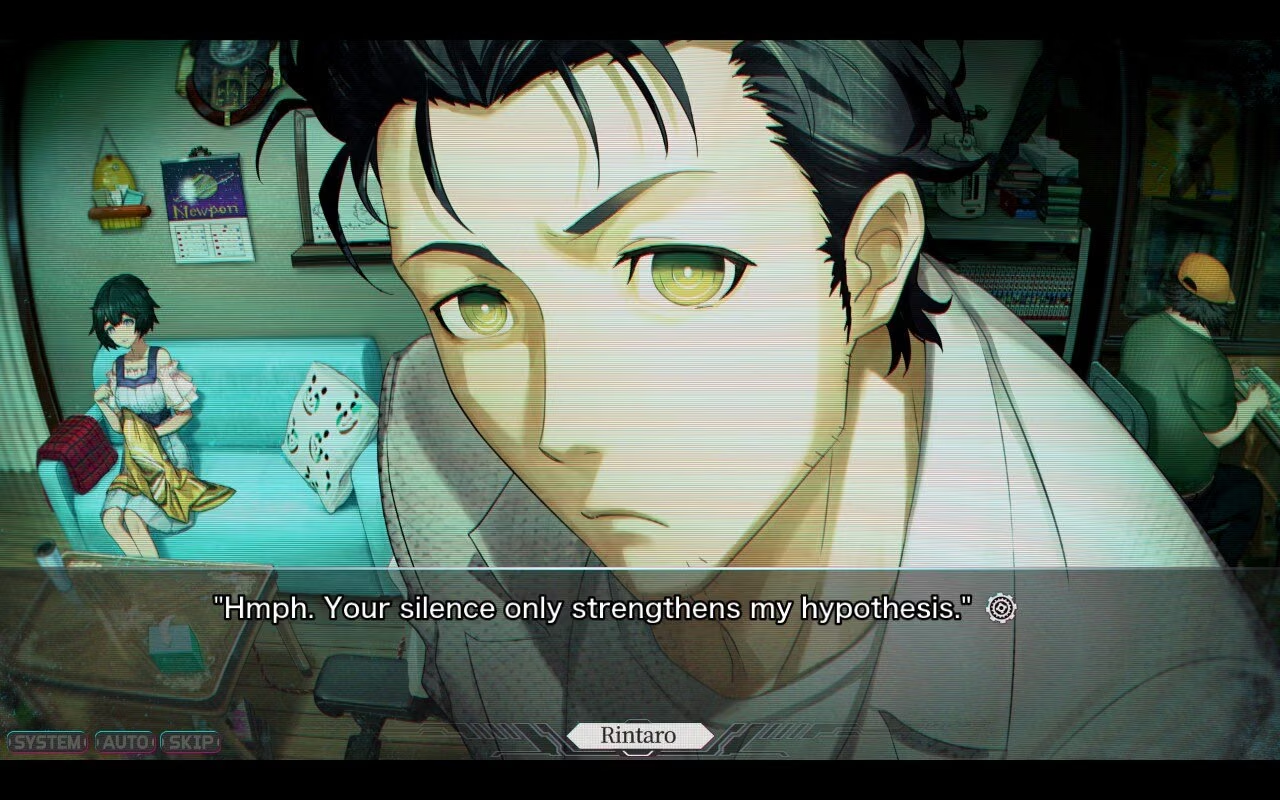
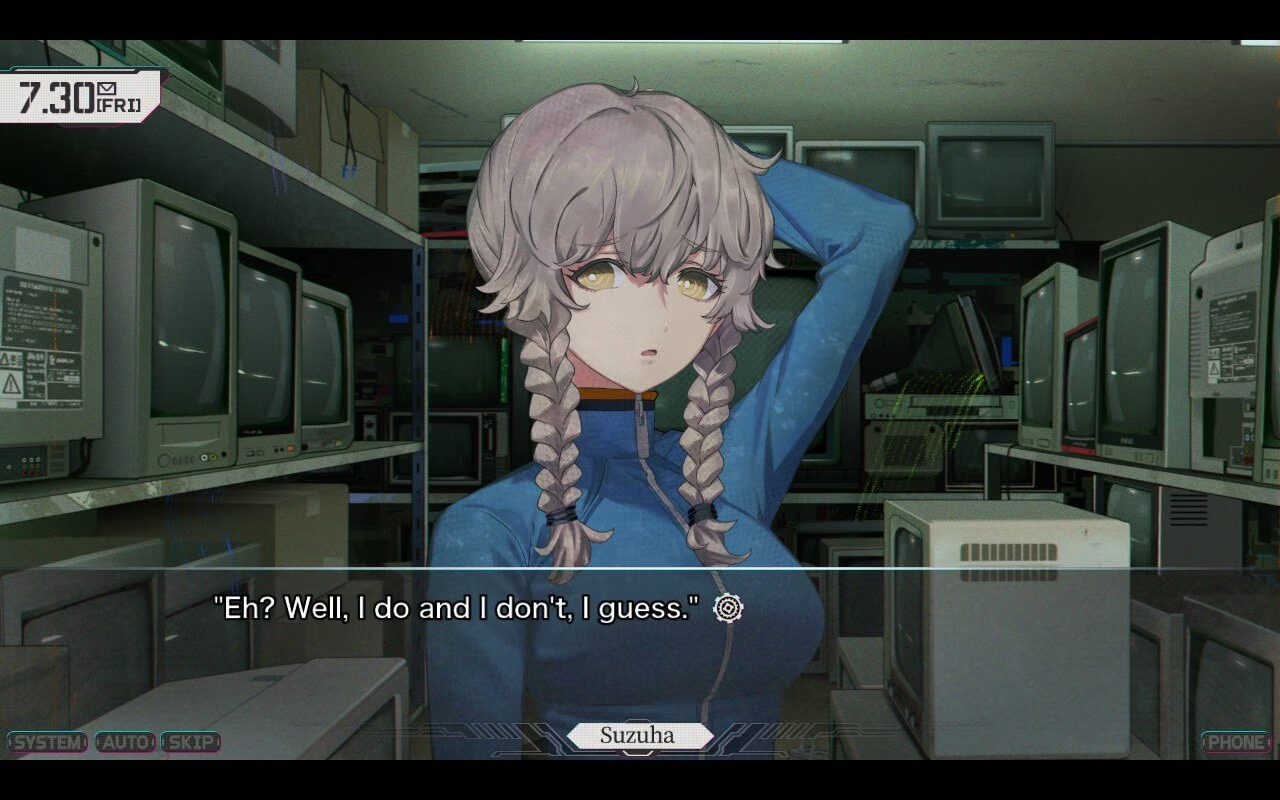
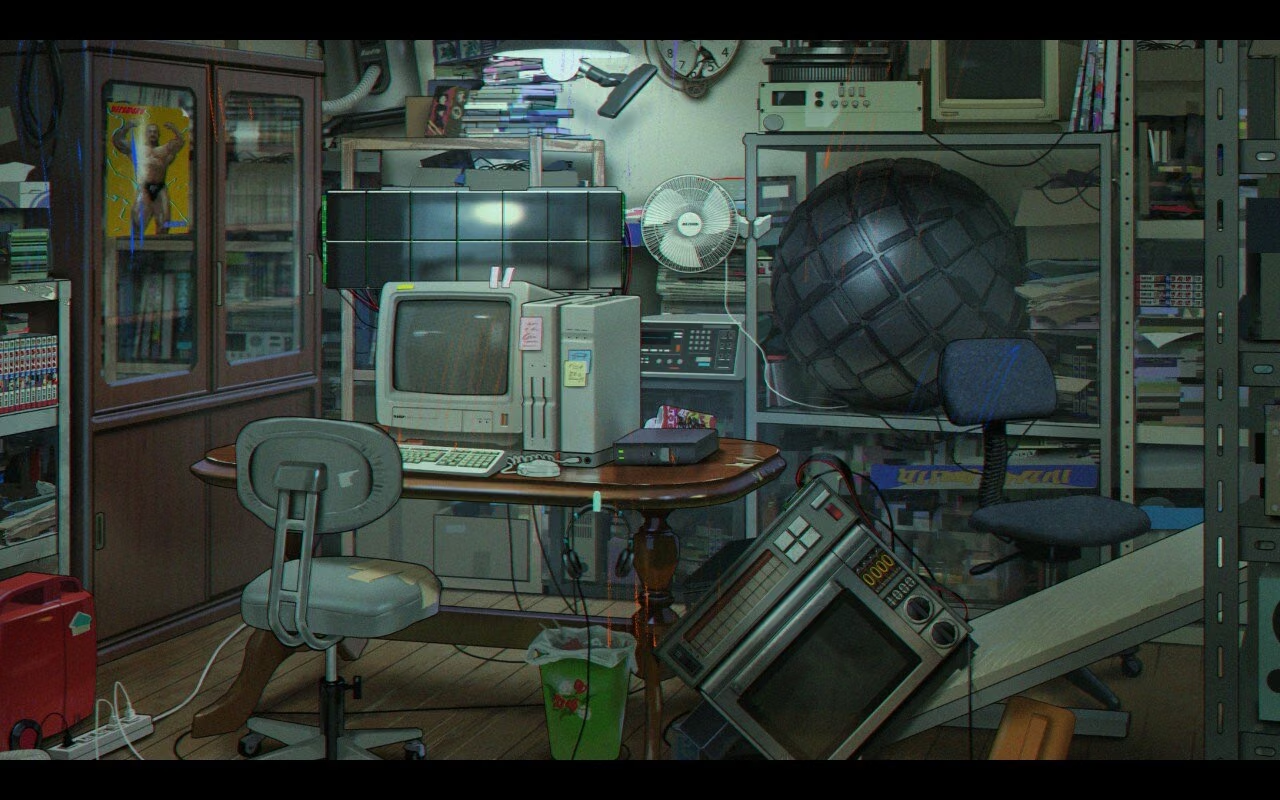
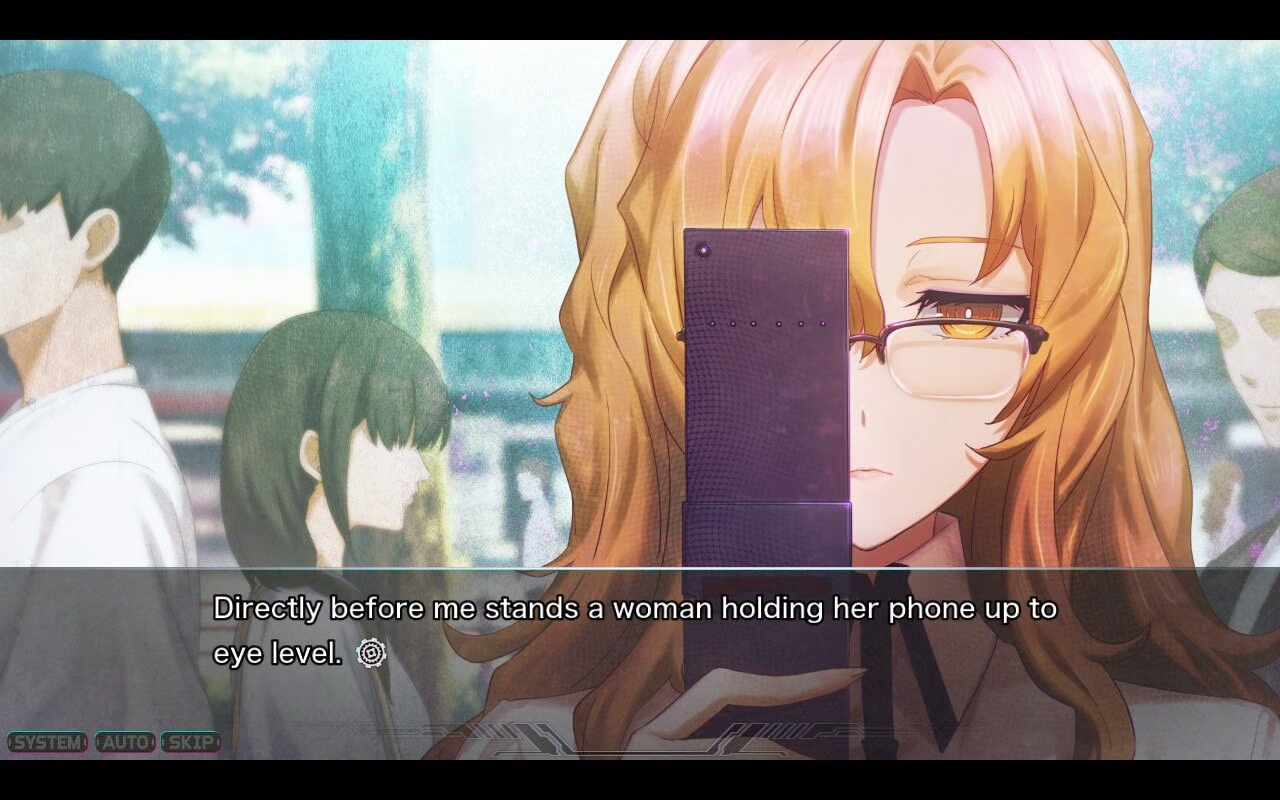
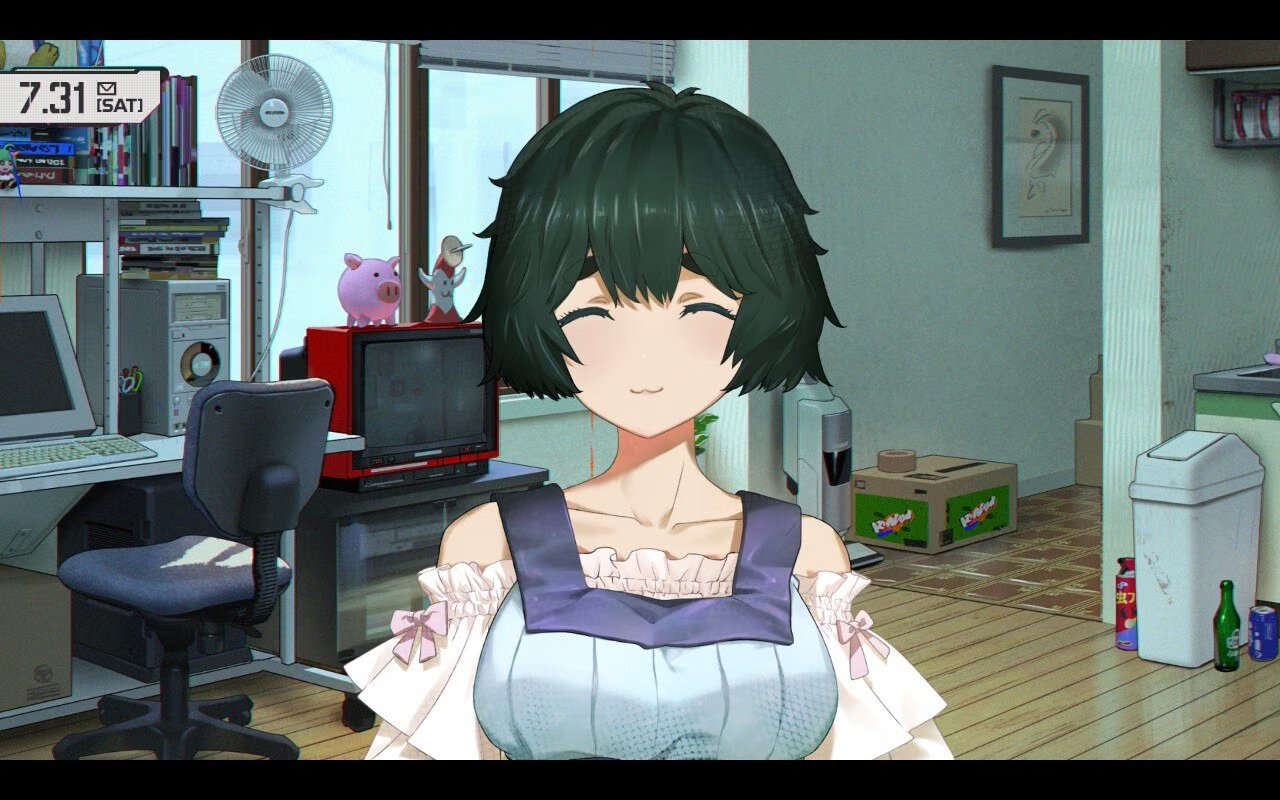
- New graphics: All characters, backgrounds, and event still images have been redrawn from scratch. This is one of the most visible changes by far. And indeed the graphics are the most noticeable changes. You will immediately see the difference if you are familiar with the older version.
- Usage of E-mote to animate characters in-game. No more static pictures when characters speak, now you have lip-syncing, change of facial expression, hair movement, and more. The fact that the characters are now animated is a very nice touch. I was not initially convinced by the E-mote thing, but it’s OK. It kind of works. You get used to it, and it definitely makes the conversations feel more alive than they did. The graphics are somewhat improved as well. I was not a super fan of the original style of the first game, and I like what they did here.
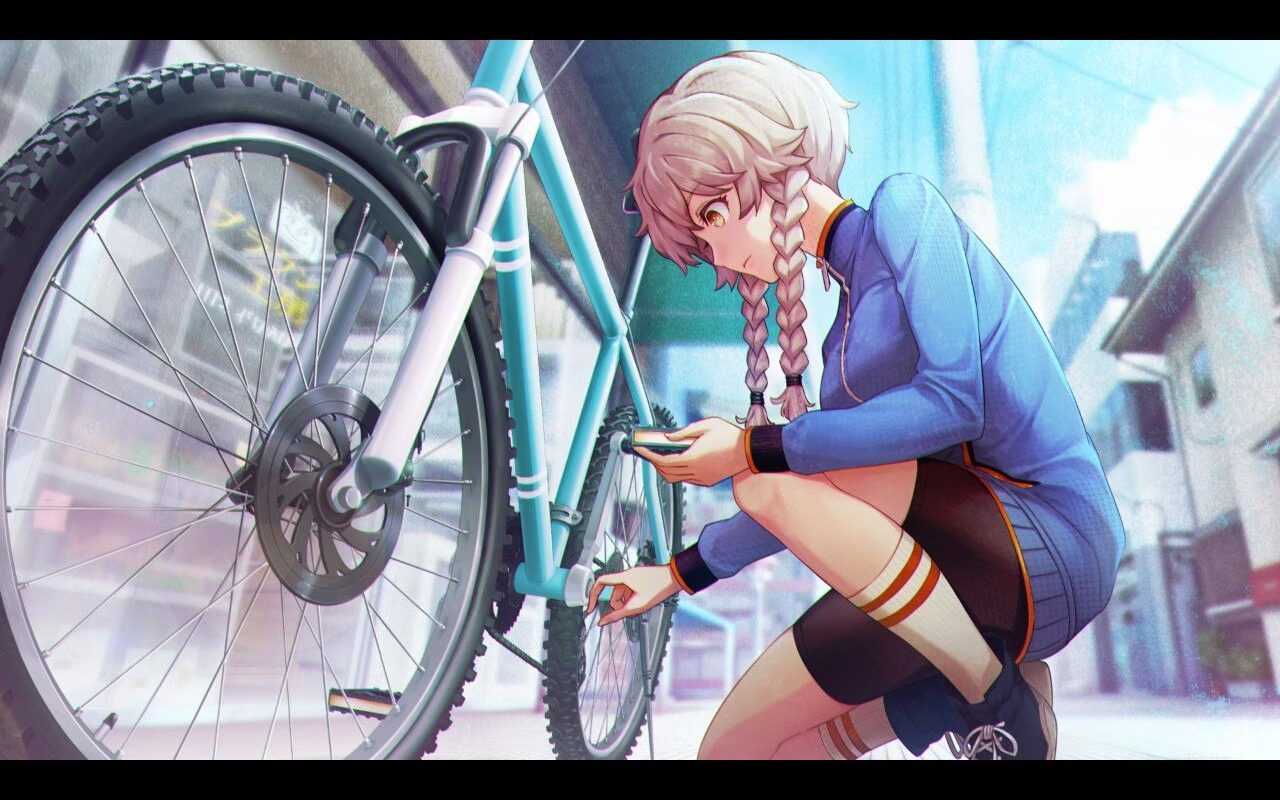
I have tried this reboot for 3~4 hours overall so I did not reach the end. The game is fairly long as you may know, with about 30 to 50 hours of playtime. It’s demanding. In my playtime I did not feel there was any major difference in content, while there MAY have been a little less fluff than in the original version, but I’d have to check it line by line to confirm.
The design intent from MAGES was clear: some new content, a revamped production with graphics, voice, and animation, to make it feel like a more modern game.
Note that I did not even bother testing the non-Japanese voices. They usually suck and fail to capture the brilliance of the original voice actors’ work. Play it in Japanese! English subtitles are very good, fairly faithful to whatever you hear in Japanese, while some jokes and references are hard to translate. On average, it’s a lot better than many translations out there.
Time Travel
Since the game originally came out in 2009, the area where the game takes place, Akihabara, has undergone massive changes. I go there every once in a while, and what used to be the electronics Mecca of Japan has become a tourist magnet. Many older buildings have been torn down and rebuilt into modern shopping centers. It has become much more maid cafe and anime-centric that it used to be, and somehow has lost some its soul in the process.
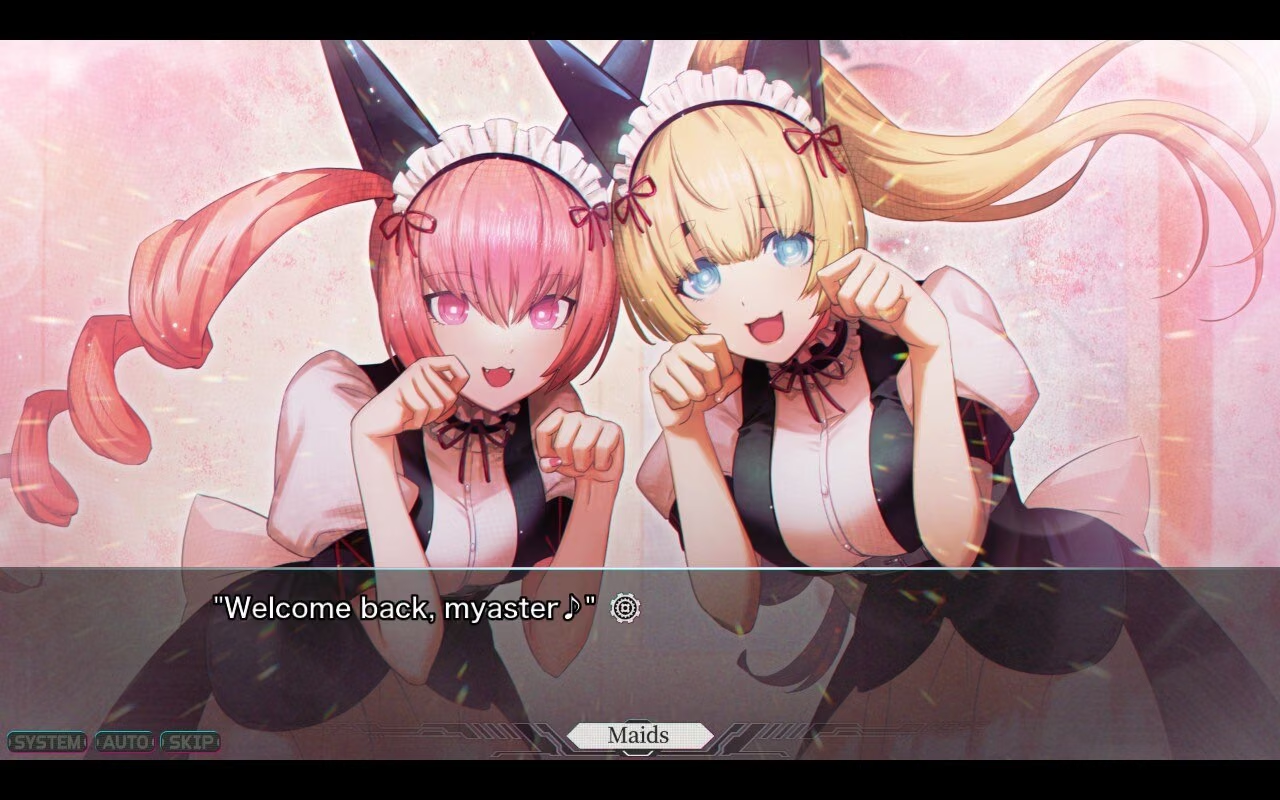
More importantly, the legendary Radiokan building that is featured prominently in Steins;Gate was completely destroyed and replaced by a new one that looks nothing like it.
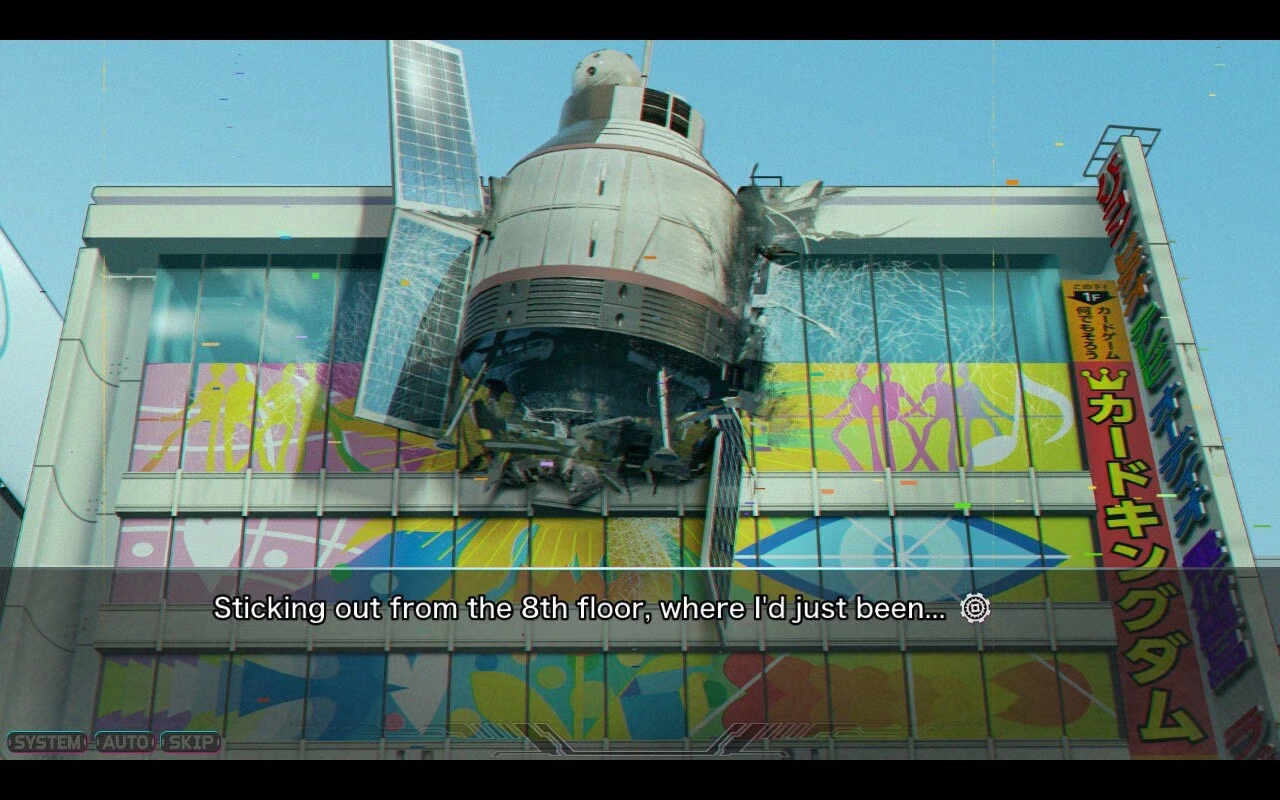
Somehow the whole quarter has lost a little of its soul and magic, and while it’s still special in many ways, it’s nothing like the early 2000’s era. So Steins;Gate kind of acts as a memory of what the quarter used to be like. A repository of a different time. Which makes it even more relevant to play today for anyone interested in that period. If you know only the anime and did not play the game, there’s a lot more stories and conversations that are worth listening to in the game.
Linux / Proton
At first I thought the game worked perfectly on Linux, until I noticed something missing: wait, where are the voices gone? Most of the dialogs are voiced in Steins Gate! Turns out it’s probably a decoder issue, and using ProtonGE was the solution to make everything work perfectly. On the Steam Deck things work beautifully when this is done, and the only problem is a missing ESC key binding that I had to fix in the controller setup in order to be able to exit the game cleanly. Since then the game has received a Playable rating for the Steam Deck, so either they have patched these small problems or missed testing for those! In any case, the game can be perfectly enjoyed on Linux as it should be, even if some tweaking is required.
Worth a shot?
Let’s make it clear. If you have already played Steins;Gate (any prior edition) and you don’t intend to play it one more time from scratch, there is no need to get this edition, especially at full price. The cosmetic changes are nice, but don’t justify the current price point. If anything, it would be great for the publisher to propose a lower price for those who already own any previous version of Steins;Gate, but it does not look like they are going for that.
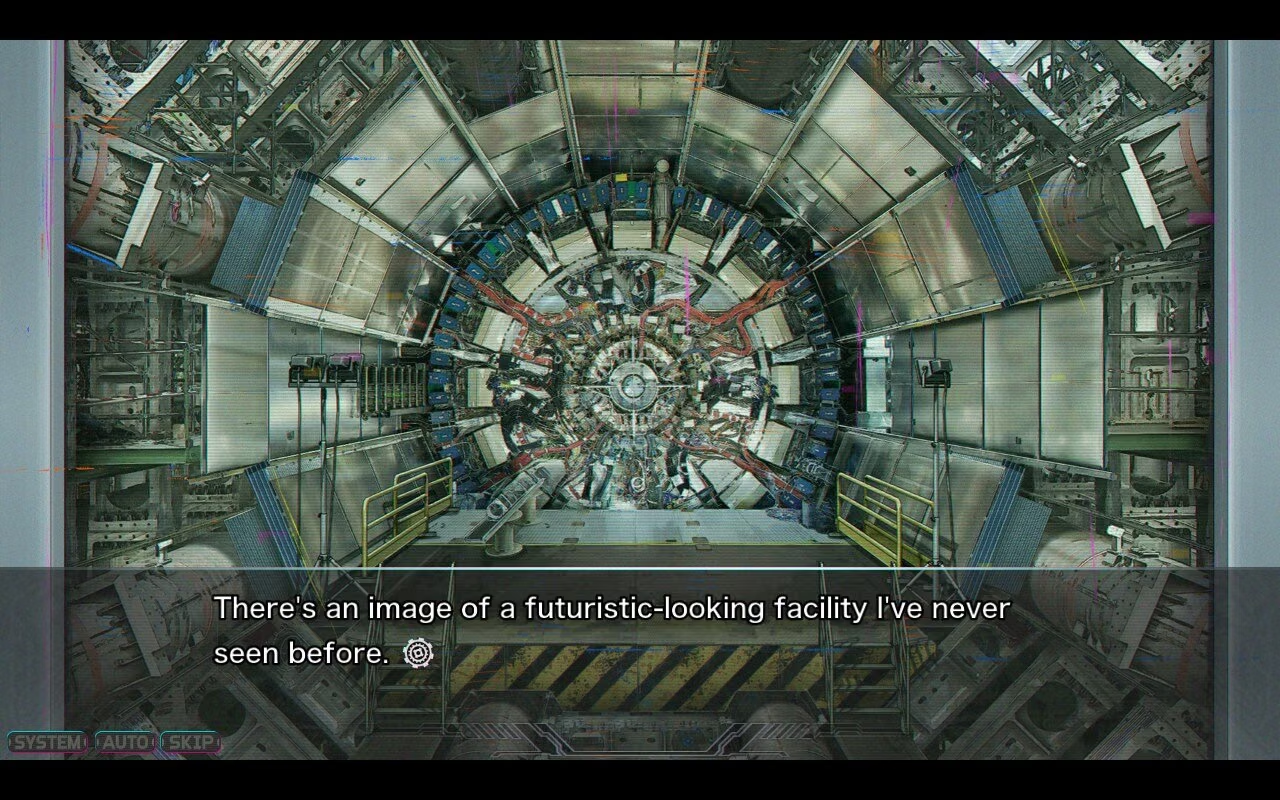
The game itself is pretty much identical in its storyline, as far as I could tell (apart from the extra world line they have apparently added). Steins;Gate remains an excellent game, probably a little too verbose for my taste (Paranormasight is perfect in that regard) but the story is gripping and entertaining at the same time. It hangs delicately between the ridiculous and the poignant, which is a very, very difficult balance to keep. Above all, the characters make or break the story, and in Steins;Gate you get a bunch of excellent and extremely entertaining characters that will live with you long after you finish the game.
If you are new to the series, this is an excellent starting point. Make sure you have ample free time ahead of you once you start! Avoid any spoiler. It won’t be even half as fun if you know where things are going. It goes right into our recommended games list, as long as you are not familiar with the original.
Resources
A few links that should be useful:
- Steam Page: STEINS;GATE RE:BOOT
- Official English site: https://steinsgate.jp/reboot/en-us/
Note: we have received a key from the publisher for this review. El. Psy. Kongroo.