
R-Type Dimensions III - Review on Linux and the Steam Deck
There are quite a few gems out there when it comes to classic shooters, and R-Type series is extremely popular if you had the chance to live in the 80s. R-Type was a go-to arcade side-scroller shoot’em up where you control a small spaceship, attacking waves of enemies called the Bydo, and at the end of each level you get to fight huge bosses before you can move to the next one. It had novel mechanics letting you have a shield (called the Force) move around independently from your ship (you can detach it anytime from your ship, but it will also make you vulnerable). This is not a bullet hell game (that came later with games in the 90s like DonPachi and DonDonPachi). Here, you have ample time to see bullets coming. Not saying it’s easy though, because a single bullet will kill you.
Numerous ports were made in 8 bit and 16 bits machines at the time, some better than the others. Today we are reviewing a modern take on a retro opus from the series, R-Type Dimensions III. The concept is dead simple: take R-Type III: The Third Lightning, the 1993 Super Famicom swan song of Irem’s legendary series, and rebuild it for modern hardware without touching the core design. The Bydo are back, the R-90 Ragnarok is in your hands, and you have six stages to go through a biomechanical nightmare.
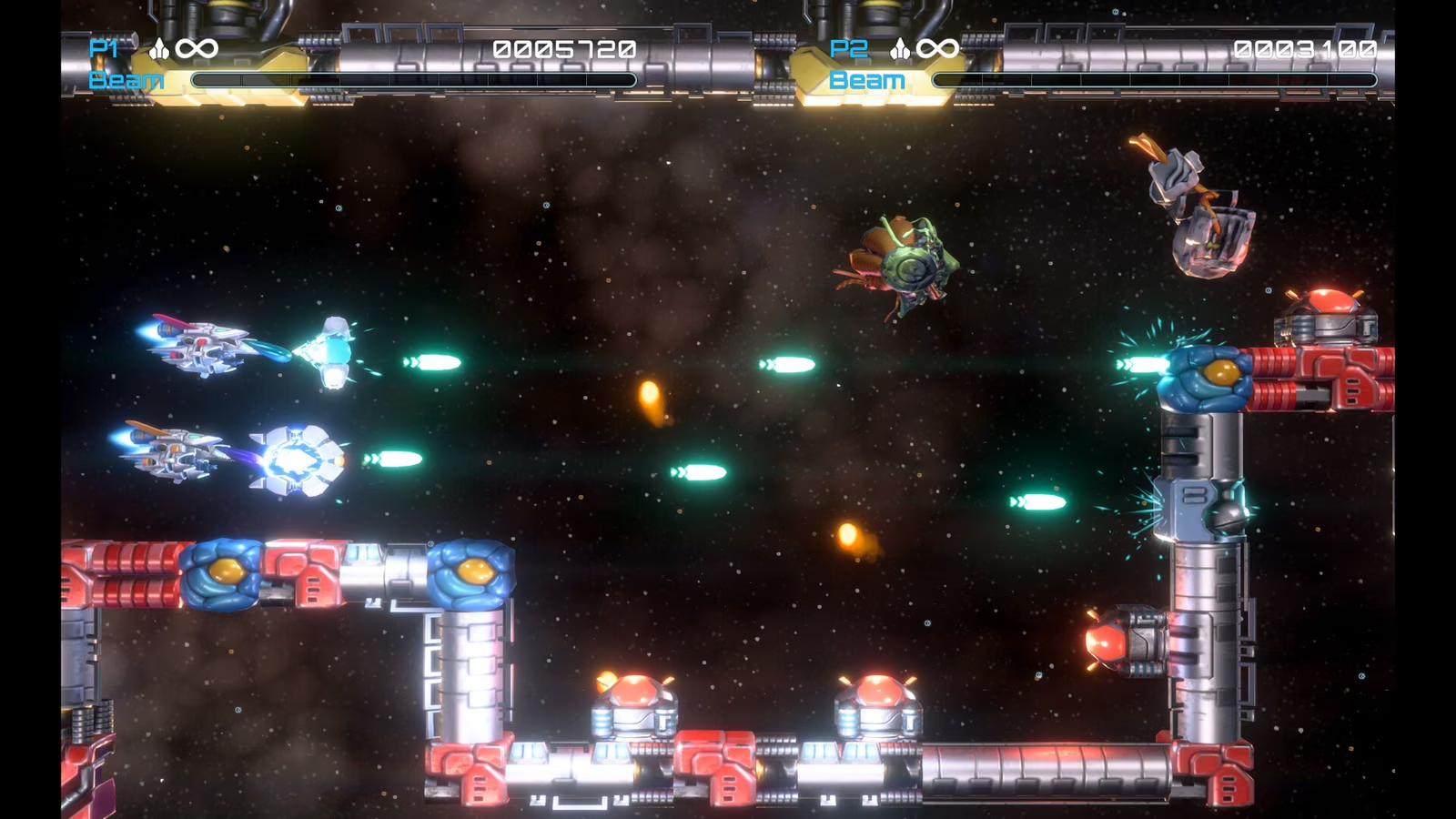
Still a challenge thirty years later.
Maybe more so, since most games have become easier on average.
Back to the Future
This is very much like an arcade cabinet with a graphics toggle. Every stage is built around the same brutal R-Type loop: forward fire, charge wave cannon, manage Force units, dodge patterns you can only learn by dying over and over again.
You find again here what you find more and more in retro remakes: a toggle between the Classic 2D, original game, and the full 3D assets - you can do that any time, just hitting a button. The switch is instant and it’s the whole selling point of the remake. In 2D mode you are looking at a faithful sprite recreation with reconstructed assets that aim for pixel-perfect placement. In 3D mode every enemy, boss and projectile has been rebuilt from the ground up in detailed polygonal models. The effect is great, still impressive every time you see it, and reminds me of what Wonderboy III did almost 10 years ago. You can see that demonstrated in a video I took as I was playing:
You start with five lives if you play Classic mode, infinite respawn if you pick Infinite Mode. To clear one stage you do not need perfect memorization on first try. The game gives you checkpoints, but they are placed exactly where Irem put them in 1993 and that means some sections punish you hard if you die just before the boss gate. Youngsters these days are not used to this kind of difficulty so this will push away a lot of casual gamers.
When you charge enough your wave cannon becomes Mega Wave Cannon, a massive screen-clearing blast with distinct damage levels while charging. It feels great when it lands and terrible when the hitbox is off. This was a problem at launch for the game: the hitboxes were not working as expected, which is understandably a very bad thing for a shoot’em up! This has been a huge source of complaints in the first reviews.
Progression
As you go deeper, you end up in bonus features like local co-op, a shop-like artbook DLC, remastered tracks and classic tracks packs. What kind of items? The options menu lets you toggle graphics, music and sound effects independently. You can play new 3D visuals with original SNES audio or vice versa. Not super necessary stuff, to be honest. Each run hardly lasts very long - most of the time you are done in between 5 and 15 minutes if you die a lot. Of course there is some luck involved with RNG enemy spawns in Infinite Mode, but making good choices is about increasing your odds. Nothing is even given: but you are in control of managing many things that can help you, such as which upgrades you pick, when to detach your plug-ins or not, and how much to boost your current ship before the next checkpoint. Ultimately your best bet is to invest in having quick fingers and memorizing a lot of patterns.
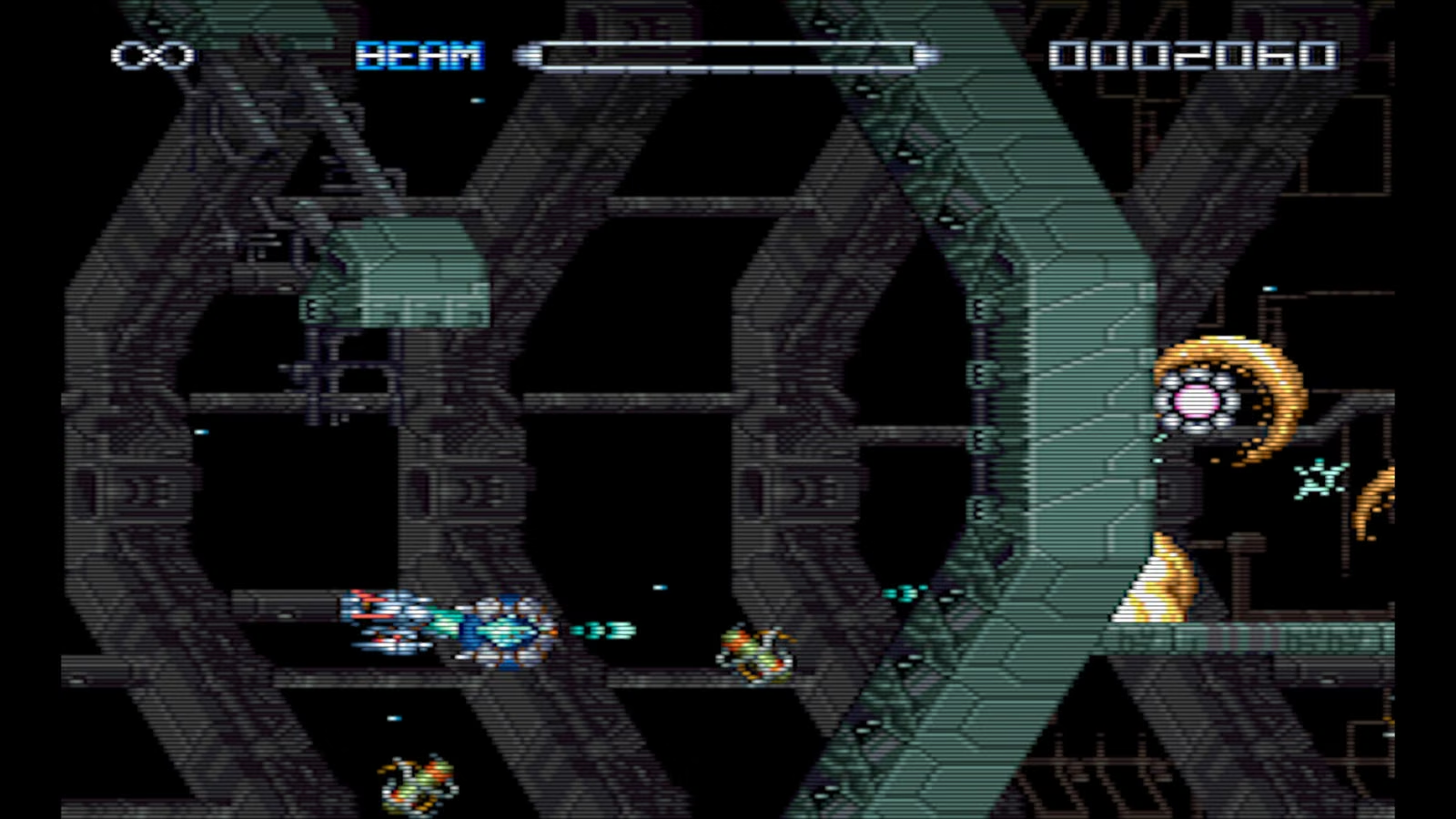
The real progression loop happened on the development side: ININ Games and KRITZELKRATZ 3000 have been patching the game since launch, in hypercare mode. Patch 1 fixed shoulder button mapping, Force disappearing on level transitions, Cyclone Force yellow laser bits shooting correctly, wave cannon piercing behavior and a lot of collision hitboxes. Patch 2 added invincibility on boss kills, reworked force docking to match the original, fixed Mode 7 pillar section in Stage 1 and improved BGM looping. All of this sounds probably mysterious but this highlights the avalanche of small or rather severe issues the game had at launch. It’s as if they completely skipped the QA stage and went to release the game in a very unpolished state. All of this explains why the game was completely torpedoed at launch and gets mixed reviews on Steam. To the credit of the developers, they have been very responsive and probably worked very hard after release to fix things ASAP. But a failed launch is a failed launch, and it’s very hard to turn it around.
Still, if you try the game now, well after launch, it’s not all bad.
Stylish but a little old
What makes the game stand out is the unique art style in 3D mode. No generic asset re-use here, a lot of hand-crafted polygonal models went into this remake. The backgrounds are detailed and the boss designs finally get the scale they deserve. Even the user interface is cute in a retro way, mixing style and functionality all at once. There are hidden secrets in many screens: try clicking on many things!
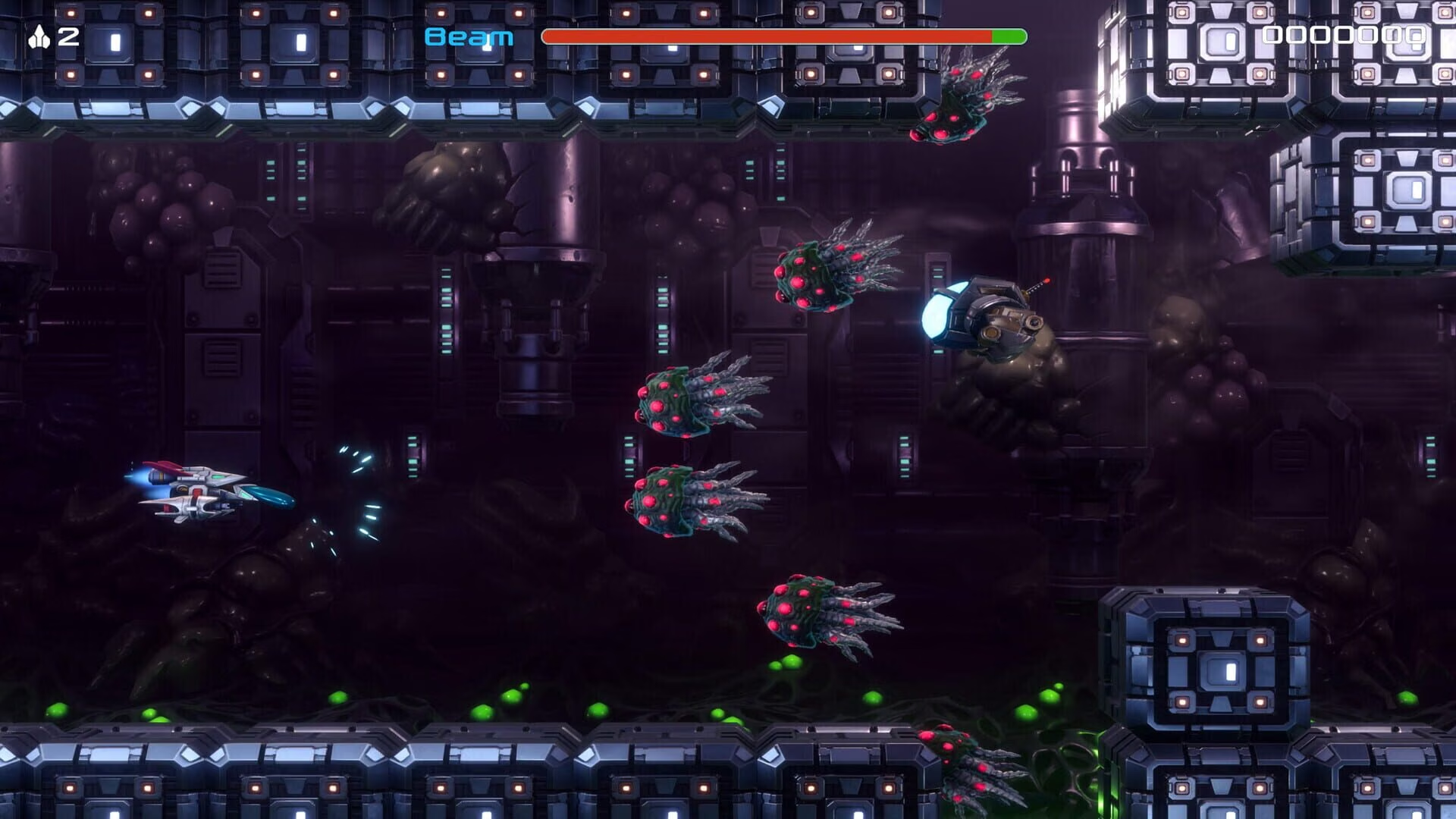
The music and sound effects are very good when they work. Sometimes mysterious, some other times epic and manages to match the action perfectly. The new rearranged soundtrack has real punch, though early builds had looping issues that have since been fixed. Since the remake respects the gameplay of the original to make it possible to switch between the two modes in real-time, this introduces some trade-offs. This means the game has to respect the original game, for better or worse, and that makes the movements of your ship a little stiff. If you were to make a modern shooter, there would be more inertia in the movements, for example, so this is as retro as it gets. It could have been a good idea to add a modern mode where the gameplay changes and prevents you from switching to the 2D retro version, to take distance from it.
Where More is Not Always Better
Presentation-wise, the game is very well done. But once you are playing it, in the new format, I find the screen very hard to read. There’s too many details on screen, that obscure what my brain can process, and I find myself switching to the retro, original 2D mode to play, and find myself dying a lot less. That’s saying something… By going with simpler graphics, you actually don’t get as much noise coming from the remaster, and you can much more easily perceive what is the background, what is the foreground, and what should be avoided to survive. So the remake completely throws off this delicate balance that is SO important in a shoot’em up.
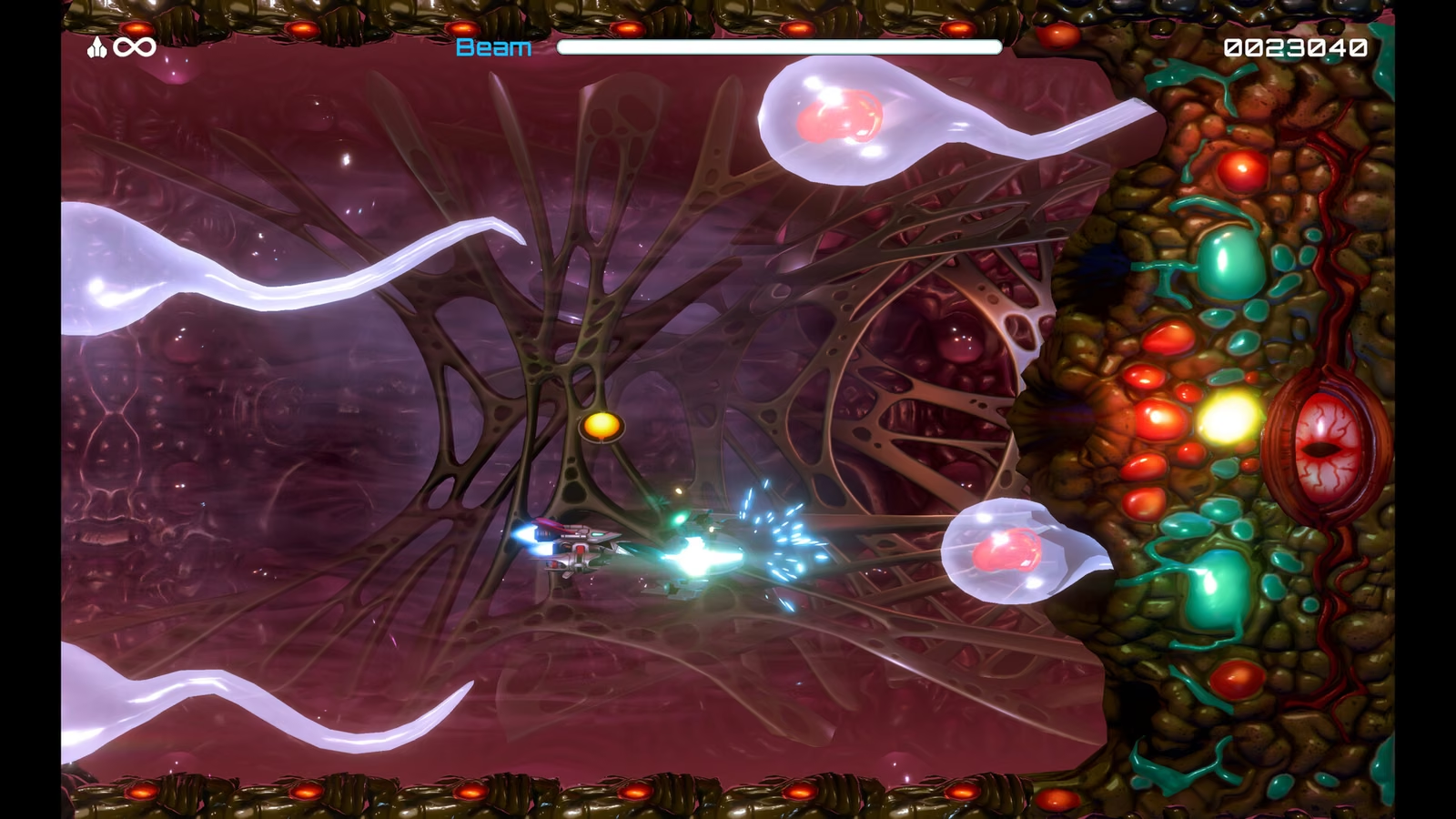
Honestly, I’m not sure you could make the old game better graphically without making it worse in another way. In other words, I am not convinced by the remake.
Working well on Linux and the Steam Deck
The game is Windows only on Steam at the moment, but it works fine on the Steam Deck with Proton. The text is usually readable and the performance is acceptable at 8W to 9W (the framerate becomes worse when there are too many enemies on screen, it could probably be optimized further). It’s rated as playable and I think it makes sense.
This makes me itch for a real, modern R-type game made for modern systems, rather than retro reboots. Not sure I would recommend it because of the fact that the new 3D mode makes it harder to play than it should be, but at least you also get access to the older game mode too. The game is not very long if you keep retrying (you will eventually beat every level if you try hard enough). You have checkpoints across each level but they are fairly sparse, so you will go through the same part over and over again, quite often. But bit by bit, you will advance, with infinite continues. So the replayability is fairly limited, unless you go for achievements and try to master the game to finish it with no continue.
It’s available on Steam now, and the pricing is completely off too. They are going for an AAA game price tag in Japan, while this is essentially an older game packaged in a modern shell, and certainly not a new game per se.
Here’s the indexed comparison for R-Type Dimensions III (US price set to 100) with current exchanges rates. Note that this is basically regional pricing at play, with the US paying less and the EU and Japan paying extra for the same game.
| Region | Local price | US$ equivalent* | Index (US = 100) |
|---|---|---|---|
| US | $34.99 USD | — | 100% |
| EU | €34.99 EUR | ≈ $39.89 | ~114% |
| JP | ¥5,940 JPY | ≈ $37.83 | ~108% |
This would have felt a lot more right at half of that, and even then you’d have to factor that fact that it’s far from perfect in its execution due to the poor QA at launch. My guess is that this will go into a repricing sometimes soon, or go often on sale to move some volume.
Note: we received a key from the publisher for this review.