
LTT Leaks Steam Frame's First Look Ahead of Schedule: Quick Summary
So there was an accidental leak of LTT’s first experience with the Steam Frame, apparently released at the wrong time (wink wink, we know what you guys did there). It was made private again soon after, but not fast enough to avoid copies from circulating. Well, good for everyone who wanted to know more what to expect without waiting further. Since we have had a quick look at this video, here’s what you should know (pending final confirmation of other reviewers, of course).

The biggest wow effect of the Steam Frame according to LTT seems to be the elimination of the cables: “my life just went wireless”. He makes that point over and over again in this video.
What’s in the box
So you get:
- Valve’s custom 6GHz wireless streaming dongle for dedicated low-latency PC VR streaming, with an option to use existing 6GHz Wi-Fi or a hybrid mode using both the dongle and home network.
- Type-C to Type-C charging cable
- Cleaning cloth
- Eye spacer / field-of-view reducer
- Power supply
- Ergonomic accessories kit.
The ergonomic kit adds an extra top strap for headset security and controller straps that give a Knuckles-like fit.
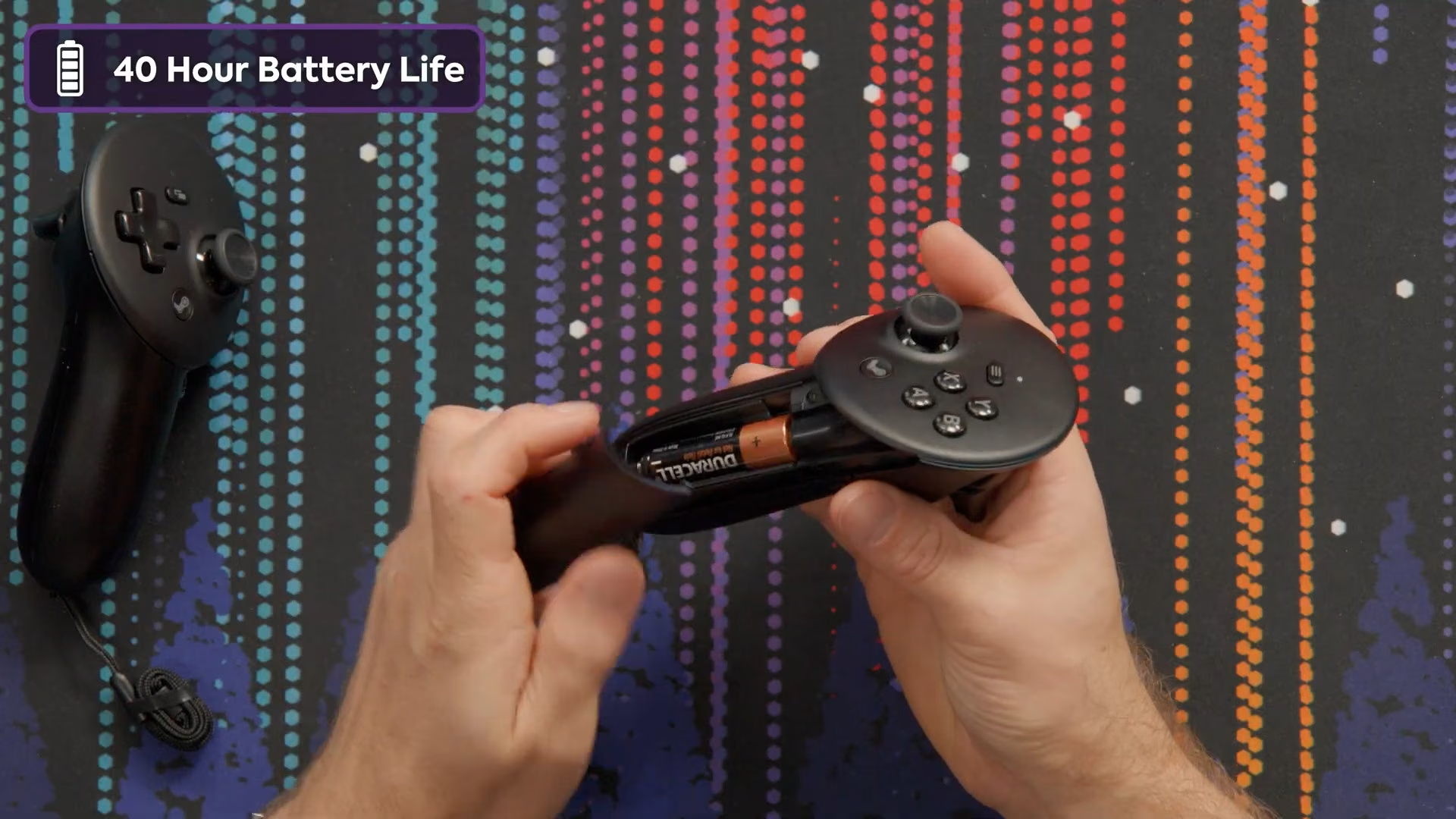
Controllers are notable for using a single AA battery per unit. Valve is quoted at around 40 hours per battery, with Linus preferring this approach over built-in rechargeables: “If you want instant access to it, you just throw a new battery in it.”
The final controller hardware is shown briefly. ABXY feel is described as “Not the most amazing I’ve ever felt, but not bad at all” which matters because the Frame is positioned as dual use for VR and 2D games.
Hardware as described
The compute module is identified as the Snapdragon 8 Gen3, 4nm, equipped with Wi-Fi 7 2x2, 16GB LPDDR5X, Bluetooth 5.4, with onboard storage from 256GB up to 1TB and microSD expansion located in the face gasket. An expansion port for future accessories is also mentioned at the bottom of the unit.
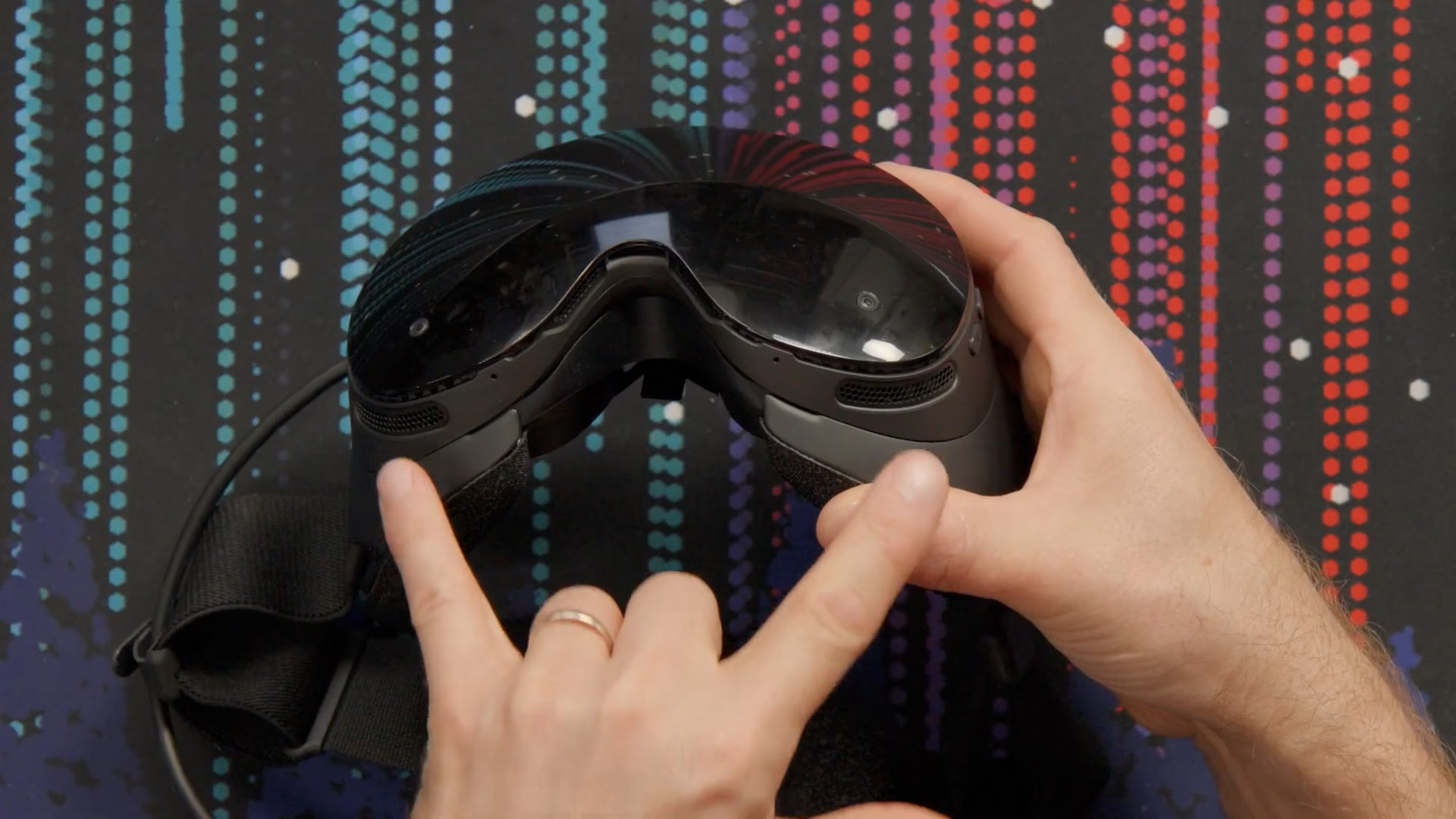
Here’s what you get in terms of optics and ergonomics:
- IPD adjustment with an IPD lock praised as a fix for what loose on the Valve Index.
- Eye tracking present, plus a proximity sensor. Foveated streaming uses eye-tracking to stream high quality where the user looks and lower quality elsewhere. Linus claims it is imperceptible even when turning gaze on/off manually.
- Pass-through cameras are monochrome only, fine for orientation but not intended for real-world interaction.
- Built-in cooling runs along the bottom. Mics are Valve’s own implementation, claimed similar to the Valve’s Index quality.
- Dual speakers on the side side, designed to cancel each other’s vibrations.
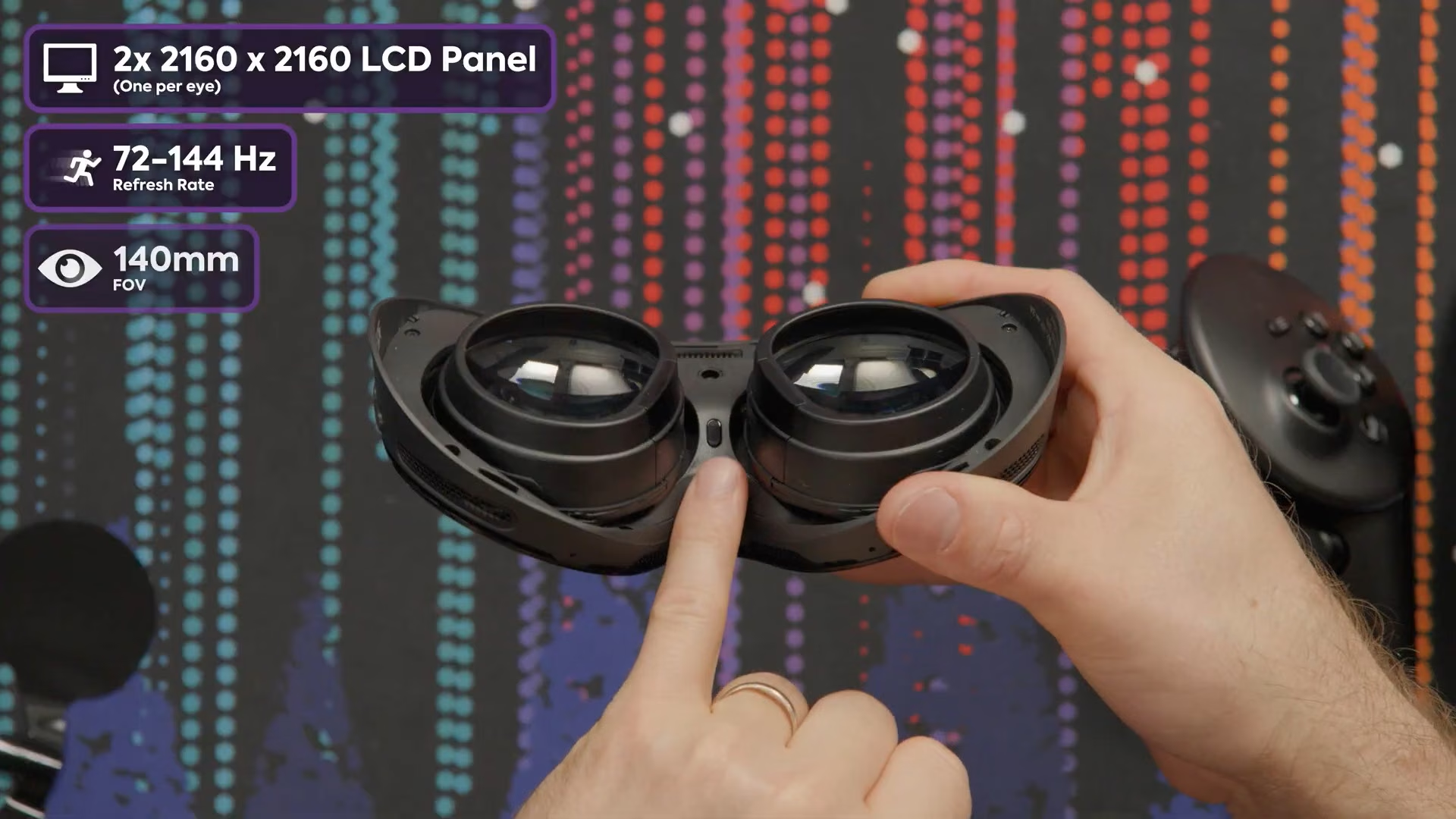
Screen specs:
- 2160 x 2160 per eye LCD panel
- Refresh range 72Hz to 144Hz, same numbers as Index.
There are apparently some orange/blue fringing on motion, worse at the optics’ edge but not a deal breaker.
The battery is in the rear for counterbalance. Twisting the head reveals that weight, though what sits on the face feels similar to Valve’s Index. the area around the nose is hard with the standard gasket. A small nose adapter from the ergonomic kit improves the ergonomics but introduces some light leakage. You can’t have the best of both worlds.
Modes of operation
LTT talked about three different use cases:
- PC VR wireless streaming. Foveated streaming over the 6GHz dongle or Wi-Fi. The video tests Half-Life: Alyx across different rooms, including distances beyond typical tether length, with no reported drop in quality or noticeable latency compared to a wired setup at home.
- Standalone ARM gaming. An onboard ARM computer runs SteamOS, just like on the Steam Deck. In addition to Proton for Windows games on Linux, the device allegedly uses FEX to run regular x86 games on ARM hardware, as expected.
- 2D / media giant screen. Both PC-connected and standalone use cases can project a large virtual screen for traditional gaming or movies.
The software quality is described as early. The Wi-Fi setup shows slow update downloads, one reboot displays a terminal-style “system will reboot now” message characteristic of Linux updates, and streaming from the Steam Machine is noted as not yet supported. Windows PC streaming is the current path only. If this is true, this is a massive slap in the face for Steam Machine buyers who were told that it would pair perfectly with the Steam Frame.
Impressions
Beyond the hardware and software, this is what LTT notes in terms of experience:
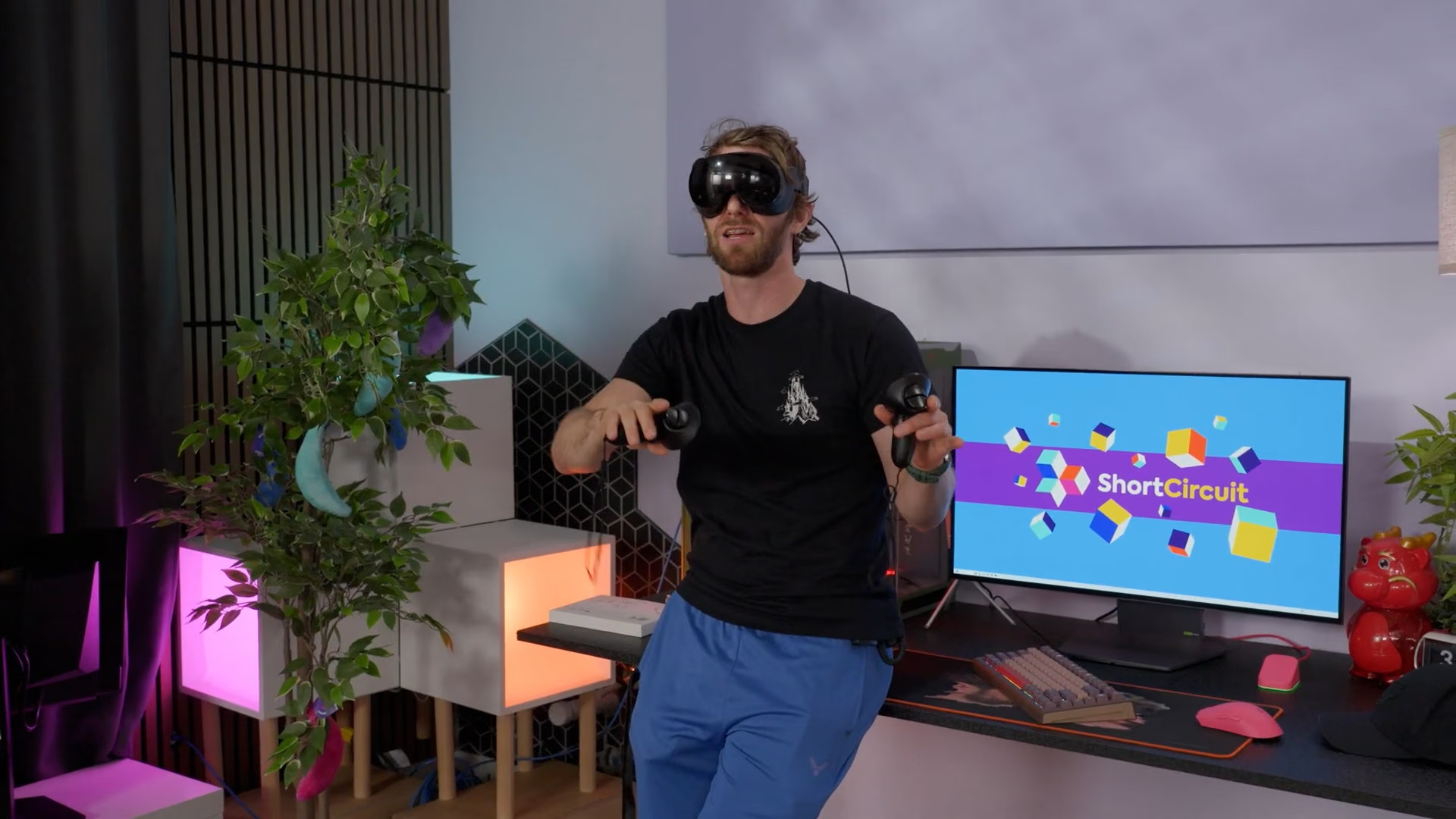
- Wireless freedom is the biggest game changer. The best technology is the one that “quietly works in the background without trying to make you impressed by it.”
- Comfort is workable but imperfect, with fit depending on nose size and preference for spacers. Prescription lenses are planned but not ready at launch.
- Controllers and AA power are good choices.
- 2D game hinges on the thumbstick feel which is deemed acceptable rather than great.
- Audio feels surprisingly near-ear despite not being that close from the ear itself.
- Pass-through quality is sufficient to avoid bumping into things, but not good enough for mixed reality use or AR.
As an early hands-on, it reads as cautiously optimistic about Valve’s direction toward wireless VR while acknowledging the usual first-unit caveats: early OS build, limited accessory testing, and no long-term reliability data.
We will probably learn a lot more from other reviewers in the course of September 2026. Hopefully with more info on price and availability.