
Iron Nest: Review on Linux and Steam Deck
In Iron Nest, you have a job: you are in charge of a huge mobile cannon, and you have to precisely shoot enemies of the state on demand. Everything is in first person mode. You live inside the Iron Nest cannon, you even have a cat, and some music (vinyl) and a coffee machine to keep you entertained between the different missions. Because of the sheer power of your machine, your ability to destroy enemies from a far way distance is proving to be a decisive factor in the battles to come. Battles, you said? Don’t worry, you won’t see them. You are in a comfortable position, away from the danger. Like someone else said in a popular TV Show, YOU are the danger.
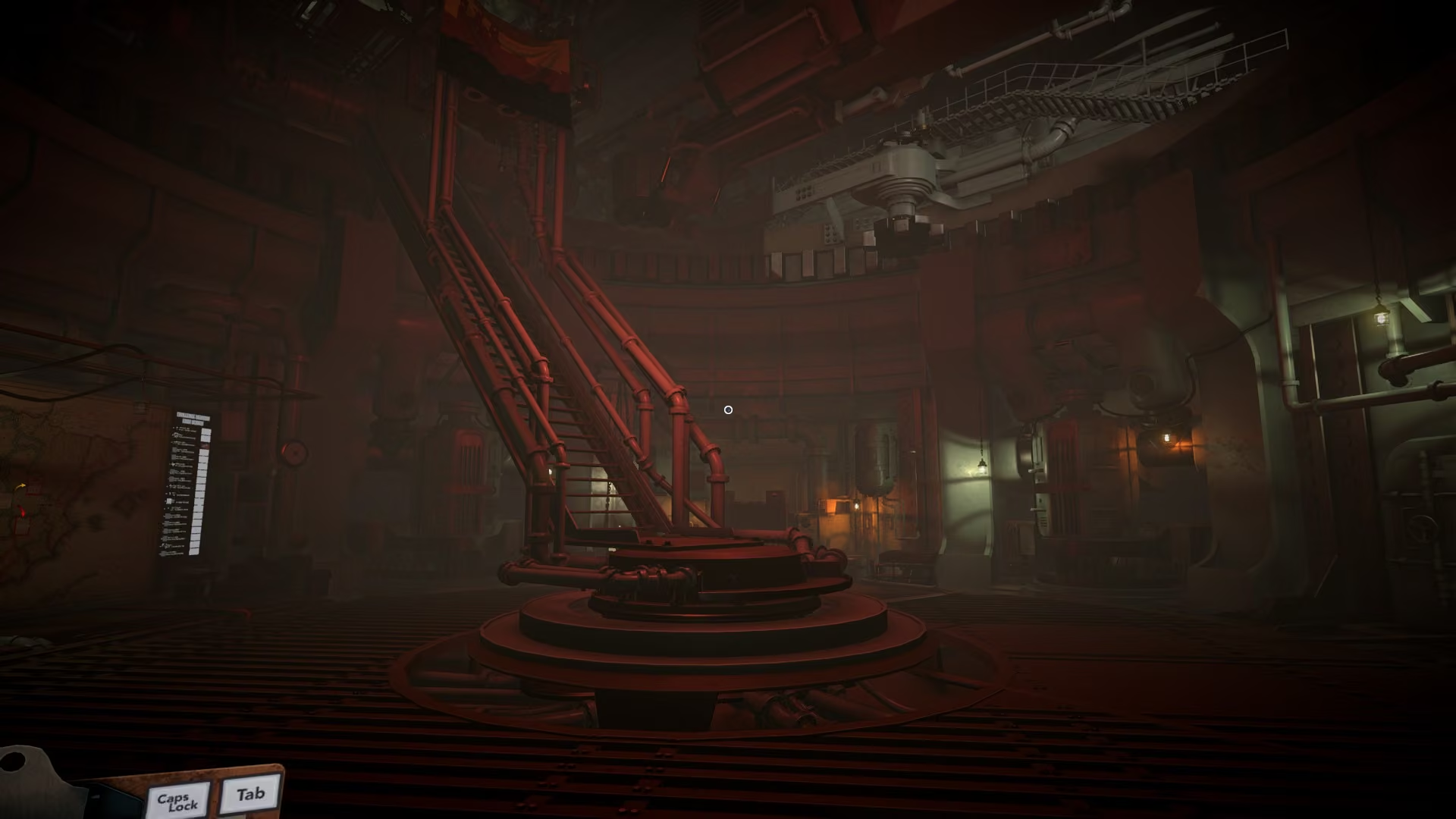
The war takes place in alternate-history Spain in the late 1920s, with Dieselpunk elements, as you can guess from the design of the Iron Nest.
Very Powerful
The Iron Nest is equipped with two huge cannons that you can fire at once or separately. Since you are the lone operator you have to take care of the whole process. It’s like a checklist:
- look at your mission objectives
- learn about the Iron Nest coordinates
- learn about the position of your expected targets: The headquarters send you a list of objectives, usually related to targets to find and destroy. Since such targets come from reconnaissance sightings, they are sometimes inaccurate, but this is what you are working with.
- spend some time on the map to reflect your actual position and the one of your expected targets. It’s like a board game. You can move some little pieces mark your own position and the one of your enemies, onto a fairly granular grid.
- draw lines on the map to help you calculate the distance between the Iron Nest and your target, as well as the expected angular orientation
- choose what kind of ammunition is necessary
- based on the type of ammunition and the expected distance, use a machine to compute the number of explosive charges needed, and the shooting angle required
- Load the projectile.
- Load the explosive charges at the back of the projectile, respecting the number given by the machine earlier.
- Push both of them in place inside the cannon
- Move to another post where you can set with precision the angle of the cannon
- Move to another post where you can set the orientation of the cannon, based on the number you got from the map earlier
- move to the firing post, and do a last check to make sure everything is in order.
- Lock the cannon
- Pull the lever to fire!
Once your projectile is in the air, you can go to check the map where you can see the simulated trajectory based on your set parameters. Once the projectile hits the ground, you get a ground photo (from a plane) on what it looks like afterwards. You can then see and confirm if the targets you were trying to aim were hit or not.
As you can see there are quite a few steps. In the beginning you may feel a little lost as the tutorial is kind of barebones (just follow the pictures) but it all makes sense and at the very beginning most of the complexity is removed to help you focus on the least amount of things.
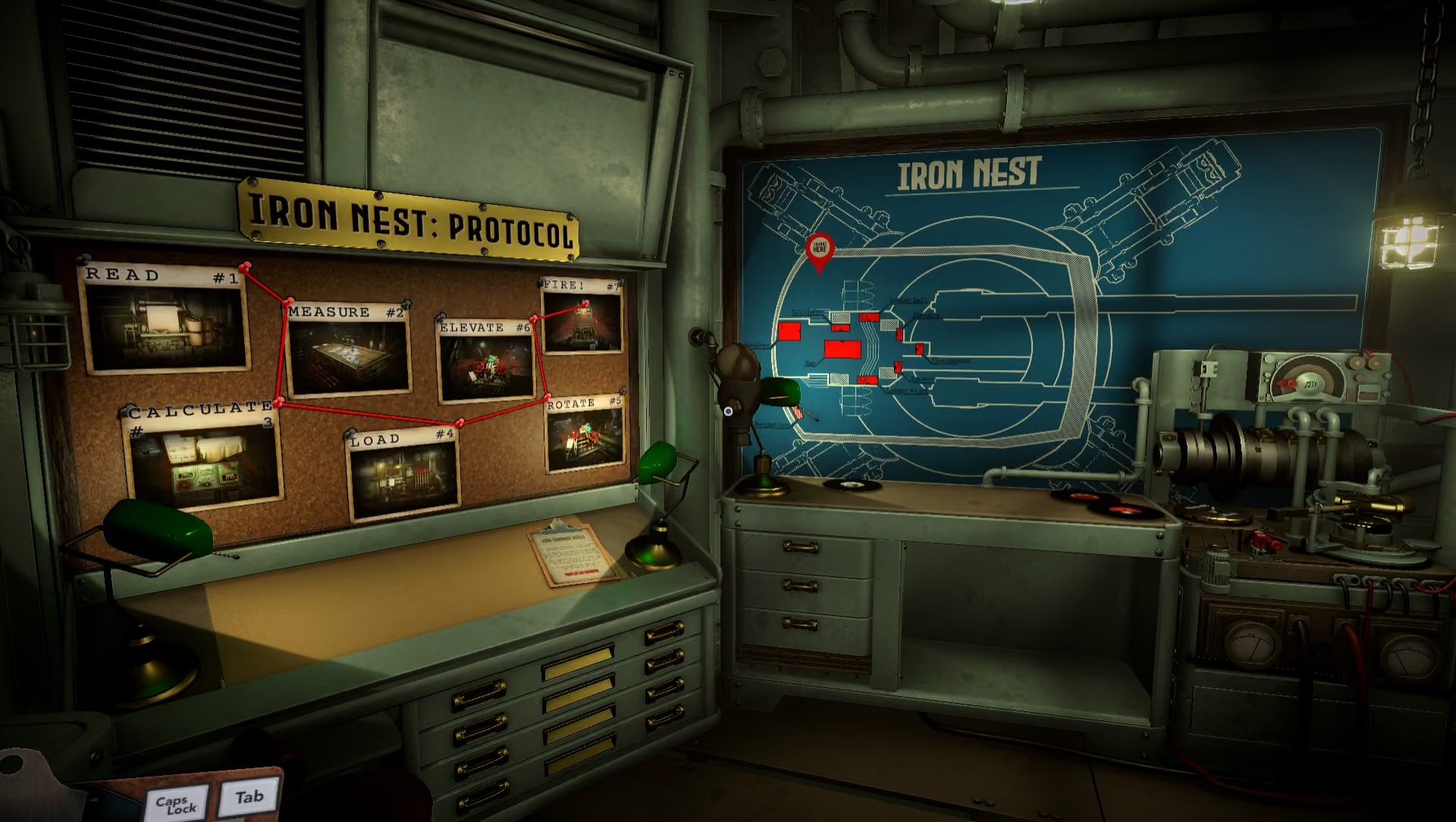
Still, this is really a multi step process that requires your full concentration. This is not a cozy game where you can listen to 3 podcasts while watching some youtube video on top at the same time. Make a small mistake means not hitting the target and having to redo the whole thing again.
More stuff to do
As you progress along, the missions give you more variety, with different types of ammunition that require different settings, a new budget that forces you to think on how to save on projectiles as much as possible, while you get rewarded with more credits every time you hit one or several targets. Reconnaissance is also an option, as you can spend some of your credits to launch a plane to give you an actual photo of one of the squares on the big map. Very useful when the scouts are not super precise. But it costs important credits so you have to use them sparingly.
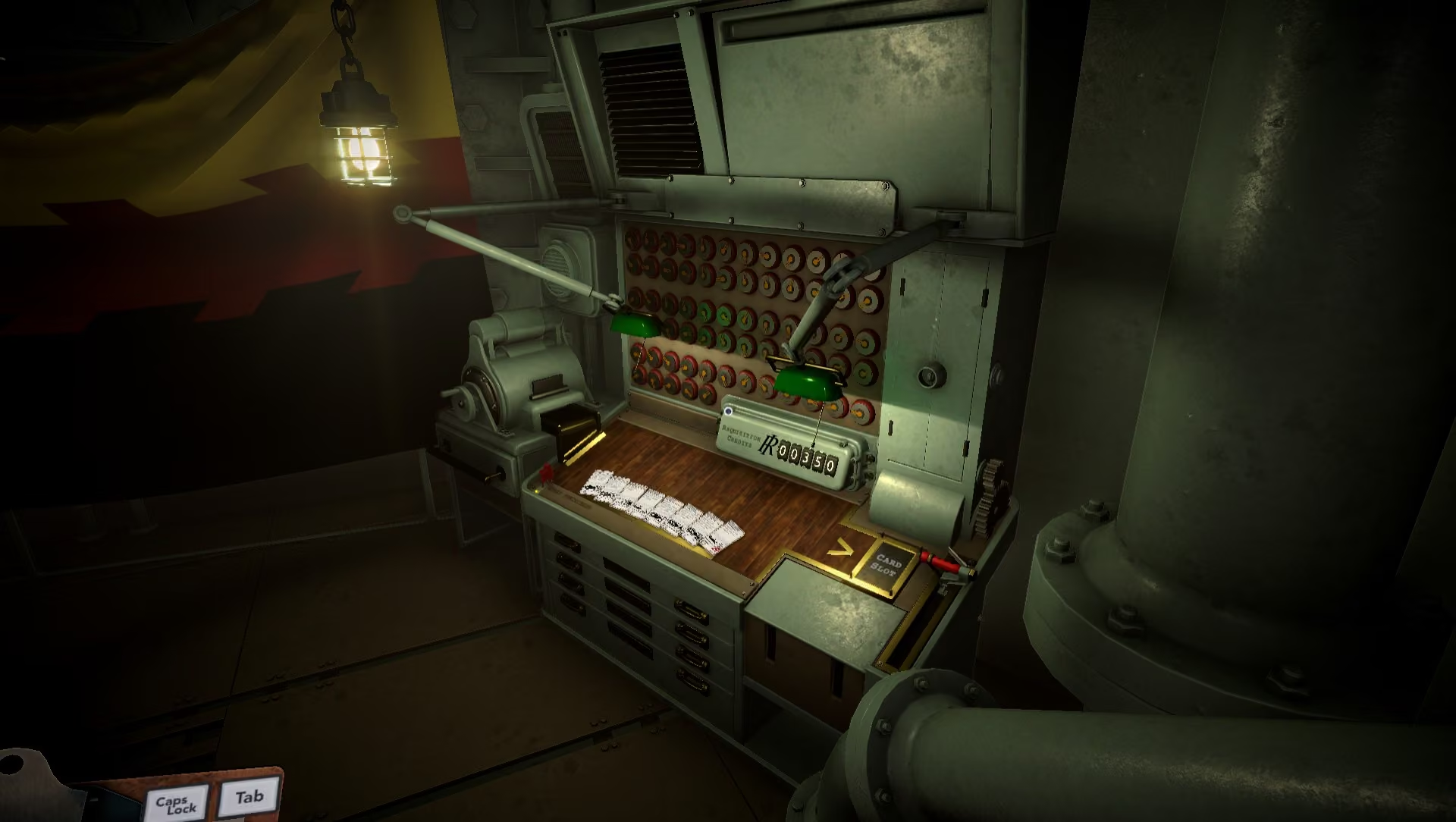
There are more challenges on the way, with timers. Some missions force you to hit your targets at a precise time which is very challenging since they are moving, and there is certainly some latency between the time you can shoot and the time it takes to hit them! And that’s without talking about your own induced latency, to be able to rush and prepare everything exactly on time! It can be kind of stressful but this comes with more experience to keep stretching you to do things faster, and to plan well and do things in parallel instead of one after the other.
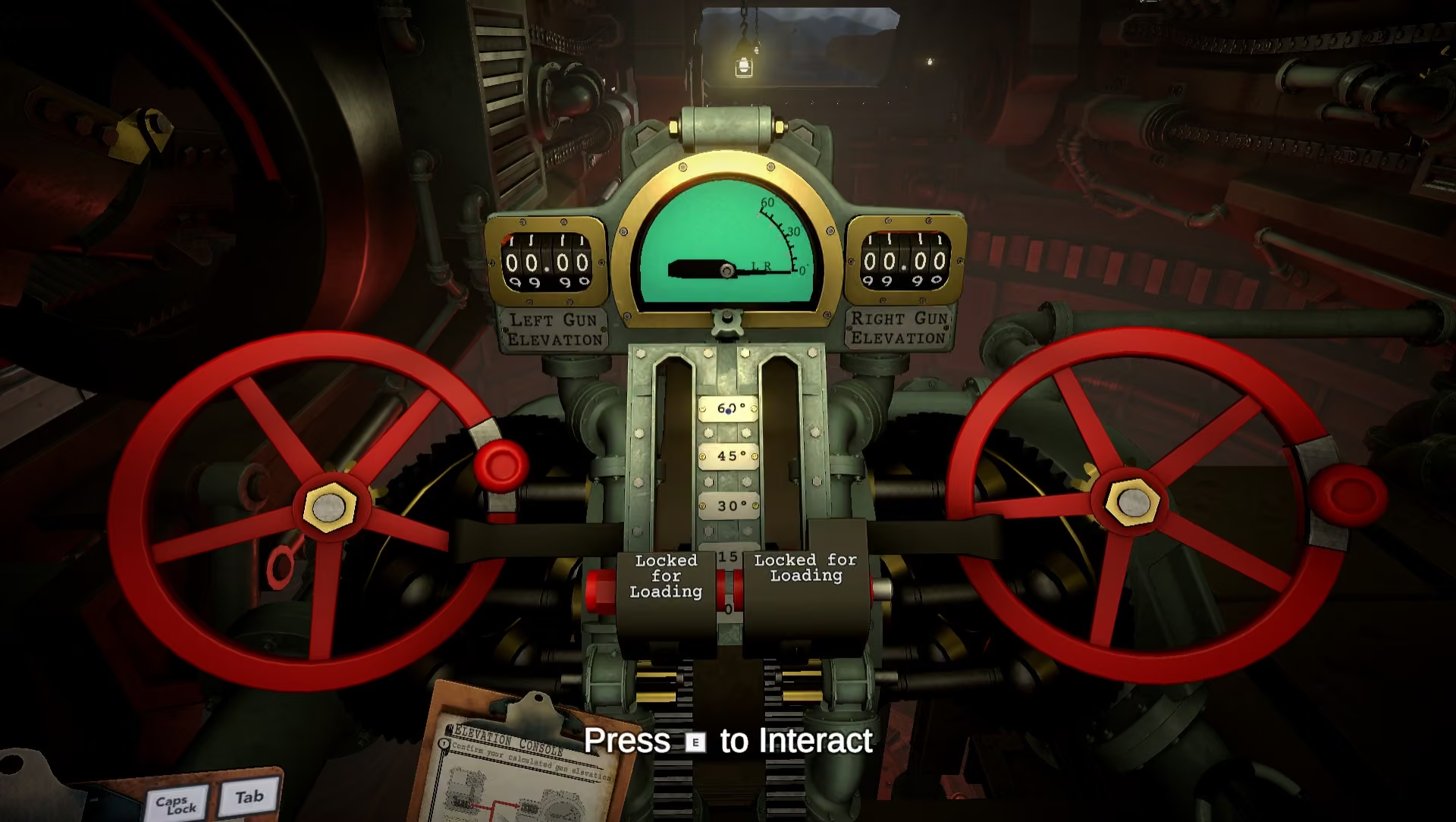
For example, setting the vertical angle of your cannon takes easily 30 seconds because it moves slowly. Instead of waiting for it to finish, you can run to the other post to start setting the laterial orientation (another angle) at the same time.
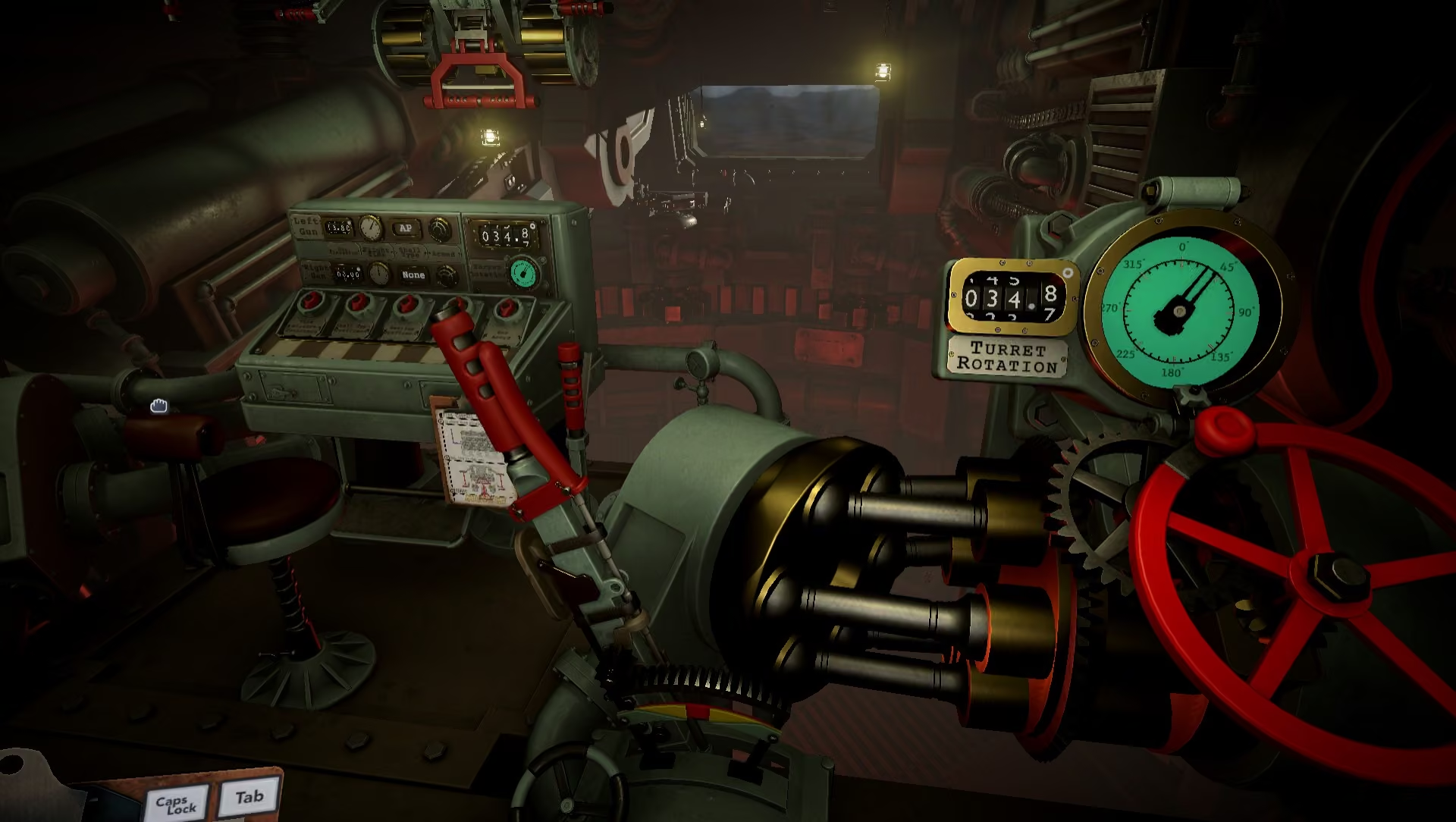
It can shave some good 30 seconds while doing it in parallel instead of one after the other.
Hitting back
There’s one mission that you get to pretty quickly which is really fun and cool. It tells you that there are three other artillery pieces in several spots across the map, which are currently inactive, but will pick up your position very quickly once you start firing your first shot. If you just shoot them one by one, you will die as they start hitting you hard not long after your first projectile hits. The whole point is to make a very effective sequence where you load two projectiles at the same time, one in each of your cannon, compute all required information for all 3 targets in advance, and choose 2 targets out of 3 that are fairly close to each others in terms of parameters. Once you do that, you can basically kill the first 2 targets in a very short time, and then rush to reload once more, and change the settings for the 3rd target (that you already computed, not to waste time). If all goes well, while you will start to feel the heat, you will have just enough time to get rid of the third target before being destroyed. Phew!
Making you work
I guess the best way I can describe Iron Nest is that it kind of feels like work. Of course, it’s war, but ultimately it’s a job, that requires perfect execution and attention to details. And since there are some elements of uncertainty, some changes all the time in the conditions, you need to use your heart to make do with the new events, and what you have at hand. It’s not fun in the same way most other games are, it’s rather delayed gratification.
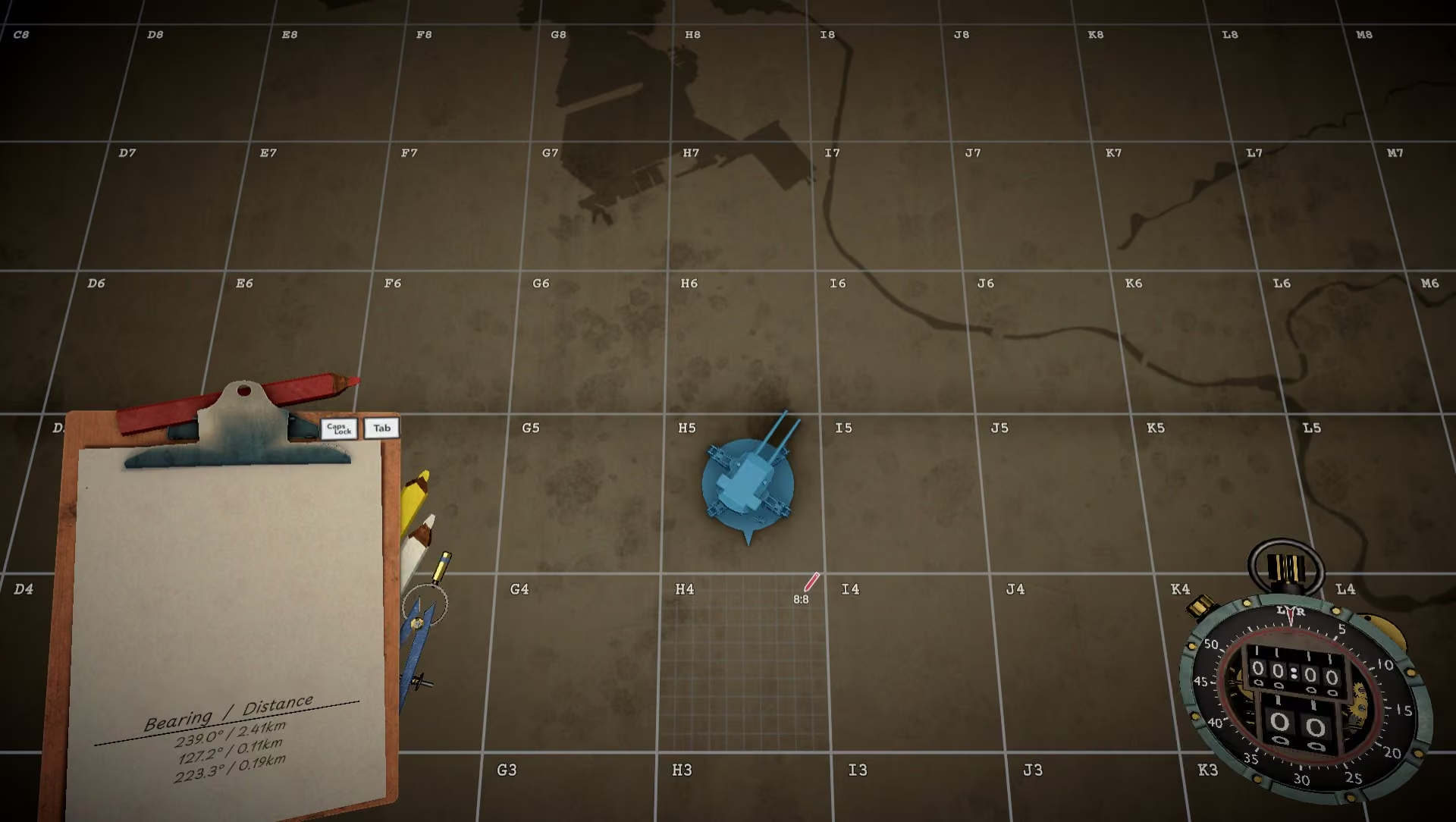
The minutia of getting every little detail right, doing it as fast as possible, is just a long process that will ultimately lead to a great reward once you beat a mission. I won’t lie, it’s certainly not for everyone. I talked to a few people about Iron Nest who told me they hated the game, because it was too tedious and/or complex. I can definitely understand that. On the other hand, I have a more competitive mindset, and I like the idea of mastering something difficult, so this is right down my alley - it pushes the right buttons. But I know that I won’t be playing this to relax after a long, tiring day. This is a game that requires energy and focus. You won’t be unwinding here.
Steam Deck: Workable?
It’s OK on the Steam Deck. I did a couple of missions on it. It’s workable, but definitely not the best format to play the game. With a mouse and a large screen you will likely be faster and have an edge for the time-based objectives. It’s verified on the Steam Deck and while I think it’s playable, there are a few things that are compromises: the size of the test is a little small for the Deck, and the controls, while adequate, play against you on a mobile device. So this is a fair warning for Deck owners who consider this game. You will have no problem finishing the first few levels, the later ones will be more challenging on the go.
A simulation?
Some people may approach this game like it’s some kind of simulator. It is not. Usually simulators are there to make you experience something that actually exists. Here, everything is fiction. I’m pretty sure the actual artillery work is way more complicated than that (with adjustments for wind, air pressure, humidity, and more fun things that happen in reality). So this sits somewhere between something that is realistic and something that’s somewhat believable. It strikes a good balance. A real artillery simulator would require a 500 pages manual at least and dozens of hours of trainings before making your first shot. Here, while the process seems complex, it’s still simplified enough to be called a game, and to be approachable by virtually everyone.
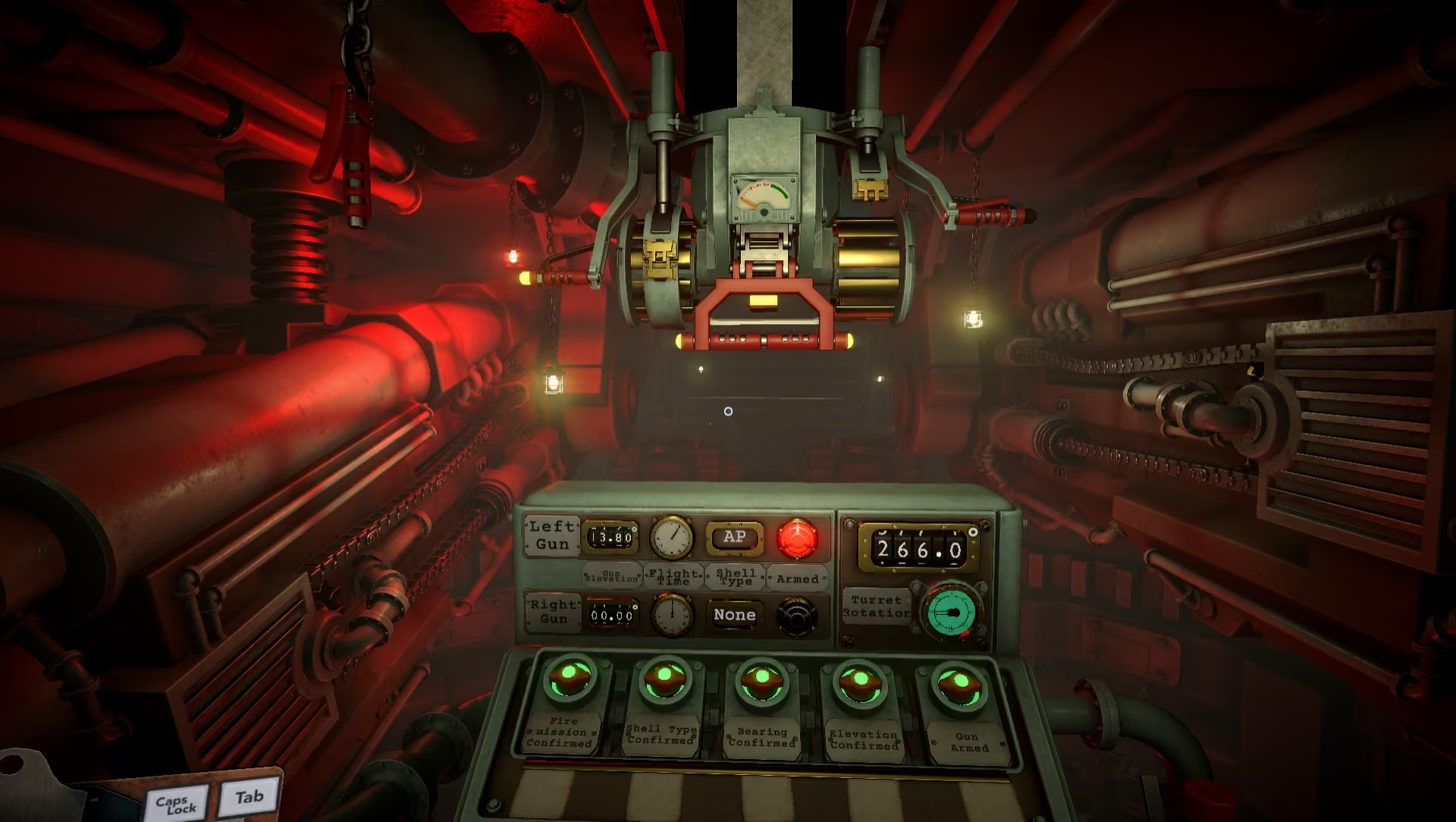
I didn’t mention much about it, but after every mission you get the first page of a newspaper talking about the war and other local events. You will often see some article mentioning the impact of your work, and this is where the game crosses path with Papers please: beyond the meticulous work and process, what you do has an impact on the war and its outcome, and some of the choices you make, will lead to different endings. And this is entirely based on your own moral choices: whether to follow orders or make mistakes on purpose. In that side of things the game is not as strong as its inspiration: it was clearly bolted on the big firing machine mechanics, rather than designed around it. But it’s a nice addition to give some context to what is happening and to explain why you are doing what you are doing.
Overall, great game, a good surprise for 2026, and as I said, not for everyone, despite what the Overwhelmingly positive rating on Steam may suggest. The game is available on Steam at a very fair price (absolutely no complaints here), and it gets a lot of updates still after its release last August, which is a very good sign.
Of course, it goes right into our list of recommended games.
Note: we have received a key from the publisher to review the game.