
Gambonanza: Review
There are quite a few games inspired by Chess on Steam these days, most of them trying to turn the traditional 64 square games into something a bit more fun and approachable by adding timers or power-ups, and shit like that. I was caught off guard since I am a regular chess player and I was intrigued by Gambonanza, that takes the familiar chess pieces and their moves and put them in a totally different context with different victory conditions. In each level, you have to capture every single piece on increasingly chaotic boards while managing your boosts, bonuses and pieces that you collect in your reserve.
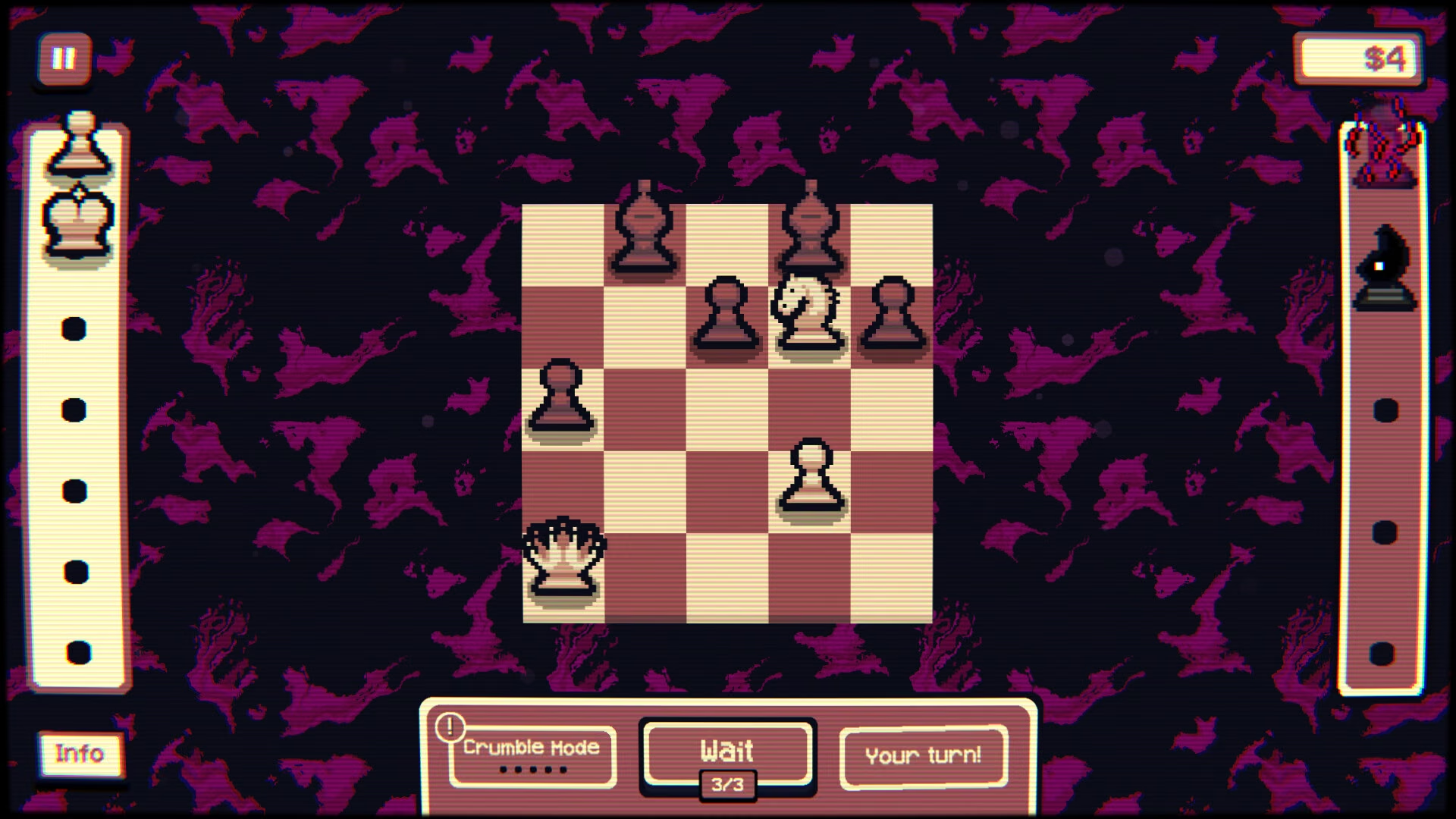
The concept is simple: you’re playing chess, but the board starts tiny (roughly 4×6 tiles), pieces can literally fall off the edges if left unmoved too long (some tiles disappear after a while!), and victory means eliminating every enemy unit rather than checkmating a king.
The Setting
Each run consists of five matches followed by a boss fight. Defeating bosses expands the board size for subsequent rounds. Think of it as climbing ladders in difficulty while simultaneously giving yourself more room to maneuver (and more room to lose pieces). It makes it very easy to get started and to get familiar with the rules, with the drawback that the first part of the run can get really tedious when you are familiar with better challenges.
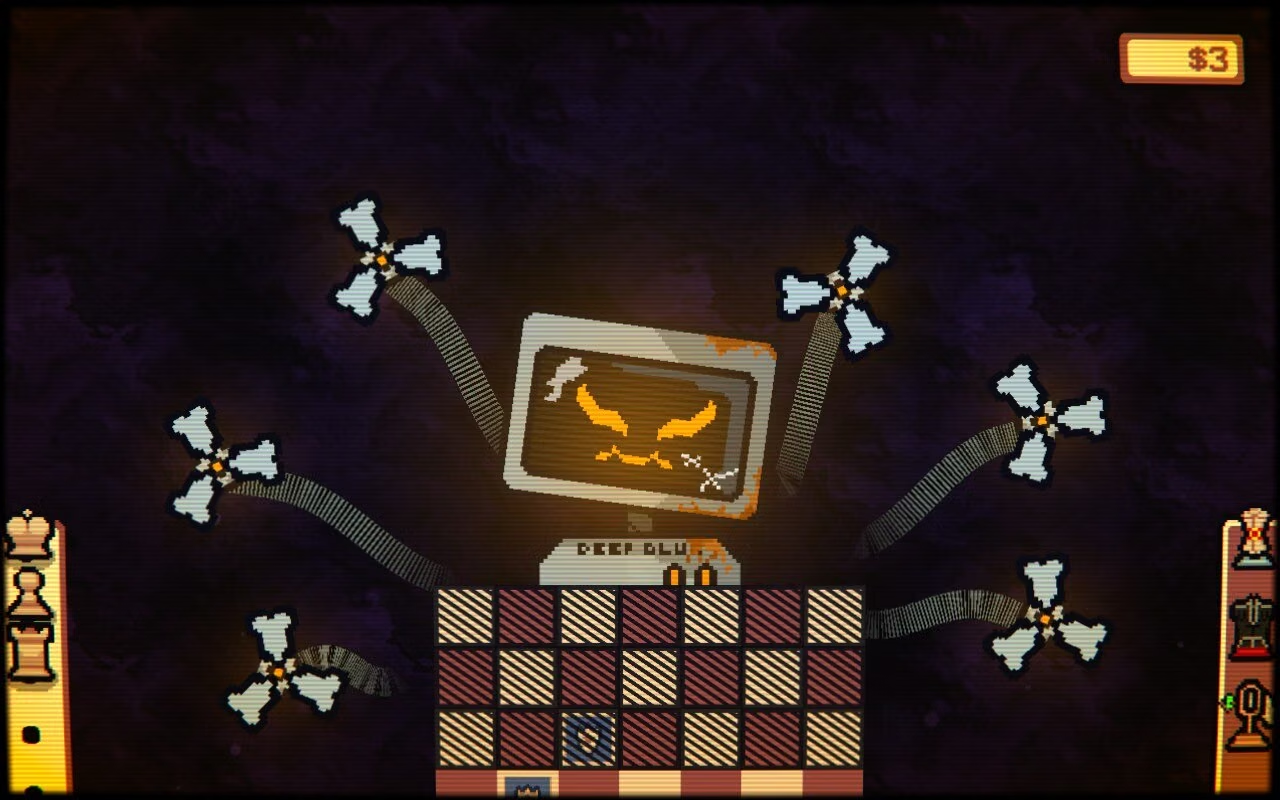
The game makes you play with two types of attributes: the move economy and piece preservation. You need to keep most of your pieces moving as they would eventually fall off after a while. Once you lose a piece, it’s gone and you can’t count on it for the next match. This makes it critical to avoid stupid mistakes as going too low in the number of pieces left is a sure way to lose. Note that you don’t choose which pieces you get, this is something you get through a gatcha part after each victorious match. The gatcha part requires spending coins, so getting money, and a lot of it, will help you push forward. To increase your chances you can count on your Gambits as modifiers.

Speaking of which: Gambits are the game’s equivalent to Balatro’s Jokers. There are over 150 of them, modifying piece behavior, board state, income generation, and conditional triggers (“when a bishop captures, …” “on your third move, …” etc.). You can hold up to five active Gambits at once, purchased between matches using your hard-earned money by clearing levels and interest earned on hoarded funds.
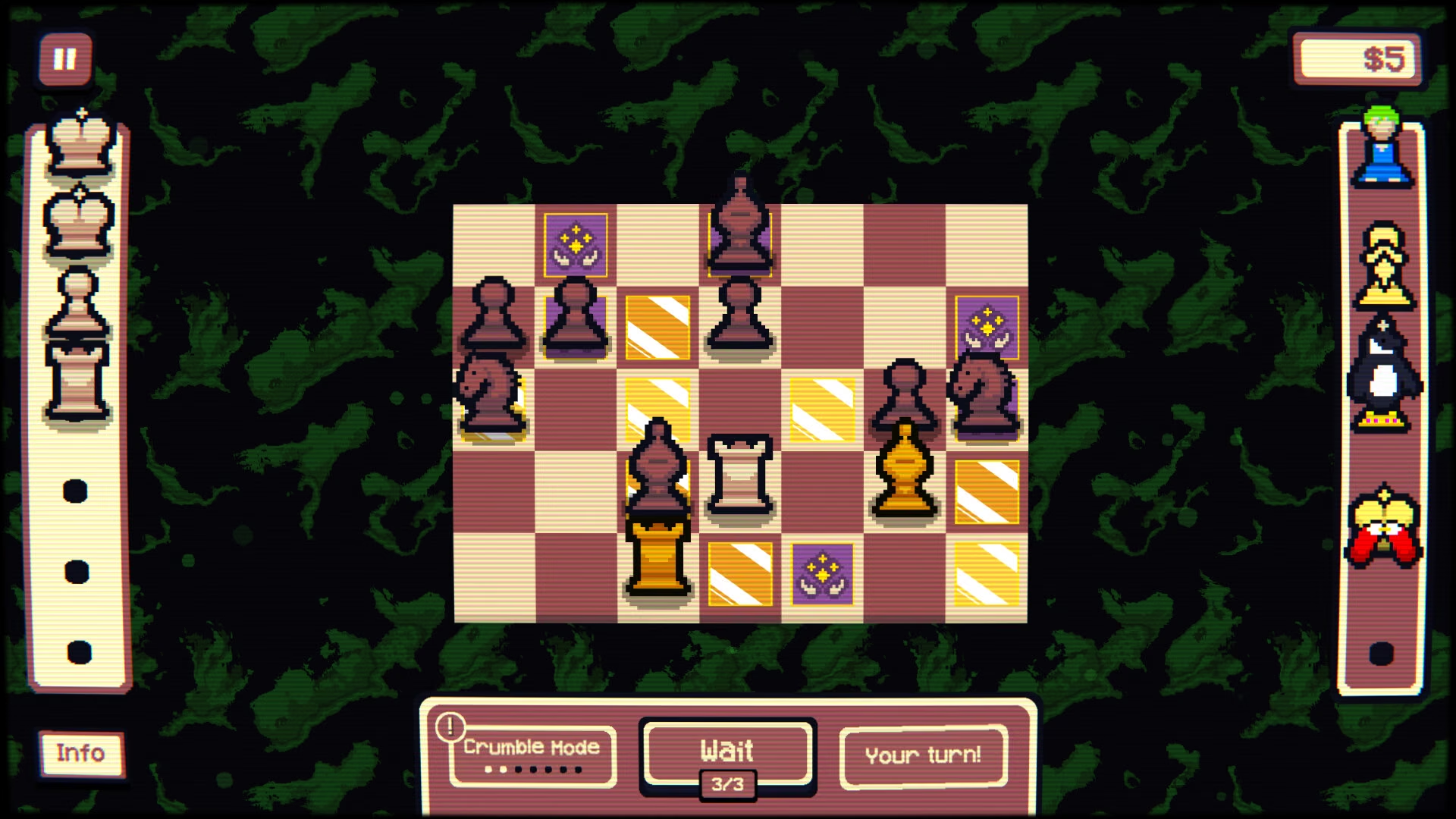
The gambits are somewhat frustrating. Unlike Balatro’s Joker system, which offers modification tiers (foil, holographic, negative variants), Gambonanza presents each Gambit as a single static effect with no way to reroll or upgrade them post-purchase. With 150 of them out there, but only room for five slots, roughly half of what you acquire will feel borderline useless depending on your current piece composition and the layout of the board. It’s the perfect example of RNG turned bad. The randomness will bypass whatever skill you are trying to build game after game.
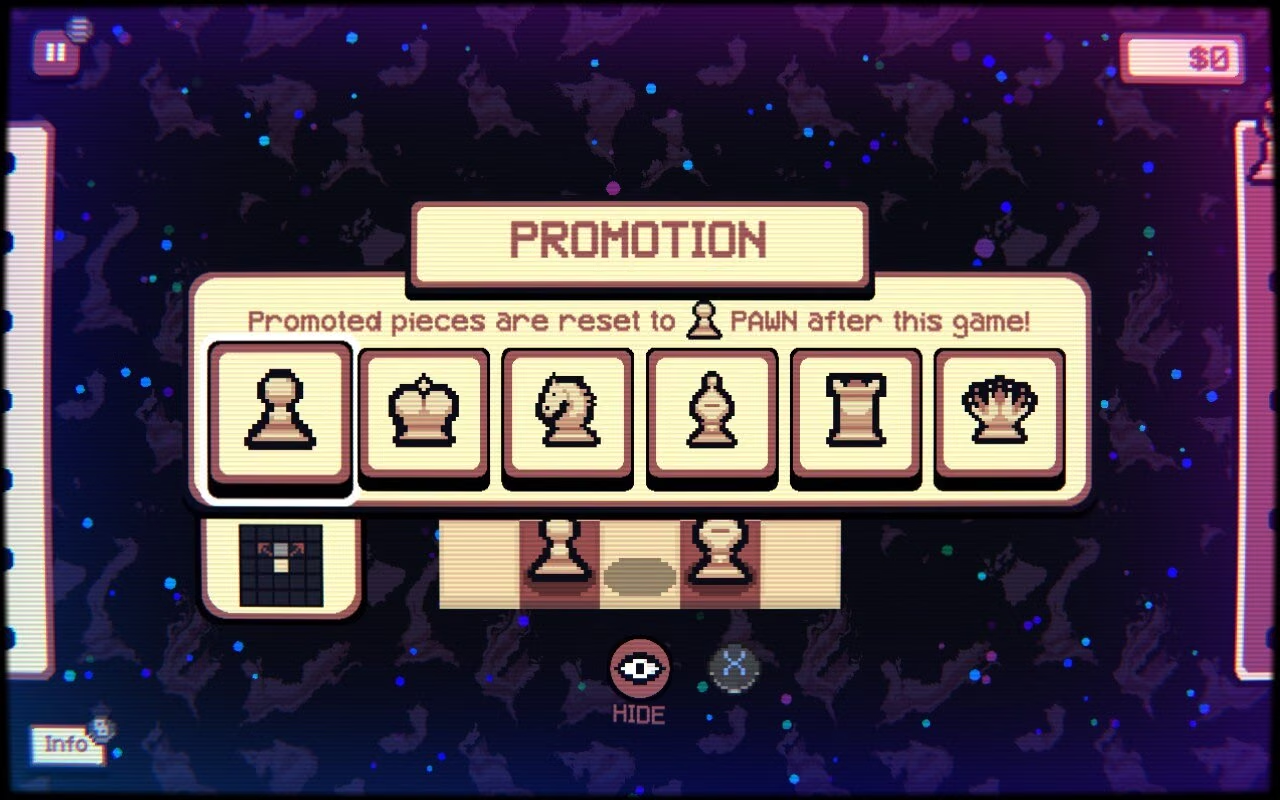
Between matches you can also purchase board tile upgrades: gold squares that generate income when occupied, blessing tiles that shield pieces from capture for one turn, phantom generators that spawn temporary copies of existing units, and some trap variants. These create a secondary layer of board management on top of dealing with your piece’s starting positions.
The reserve system lets you buy additional chess pieces beyond your active limit (you are always limited by a certain number of pieces at once, and unlocking this limit requires money for every extra piece, of course), storing them off-board for mid-match substitutions. It’s a good backup system that gives you some margin of error when you make a bad move so that you don’t end up with a game over too fast.
Progression
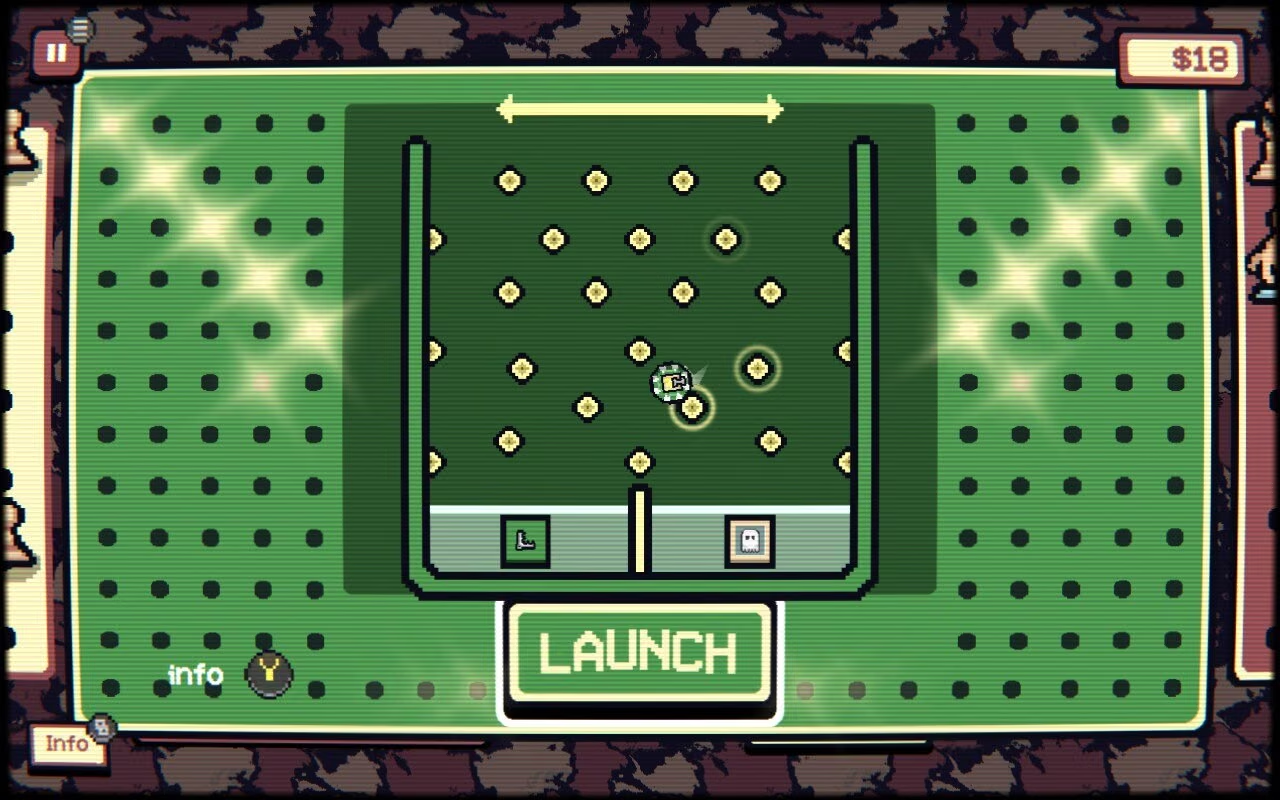
As you advance, you encounter pachinko-style slot machines and gatcha capsule systems giving you randomized Gambits, pieces, or tile upgrades. These are lockable (so good rolls can be preserved), but they introduce a gambling element to resource acquisition that doesn’t always work well with your own strategies. Pre-run customization is very limited compared to what is offered in Balatro’s deck-building. There’s no equivalent of choosing your starting composition before the run starts. You just have to pray you don’t get shit from the get go.
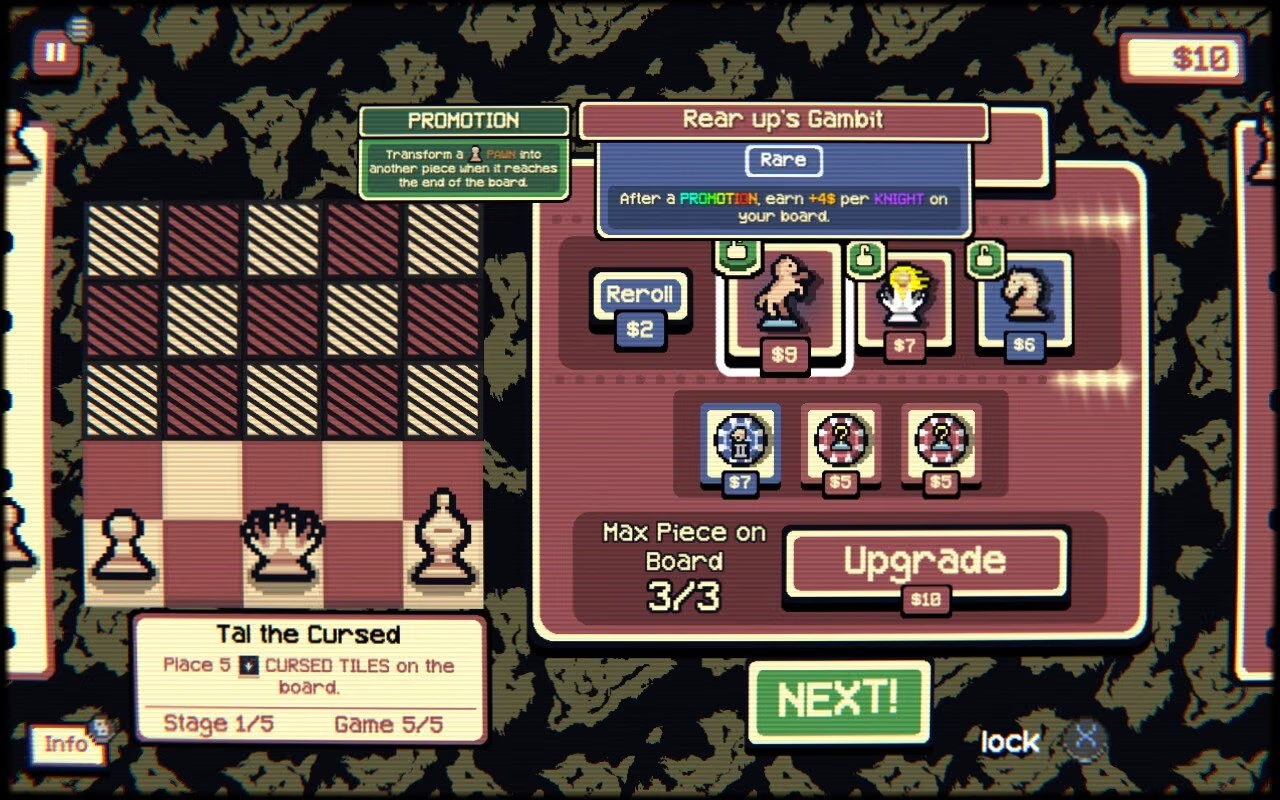
One of bad decisions made by the developers is to make your money worth less and less over time. Adding one piece if just a few coins, but adding extra ones mean a steeper cost time after time. Almost exponentially so, at least it feels that way. At the same time, your computer adversary starts with a lot more pieces in every match so you will always feel inferior in some way. Instead of building up, a lot of the money is spent replacing some lost pieces. So you are fixing your home, replacing broken windows and removed tiles after the last typhoon, instead of investing in it to make it better and bigger. Sad.

The bosses themselves are quite fun as each of them introduce unique mechanics, rather than simply starting with a lot of pieces. And beating them is rather satisfying. The problem isn’t boss design. It’s the inconsistent AI behavior in regular matches.
If you used to regular chess games, you expect AI to make pretty good decisions adapted to your level. In Gambonanza, the AI makes a lot of stupid moves that seemingly make no sense, which seems to defeat the point of adopting good tactics. Like moving a piece into a place where you will obviously eat it without problem. The game would benefit from a more regular behavior.
Visuals and Music Could Be Better
Visually, Gambonanza goes for vibrant pixel art with CRT filter looks in the style of arcade cabinets: colorful, slightly retro, and generally looking good enough. The animations are functional but are not really exciting or satisfying; when multiple Gambit effects chain together, they fire simultaneously rather than sequencing cleanly, making it harder to grasp what actually triggered what during complex combos.
The music and sound design are OK - nothing fantastic but they do the job. It would be very hard for me to remember it out of the blue, so it’s more like some soundtrack that you typically ignore after a while.
Made for Linux (and mostly fine on Deck)
Gambonanza ships with an official native Linux build alongside Windows and macOS versions. The native build uses OpenGL rather than Vulkan, but you would not know if I did not tell you. So, you don’t need Proton, while it works flawlessly through Steam Play if you prefer that route. It runs on a potato so there is no need to worry about the specs unless you are trying to run it via QEMU on a Raspberry Pi 1. At 450 MB install size this is one of the lighter titles we’ve reviewed, too.
On the Steam Deck, things are playable but not officially verified by Valve at time of writing. The controls work as expected with the gamepads and are well adapted to the different moves you need to execute. You however need to switch to 720p resolution, and sometimes the text can be a little small, especially for the Gambit tooltips. You can turn down TDP almost to the lowest levels and still get 60 FPS so this is perfect for long playthroughs on battery.
Worth it?
If there were no other games in the roguelite or deck-building category, I’d be inclined to recommend it, but these days, unless as you are focused on chess-like movements, there are tons of very good games that build on Balatro’s strengths, especially if you factor the price of $14.99. It would be a lot more competitive at a lower pricepoint, and I guess this is the kind of games that will do very well when hitting 50% sale or more.
In my case, after the initial interest, I don’t see myself sinking more hours into Gambonanza until they fix some of the fundamental gameplay issues (especially the very heavy RNG aspects that make it feel really unbalanced). So, the ball is entirely on the developer’s side to fix this if they want to broaden its appeal.
You can find Gambonanza on Steam right now.
Note: we received a key from Sidekick Publishing for this review.