
Esoteric Ebb: Discotastic! In Review
Find out who blew up the Tea Shop in Esoteric Ebb, a noir fantasy CRPG with intricate political trama*. Developed by Christoffer Bodegård (with the collaboration of many other people), and published by Raw Fury. Works great on Linux and Steam Deck.
Esoteric Flow

You are THE Cleric, no, I mean, the Dancing Bard. Well, you are some sort of detective sent to the city of Tolstad to investigate the explosion of the Tea Shop. But you start the game at the Lich House, a mortuary, freshly revived with not much of a memory or personality.
You will recover your memory and rebuild your personality as you try to solve the explosion and the mystery of your death, by interacting with the city and its inhabitants.
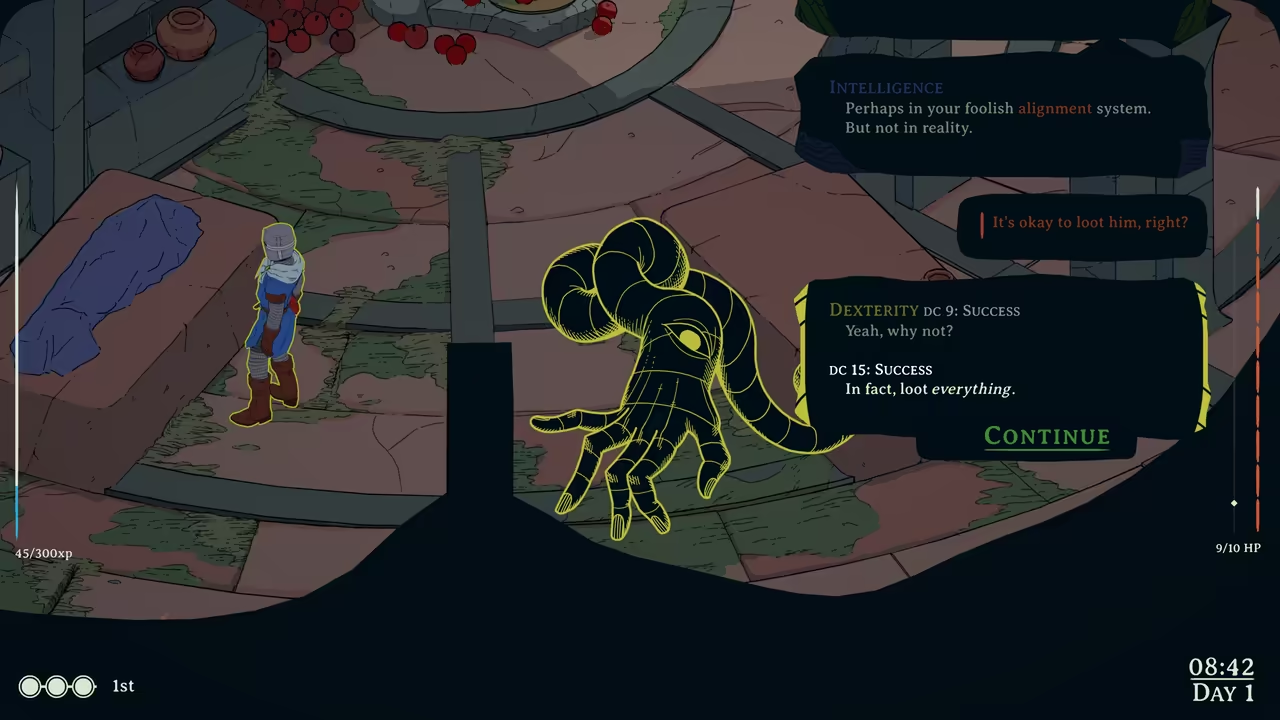
The CRPG stats inspired by Dungeons & Dragons (but thankfully not bound by D&D terrible rule-set) might have a saying on your personality. Triggering conversations every time a subject of their interest is brought up. Your Endurance will manifest about your raw survival, while your Dexterity is a weasel opportunist. And while the results of your actions are governed by the results of a die roll, the game is tailored so failing those checks will also provide an interesting and sometimes useful outcome.
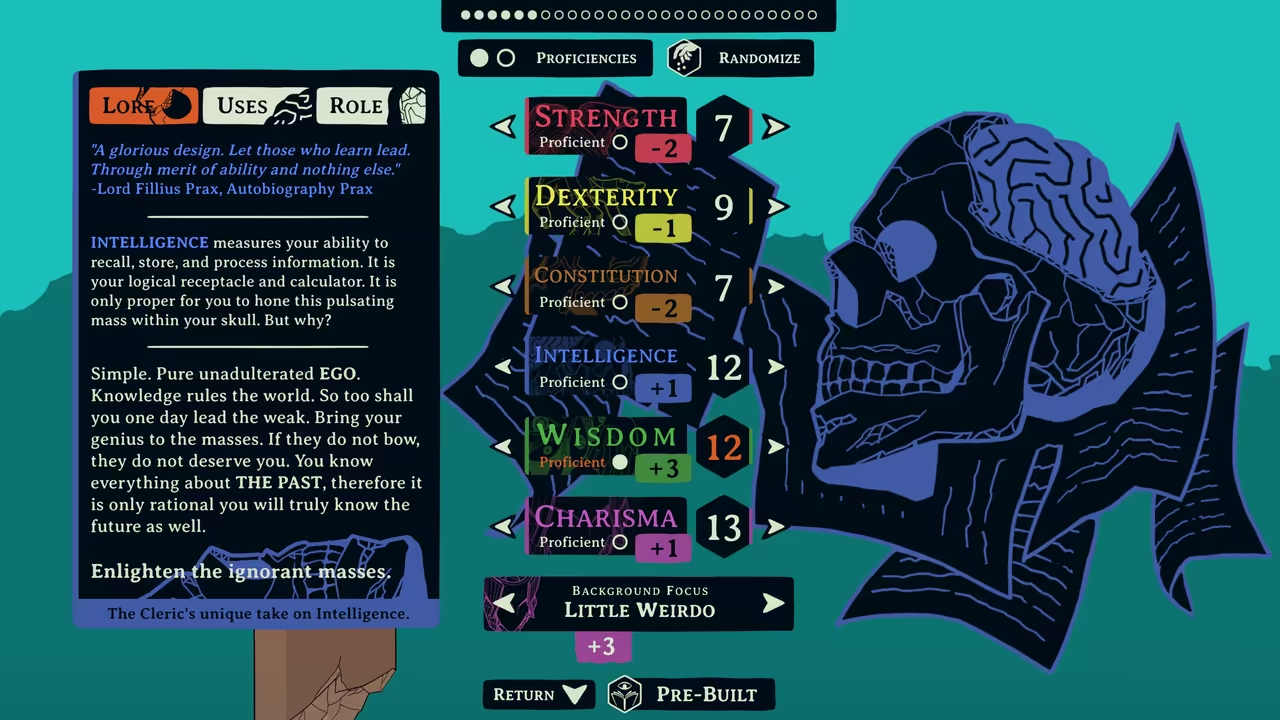
New to the nation is the concept of democracy, and in 5 days game time they will have an election. Everyone, including your stats, will be associated to an archetype belonging to a political party. Your Strength will manifest as Fascist, so will some old aristocrat families. Weirdly enough, your Intelligence is also prone to an authoritarian regime, but one in which you are the God/Leader of the nation, the same aspirations of some other excentric characters you will meet.
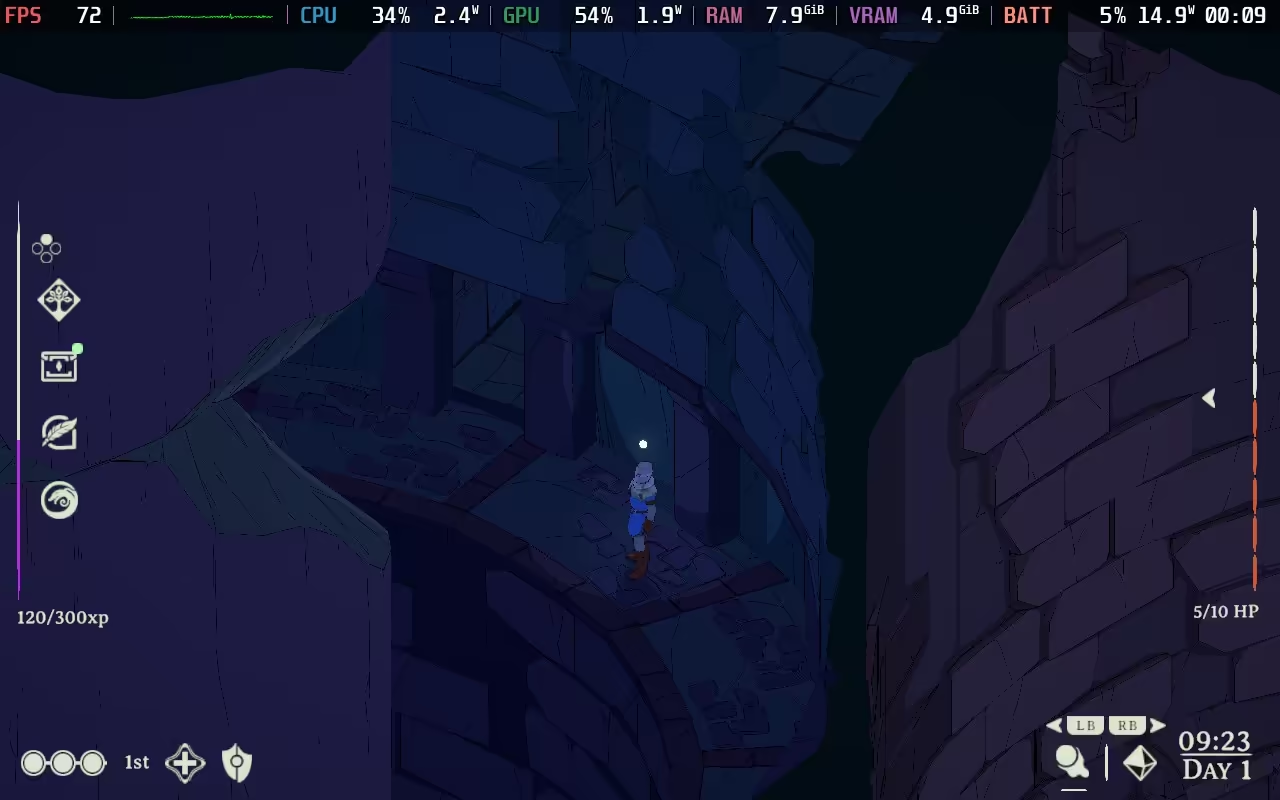
The city is built around this ancient obelisk from the gods that reaches from the depths of earth to the skies, where its denizens are living the most mundane lives. Below exists dungeons for you to brave, and it is interesting how people treat it just as casually as we would treat an underground rail system (tube, metro, subway).
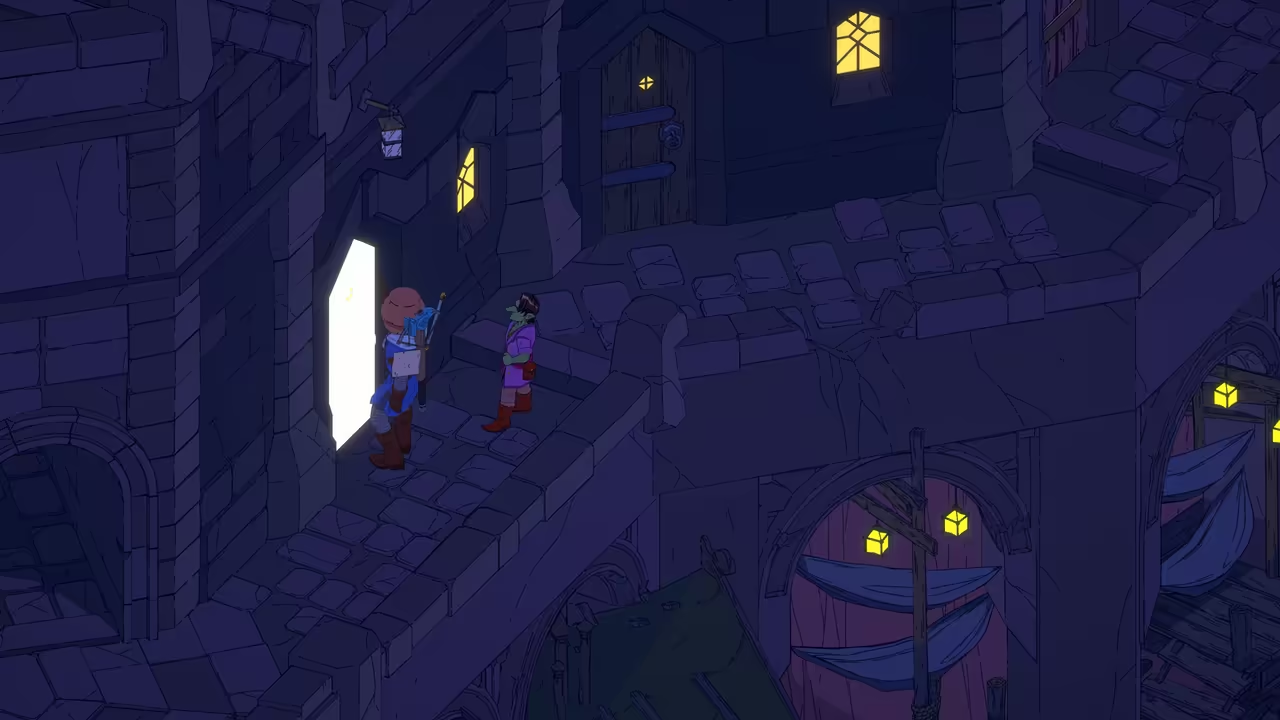
As you advance, you will uncover new story threads that you are free to pursuit if you choose to. Completing them might not lead you to find the culprit of the explosion, but bring you more understanding about the world you are in and about yourself.
Feeling the Ebb
I am extremely happy with the liberty of choice I have with this game.
If you played story-rich visual novels, or even those choose-your-own-adventure book you know how linear they can be, you are just exploring a branch linearly. But not with Esoteric Ebb. It is more like several little trees that you can decide to explore or not. The game is not just about picking choices in conversations. There are plenty to explore, and you can go anywhere and do anything in any order you want.
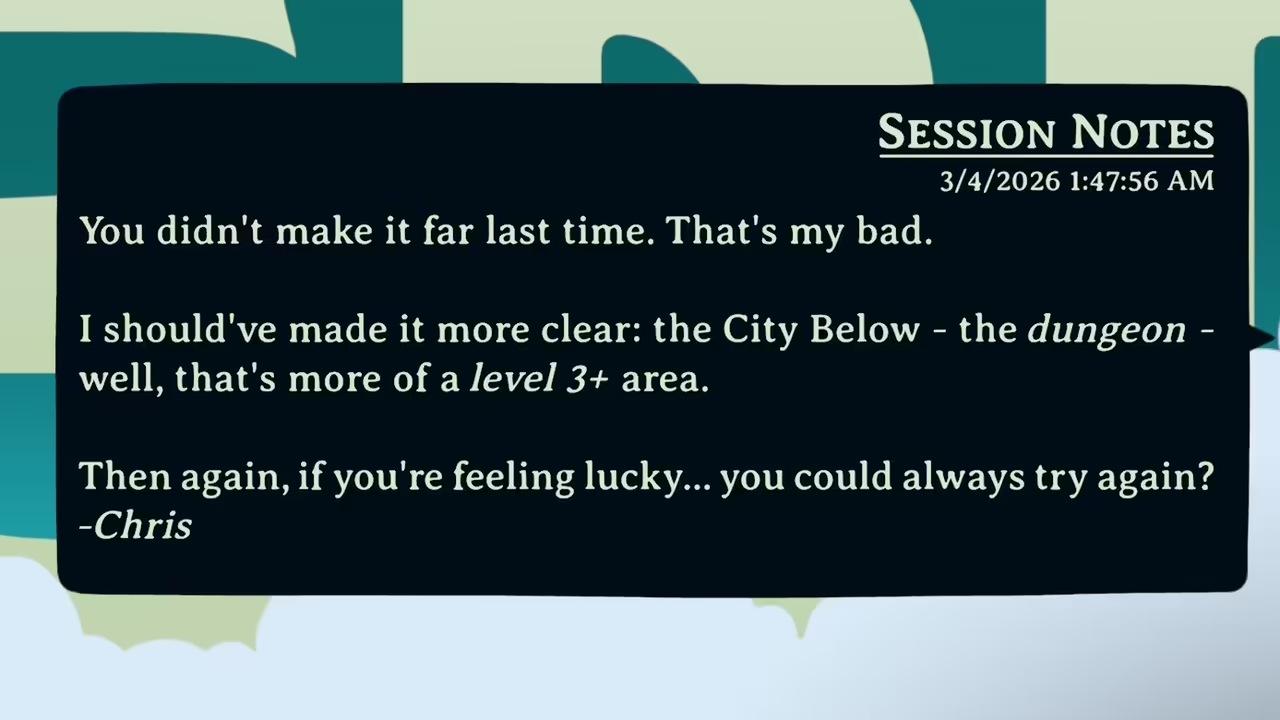
Without knowing, I went to an entirely different path from the starting area, exploring the underground dungeon early on and dying plenty of times to its many dangers. It was not until I read the note on my save file, the dev put messages akin to a Game Master reminding the party of where did they stop in the previous adventure. It said something in the lines “I should have been more explicit where you should go next, which is up. Going down is really hard, but proceed as you wish if you are feeling lucky”.
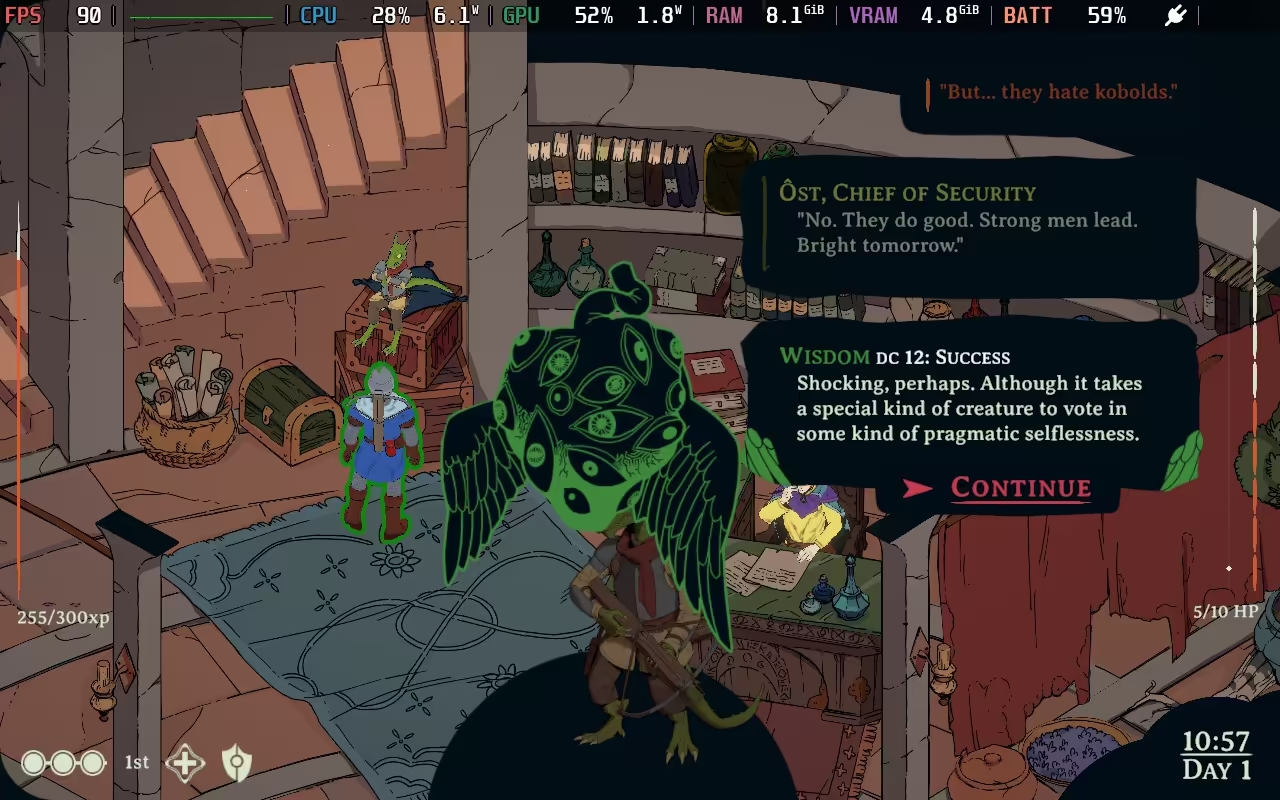
There is a reason I am comparing this title to visual novels, safe from some mechanics, the majority of the game is navigating text-based dialogues, there is no voice-over. If you like those, the dialogue choices were plenty, in both flavour and as ways to proceed the quests. When there was a skill check, there were always multiple options which at least one would suit my build. When not, there were other ways to overcome the obstacle. Early on you could find equipment that would boost your stats, later you find potions that increases your stats permanently (well, for one week, but this is about how long it takes to finish the game) and there were always clues all around that helps reduce the challenge of a skill check: people might know about a weak spot, or examining a document might help you understand better what is going on.
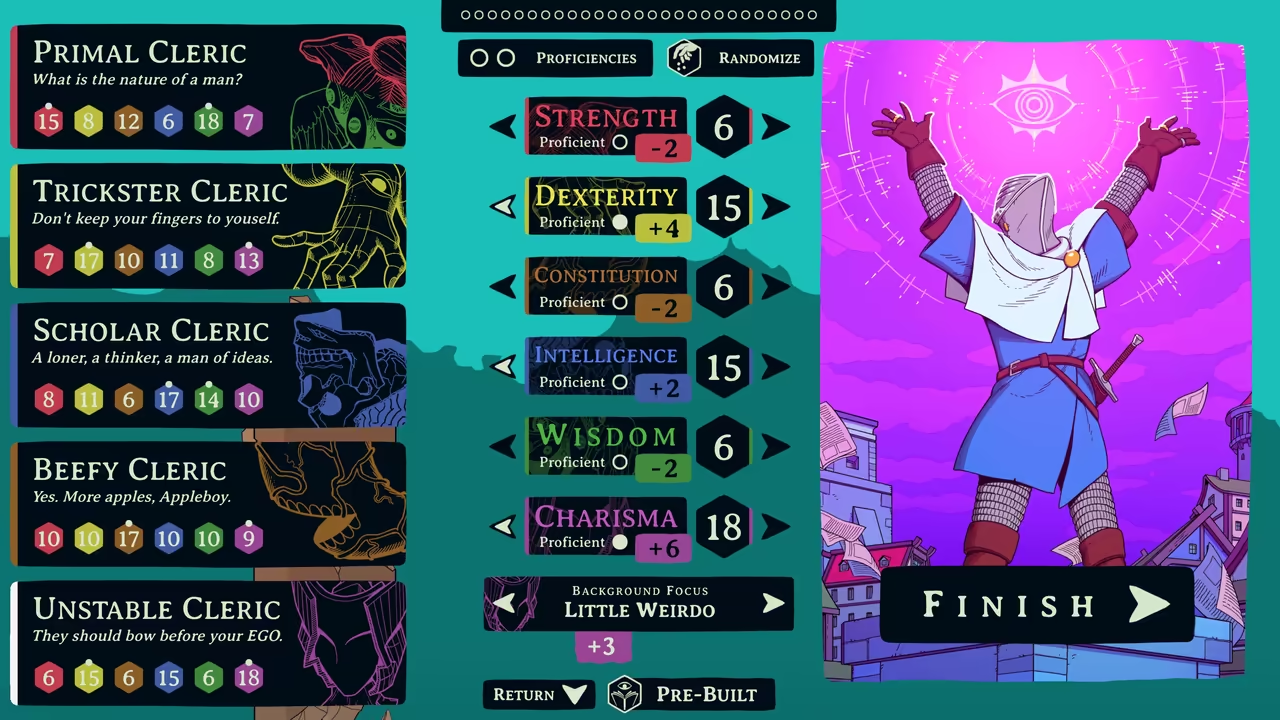
For my first time, I created THE Cleric based in Dexterity and Charisma because it sounded fun, and it triggered unhinged conversations with my stats. Think about cartoon angels and demons on your shoulder interjecting at any opportunity, but in this case, there are 6 egotistical gremlins that appear more the stronger they are. Charisma would interrupt my conversations suggesting routes seeking the approval of others, including from enemies during combat, it would also refuse to wear equipment that were not in pristine conditions. While Dexterity would tell me to steal from those same people, and attempt to sucker punch or run from enemies.
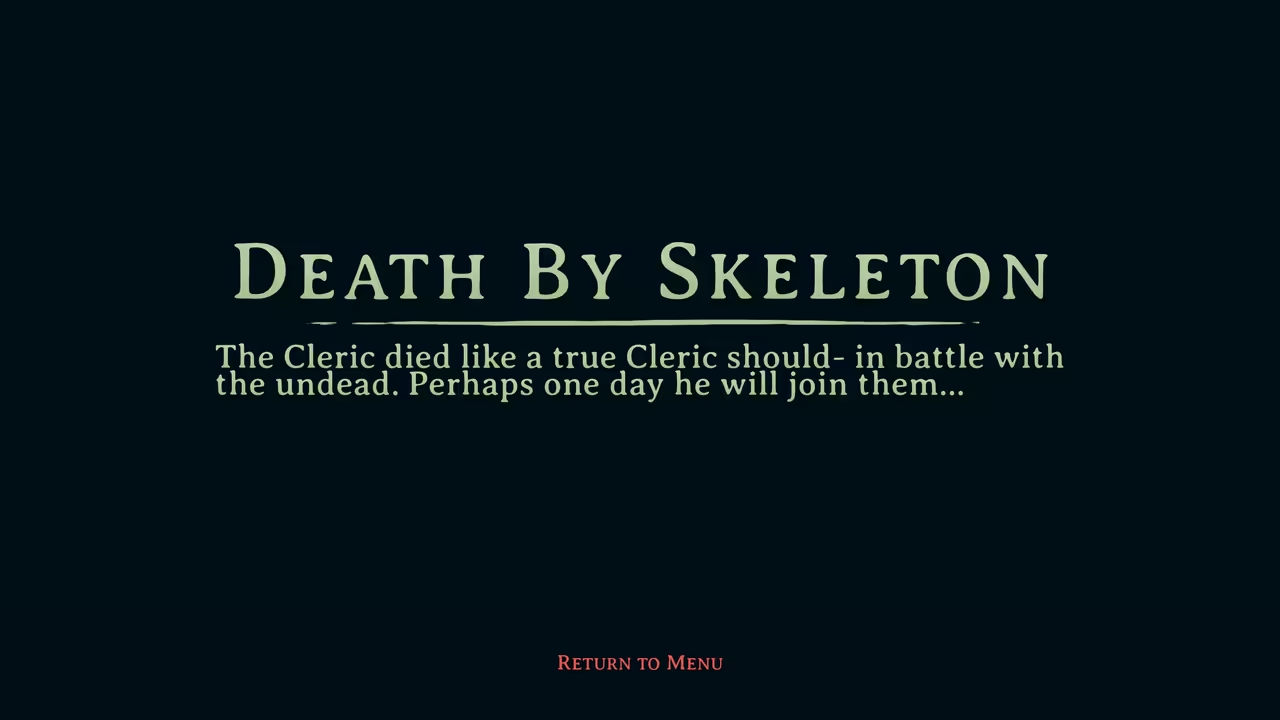
But by going earlier in the Dungeon with that build and pretty much dying every few steps, I felt that my build was wrong for me, that prompted me to restart the game with a different build. It was the only time in the whole game that it felt that way. I noticed that sometimes the Wisdom would warn me of something wrong. So I created a cranked up Wisdom-based Cleric (I know, boring!). But this was more about me trying to have an easy way of exploring the dungeon and less about the game options. I could have easily gone the other way with the unhinged build and get a bit more prepared before venturing deep down in the dungeon.
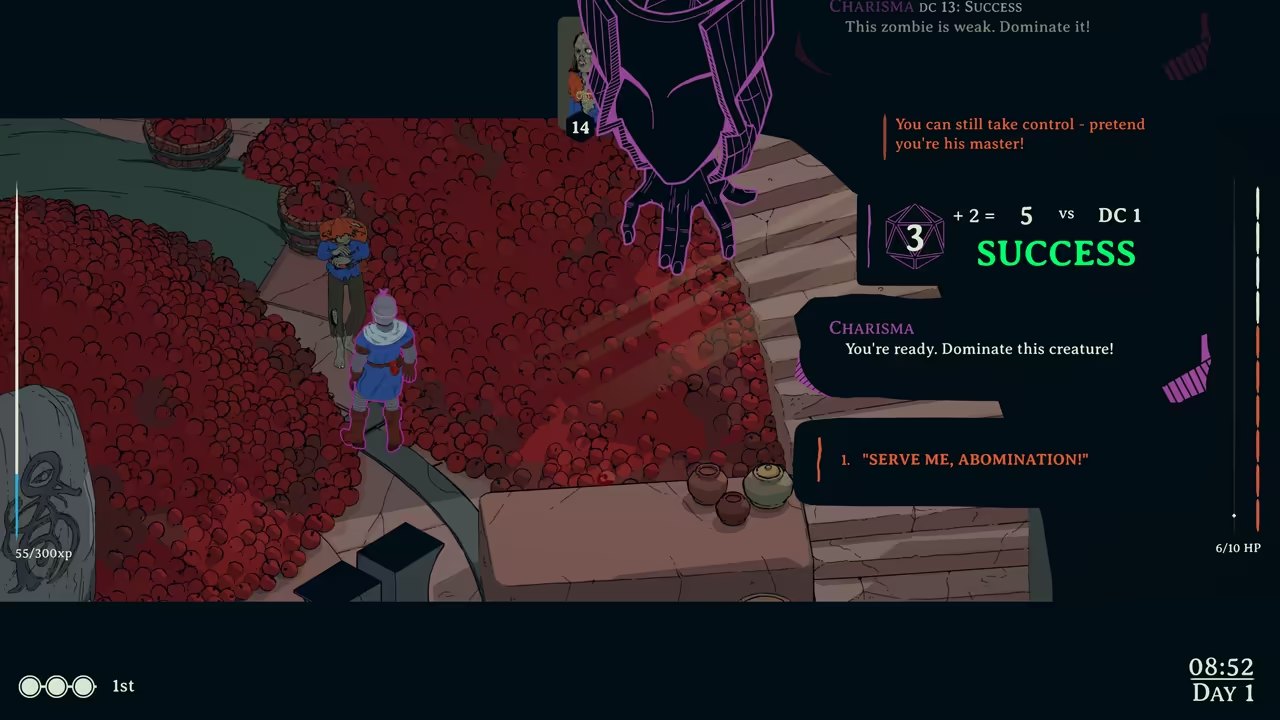
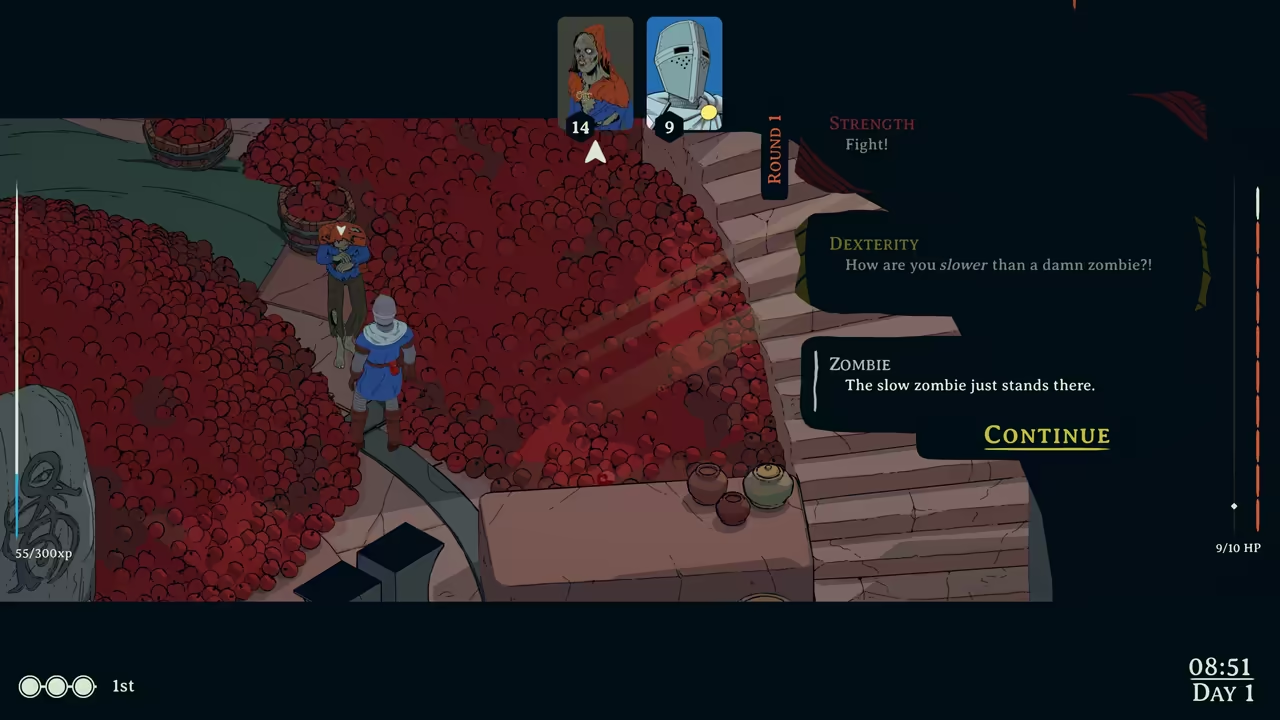
The game has no combat, well, there is combat, but it is set as a conversation. My very first combat, I tried to convince a zombie to follow my orders while it was attacking me. You don’t have to use brute force, but have in mind that you have limited turns to “finish” an enemy. I tried to defeat a big skeleton, and in 4 turns it would execute me if I failed my checks. If you cannot pass a skill check, maybe try to use one of many spells you have.
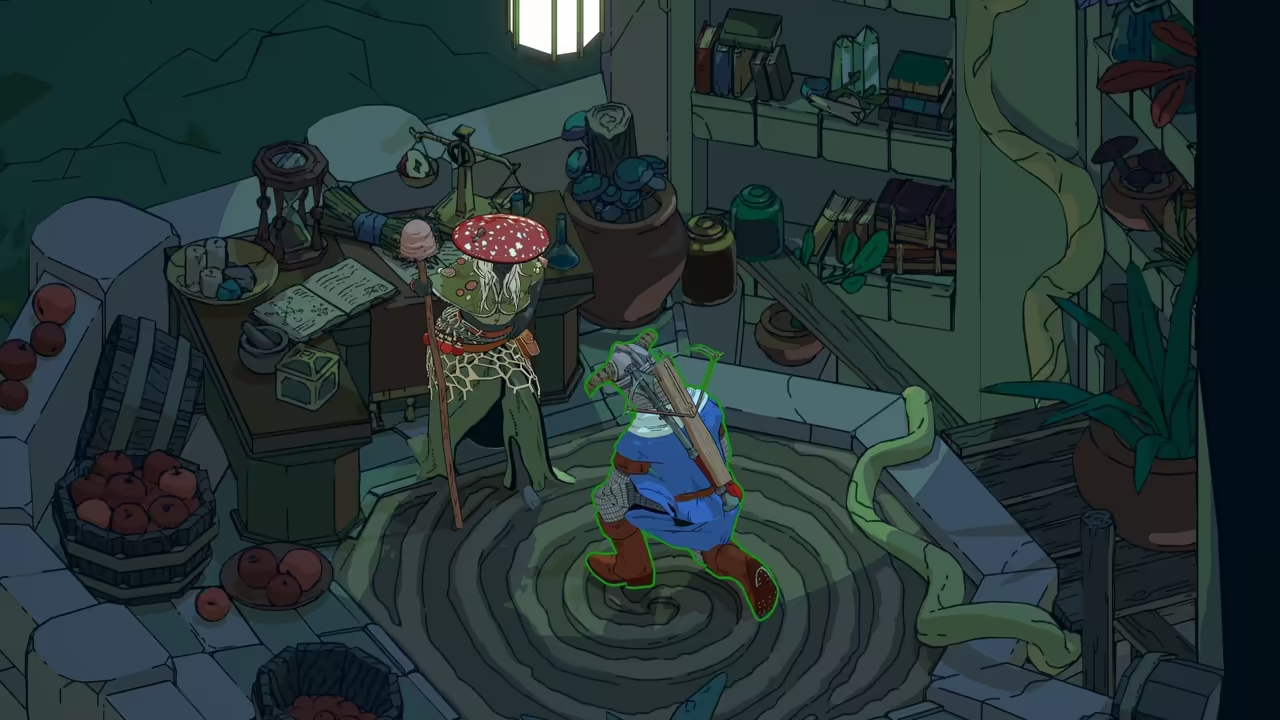
Spells are fun, and can help you a lot. Speaking with the Dead will help you a lot in investigations, so will my favourite: Speaking with animals, I had some hilarious conversations with the local fauna. I like that the game highlights usable spells because you have many to choose that can be daunting, and you might forget to use them if you are too focused on the conversation.
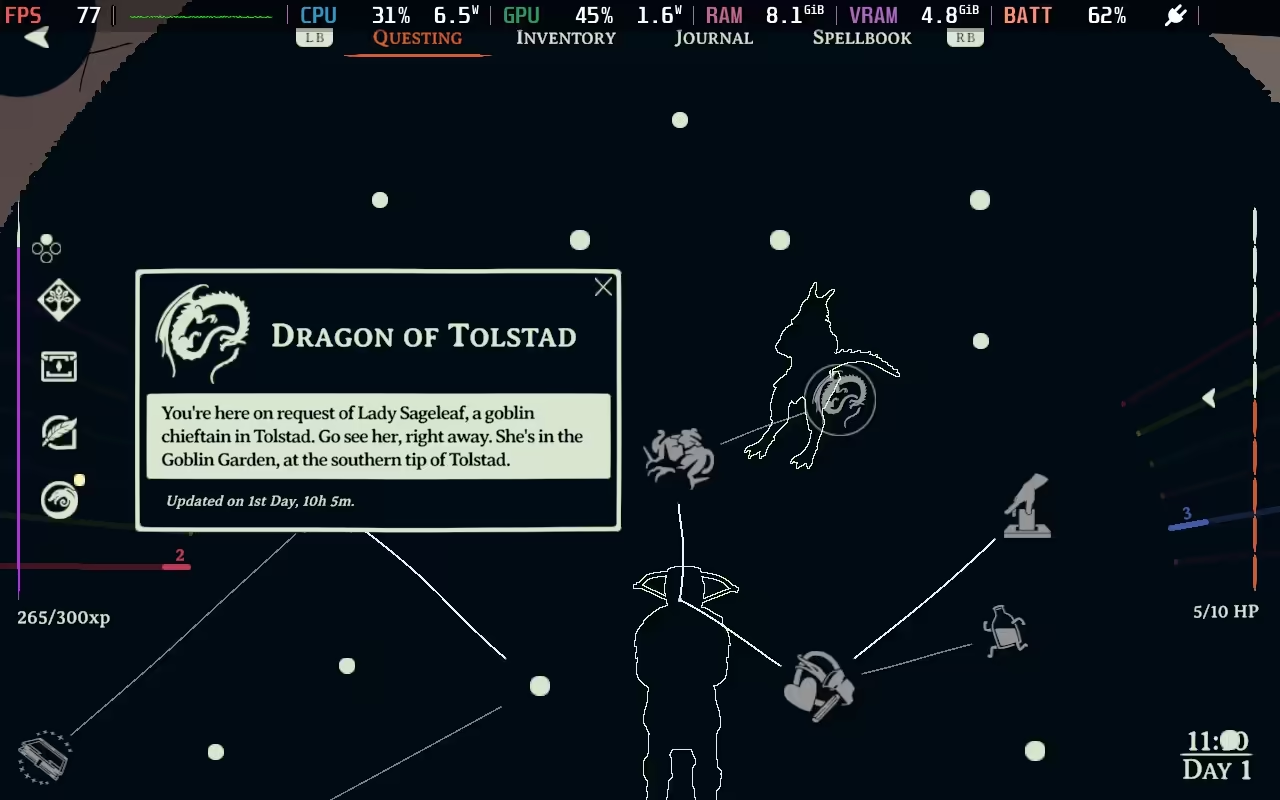
Some little tree plot lines I mentioned earlier are important enough they are considered quests, and they show on your menu. It is useful to remind you about the things you might want to pursue, like when you are deep down in the dungeon and forgot you came to this city to investigate an explosion, not to spelunking. I wonder how long could I go in the game without setting a foot in the Tea Shop (there is an achievement for that, I should try it next)? They also show important information if found on each plot line, and how they are connected. What does the explosion has to do with the upcoming election?
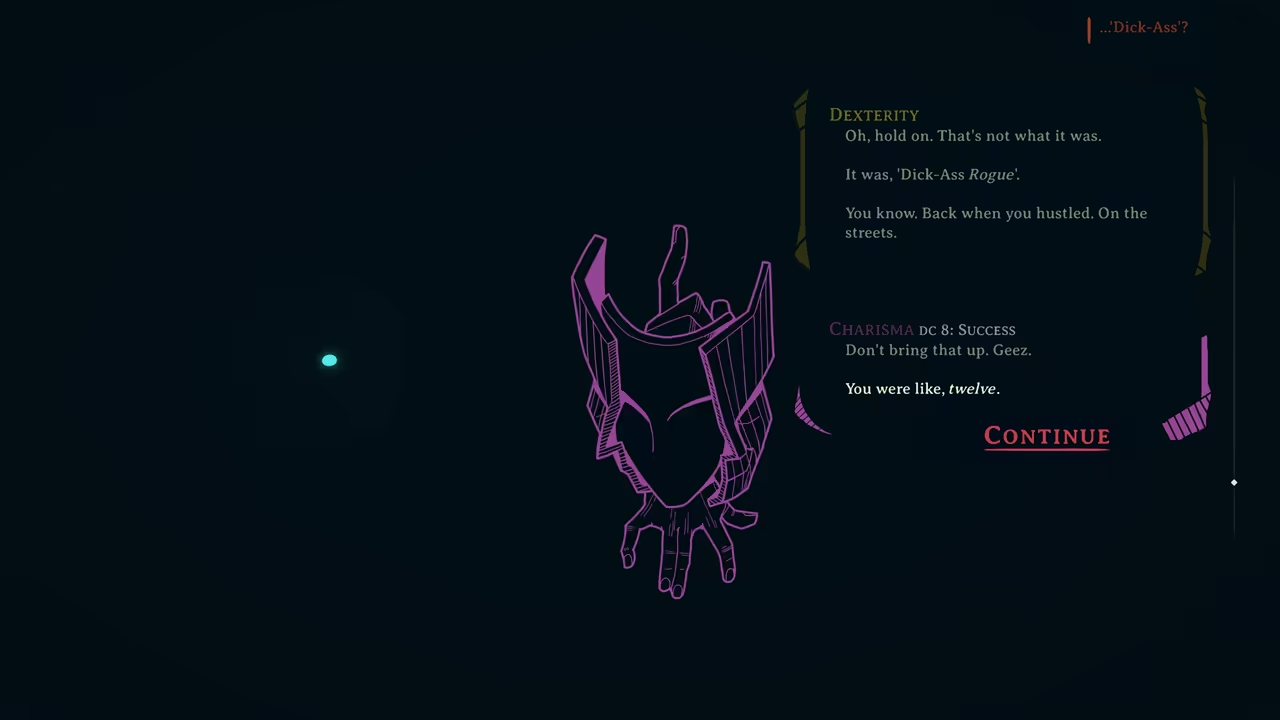
Once you finish a questline, an option will appear in your quest menu for you to reflect upon it. Usually, it takes the form of settling an argument between your gremlin stats. Doing so you give a bit of personality to THE Cleric, also you unlock a passive benefit. Thinking about my very first quest rewarded me with 1 HP recovery per hour, it does not sound like much, but it saved me some apples in the long run. You can have 4 of those passive bonuses equipped at once. After reflecting on the quest with your stats, they will ask you to take a side, and explicitly explain the bonuses associated to you before you choose them. Adding another philosophical layer, ‘Am I going to choose this because of my values, or because of the benefits associated’. While you do know the bonuses, I don’t think THE Cleric is aware of those bonuses when they kick in. I had extra proficiency in rolls speaking with feminine characters against a masked enemy, but the main characters did not recognize the attacker as a woman until I unmasked her.
Esoteric problems
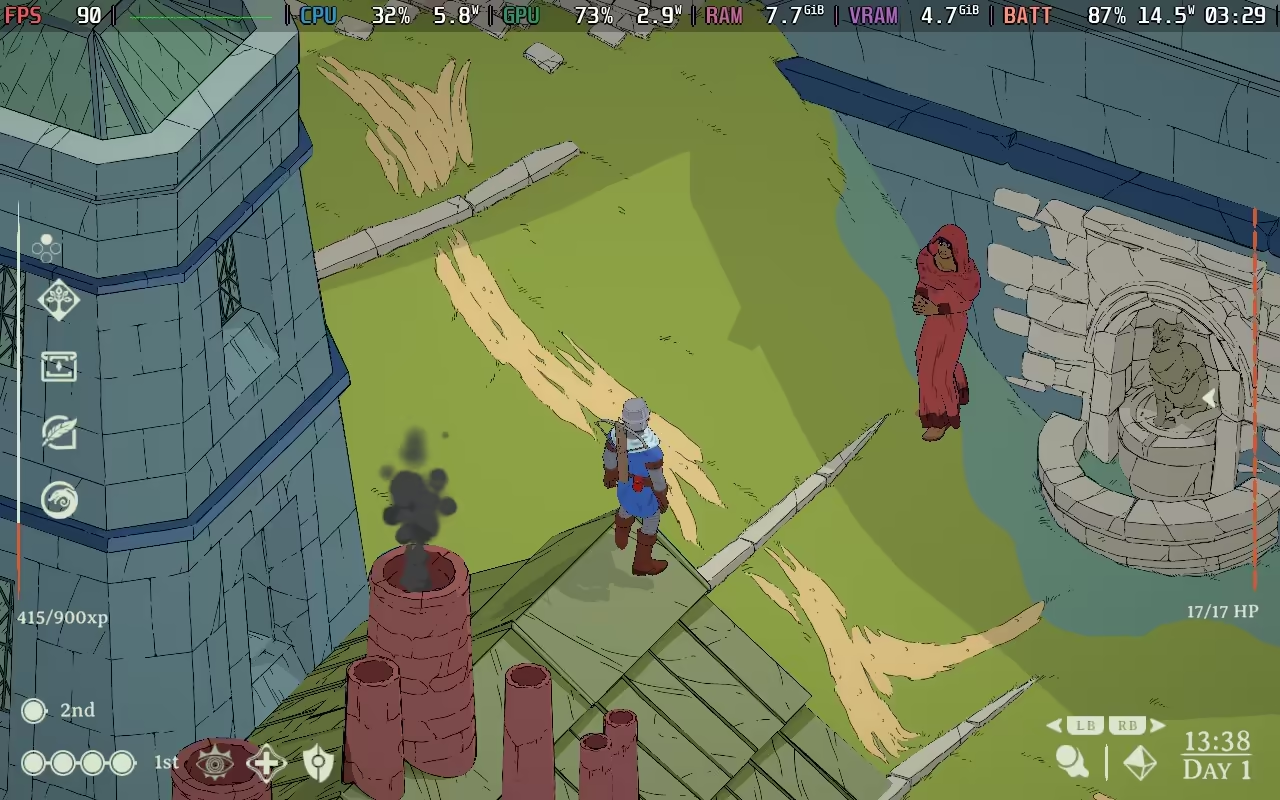
I played the game mostly on Steam Deck and it was great(Verified title, ~ TDP 14.5W / CPU 5.8W / GPU 2.9W). I could read texts fine, the controller was responsible and everything was comfortable within the reach of my fingers without needing to reconfigure the settings. Then I tried mouse and keyboard on my Linux PC and started dying a lot. With the controllers, you walk with analogue sticks, with the mouse you move to where you click and that was quite annoying and lead to plenty of deaths, mostly from clicking on the wrong spot accidentally. Wisdom would warn me of a trap, I would click somewhere else, but the path finding would run me through the trap. When three dots appear over something, it means you can interact with it. On the controller you press a button, and it shows you the interaction options, but I would mouse click on them and the pathfinder you lead you to the traps.
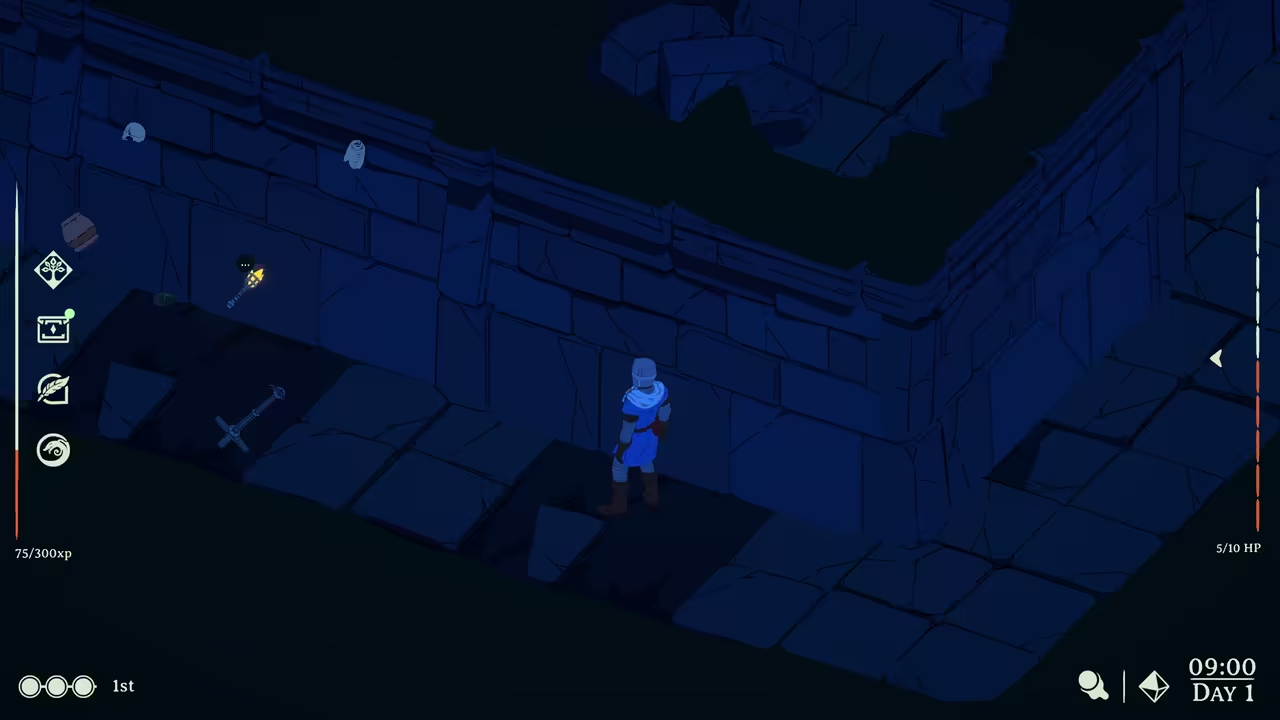
The level design is well done, even without high Wisdom, you can figure out some traps and secret passages in the game just by observing the surroundings. On the other hand, playing with the mouse, the game pathfinding made it sure I would discover it all by stepping on them. Including that I could not talk my way out of all problems. There is not much of an argument you can put to a Gelatinous Cube not to digest you.
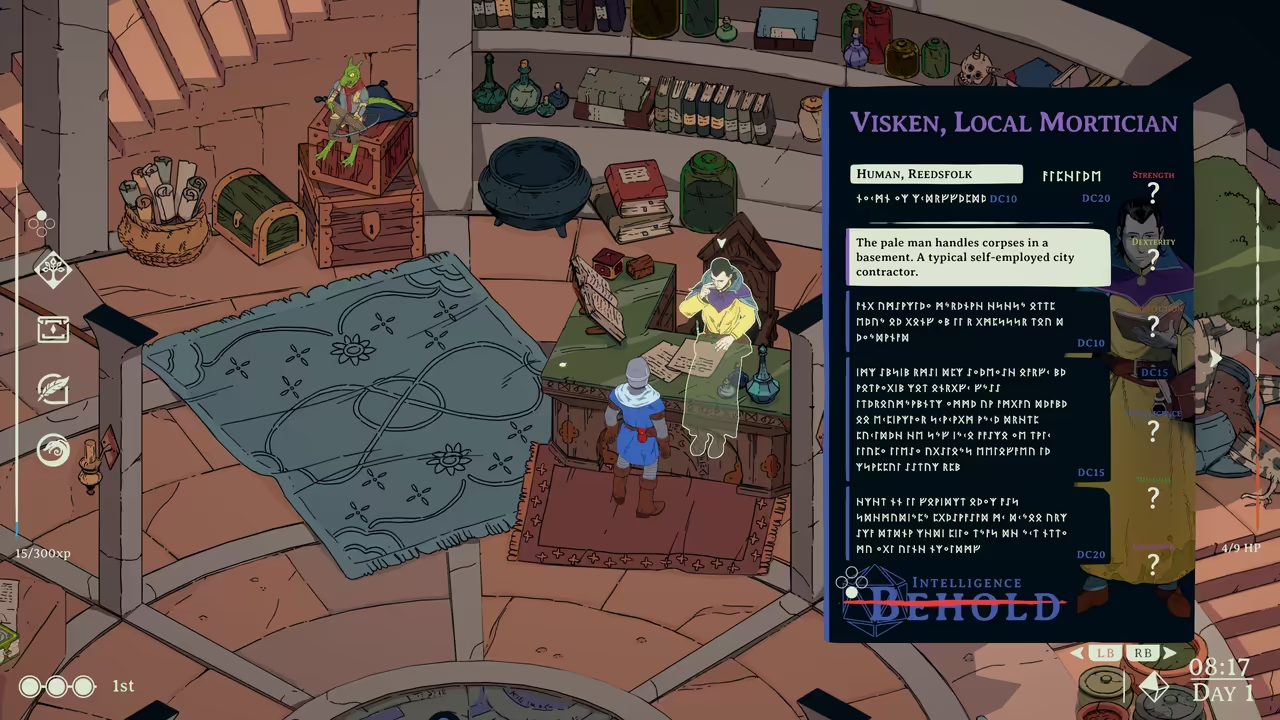
There is also a mechanic to behold people you can talk to. It is like a perception check that can give you insights on the target and reveal their alignment if you get a high number. It adds a lot of flavour and background information, but besides some bonuses you can get from interacting with specific alignments, it did not feel mechanically useful. Probably because of a bug. During my first gameplay, I did not see any important interaction unlock because I revealed beholding information on a person. There was something in the lines you know their secret on the beholding page of an influential character, but in fact, I did not know any secret. There was no option to discuss the secret, or where to find what is this secret. But, while discussing with other players, it seems I was supposed to know some more and more dialogue options should have unlocked.
I was also haunted by some progress soft-lock, and had to load an earlier save to overcome it. Some actions you take trigger conversations with people in places and times they would not usually be found. In one case, I saved without finishing the interactions and when I loaded the game on the next (real life) day, the person was not there for me to finish the interaction and progress. From the change logs, it seems that the devs have been working on many bugs I hope this is one of them.
And last, the end. Spoiler! Spoiler! Spoiler!
! I am not a big fan of stories where god shows up and explain everything to me. But I should have expected that, since the first thing you do in the game is talk to an indifferent god.
The Disco Elysium in the room
While there are plenty of story-rich games that gives you plenty of freedom. From Planescape to Roadwarden, but Disco Elysium might be the game that served as higher influence to Esoteric Ebb, so it is hard to not make a comparison between those titles.
Esoteric Ebb brings the noir theme to the fantasy settings. But detective work is not the only thing they have in common. They also share the social aspects of Tolstad denizens thought political identity. And if you like the dry humour, sarcasm, and irony from Disco Elysium, Esoteric Ebb has it, but less subtle, way less subtle, cranking the humour to 11.
You both start the game with no memory. In Disco Elysium, you destroyed your brain through substance abuse, and in Esoteric Ebb you were destroyed and revived. There are stats, but Esoteric Ebb uses fewer and more common concepts like Charisma rather than Inland Empire.
They also have equipments and items. If you were used to switching your whole wardrobe before starting a conversation in Disco Elysium, you can do that here too. But I felt this quick change less necessary as the game went by. There were potions that increases your stats for pretty much the entire game instead of just an hour. There were ways to reduce the challenge of a test by exploring the surroundings and talking to people. Lastly, there were multiple ways to complete a quest, that not necessarily required a skill check.
The art style is completely different, so is the audio and music. While the developer is listed as a single person’s name, he shares a list of the collaborators who worked on the game, with unique art and solid soundtrack. I recommend checking that list.
Overall, Esoteric Ebb brings important discussions in a lighter and more humorous manner than Disco Elysium, but with enough lore and options to stand on its own.
Last remarks
I like when games extend the mundane into the fantastic. I do not have fun playing a scrapyard game, but if you are salvaging spaceships in orbit that is cool, like in Shipbreaker. I do enjoy doing house chores like sweeping and vacuuming the house, but I do not enjoy doing that in a game, now put that in space where you clean after the Doom Guy came by, and you have a fun Viscera Cleanup Detail. If you get a detective story, it is fun, and you push it forward into space, you have something great: The Expanse. Oops, that was not what I meant. Make it medieval fantasy and you have Esoteric Ebb.
The D&D inspiration was not a hindrance, the dev adapted it heavily to tell a compelling story (as many good games do, including when you play it table-top). And while you have Disco Elysium casting a massive shadow, Esoteric Ebb has enough marks to stand out on its own.
From the past few years, my favourite game of the year was released during the first semester. With Hi-FI Rush, The Alters, and now Esoteric Ebb keeps the tradition.
Either you are looking for a well-written story, or something to scratch that Disco Elysium itch. Esoteric Ebb is there for you, to fulfil that hole you did not know you had. Available on Steam.
*political trama: Trama is the first word that comes to my mind to explain the warp & weft in intricate and dense potlines. But when editing, my spellcheck told me: “what the fuck are you talking about?”. This is one of those words we have no direct correlation between languages. We have words for plot, for intrigue, for intricate, for dense, for conspiracy portuguese-english dictionary: trama… but I could not find a word that carries the same emotional load that a single word, trama, brings to me. I could make the argument that the word love hits harder on your first language learned. But it is more like: “I am lazy, and I want to write with a single word instead of dense and intricate political plot, but now I am paying the price by having to write this footnote with many more words”.
Note: We were provided a review key by the publisher.