
Celestial Return: Review
Celestial Return promises a hard-boiled, cyberpunk and cosmic horror game. “Count me in” when I was offered a key by the publisher. But this review would have been cut a lot shorter if I had not waited a couple of weeks after the release. Now the game runs well on Linux and Steam Deck with Proton thanks to some recent updates from the devs.
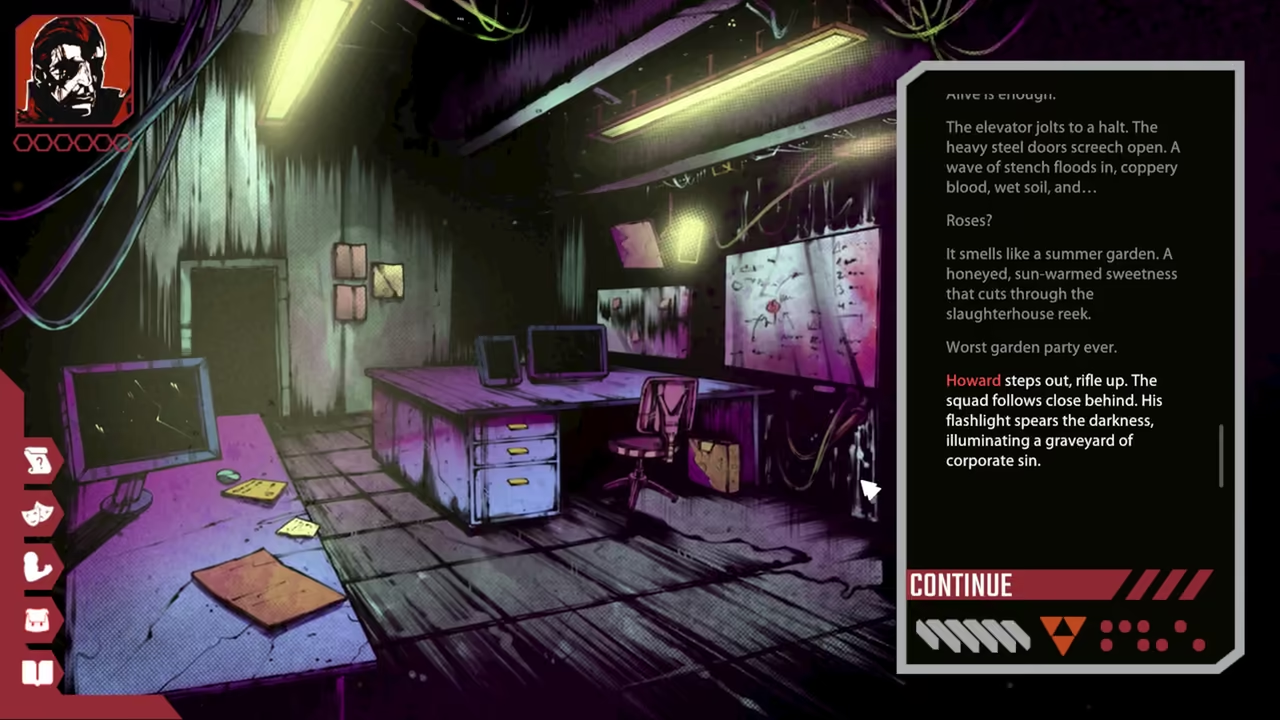
Celestial Return is a visual novel where you follow the footsteps of Howard, once part of an elite force that hunted beings called Abstracts, now just a private investigator. On the left side of the screen you read and interact with the overly descriptive story, and before the updates that would be mostly of what you would see.
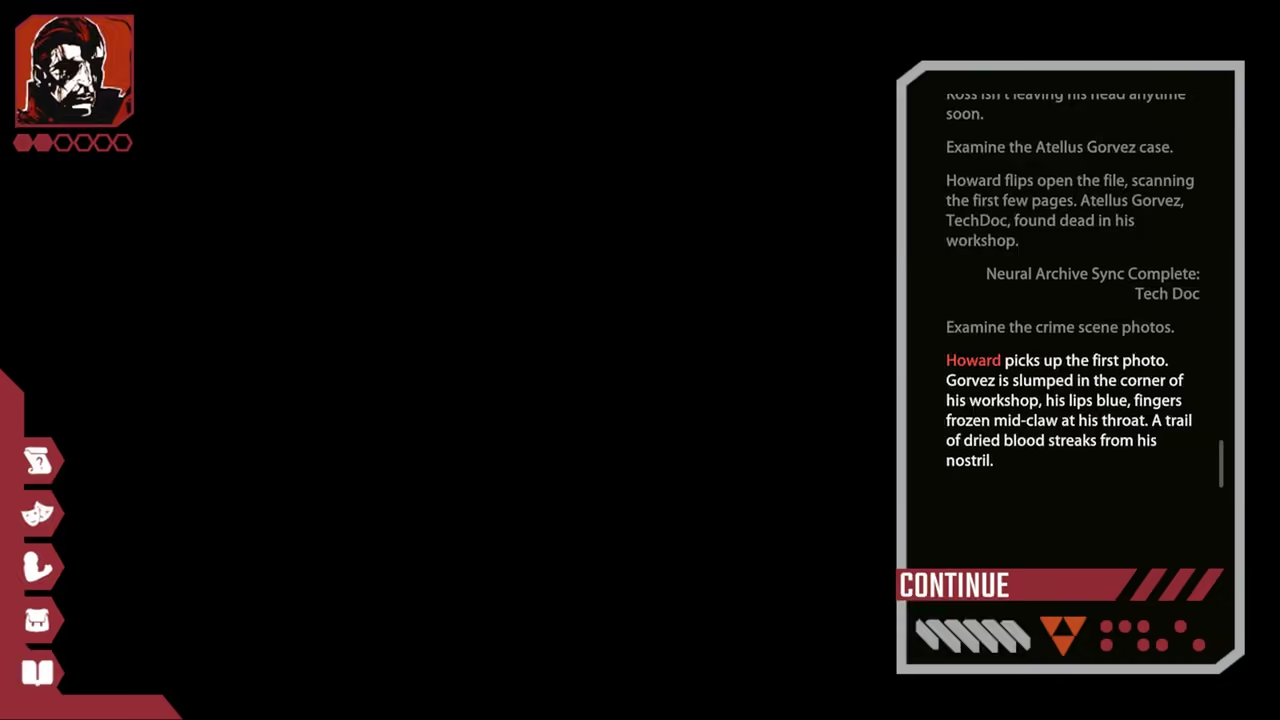
The game now plays a background video, and show some images as the story progress. They had encoded some videos with shady proprietary H.264 that would either stutter the game, or not load at all. That reminded me of the time I used Windows, and had to install some codec packs to be able to play this kind of stuff. Sadly, the Proton bundled with proprietary stuff did not work for me with this game. So I had to skip the animations, and played with black background most of the game. Because some videos would show, I pondered if the black was a design choice or just a bug.
I imagine most of the problems with bugged save games, soft-locks (most of them the workaround was saving and reloading the game), clipped story and options not showing on the story box, and other technical stuff will eventually be solved. So let’s jump to the things that are not so easy to fix.
Writting and Art Slop
“Everything poorly made is SLOP”, seems to be the motto of this generation, LLM or Image Gen or not. And I don’t blame them, the well is poisoned, be it mass-produced by sweatshops or machine alike, they ruined it for everyone else. It is unfortunate that starting artists might get the flak because of poor character proportions, or unnatural writing.
I tried to block the thought of slop during my gameplay, but I could not keep it away for long. Every other paragraph would raise a red flag characteristic of language models, some images with weird eyes, faces and limb proportions, uncanny, but was it intentional? I checked the discussions on the Steam, the devs assure people with similar questions that they did not use any sort of machine learning for creative work. They understand that parts are terrible, well they use more middle manager words, but they are working on it. So I guess I was just shielding fellow humans trying to blame poor choices as made by machine or some kind of sweatshop.
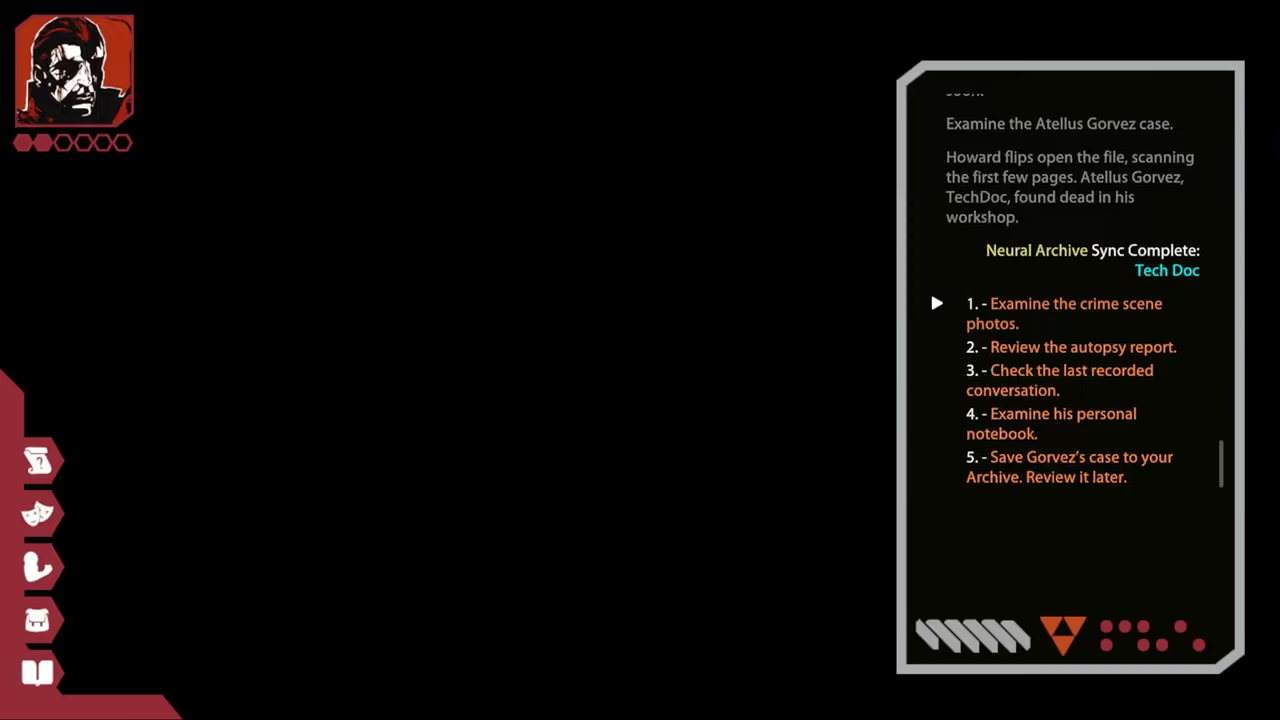
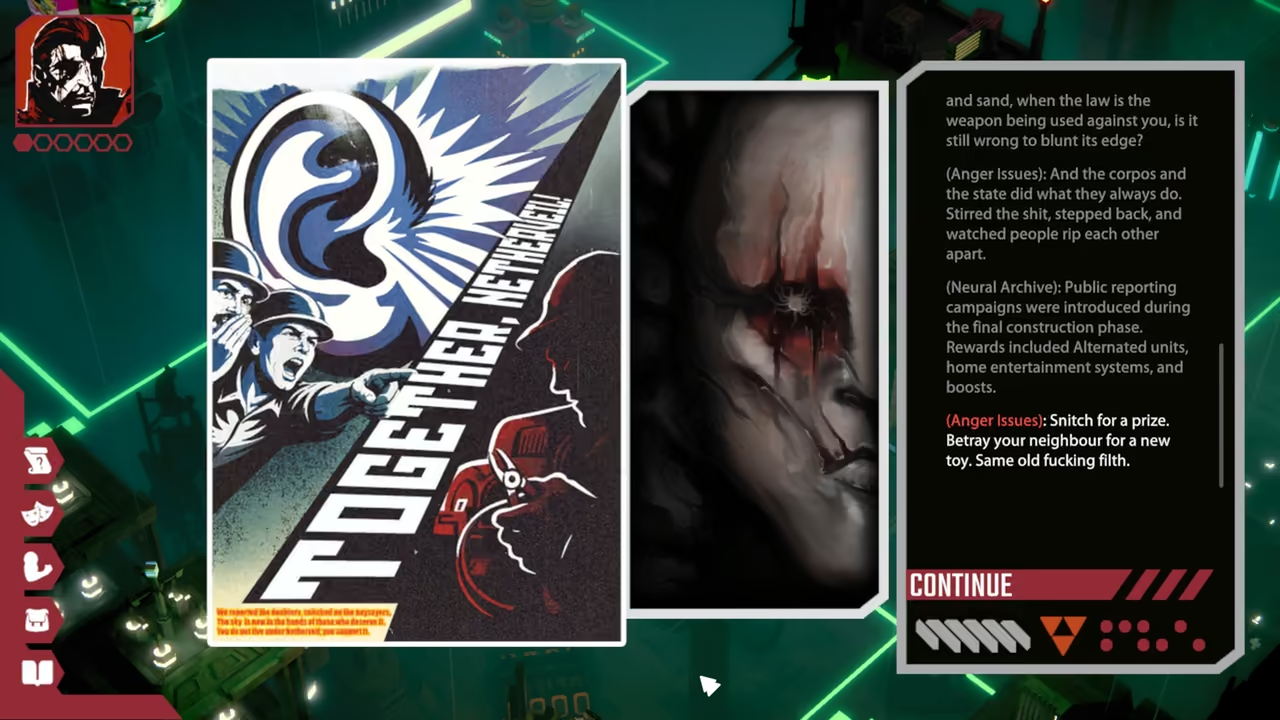
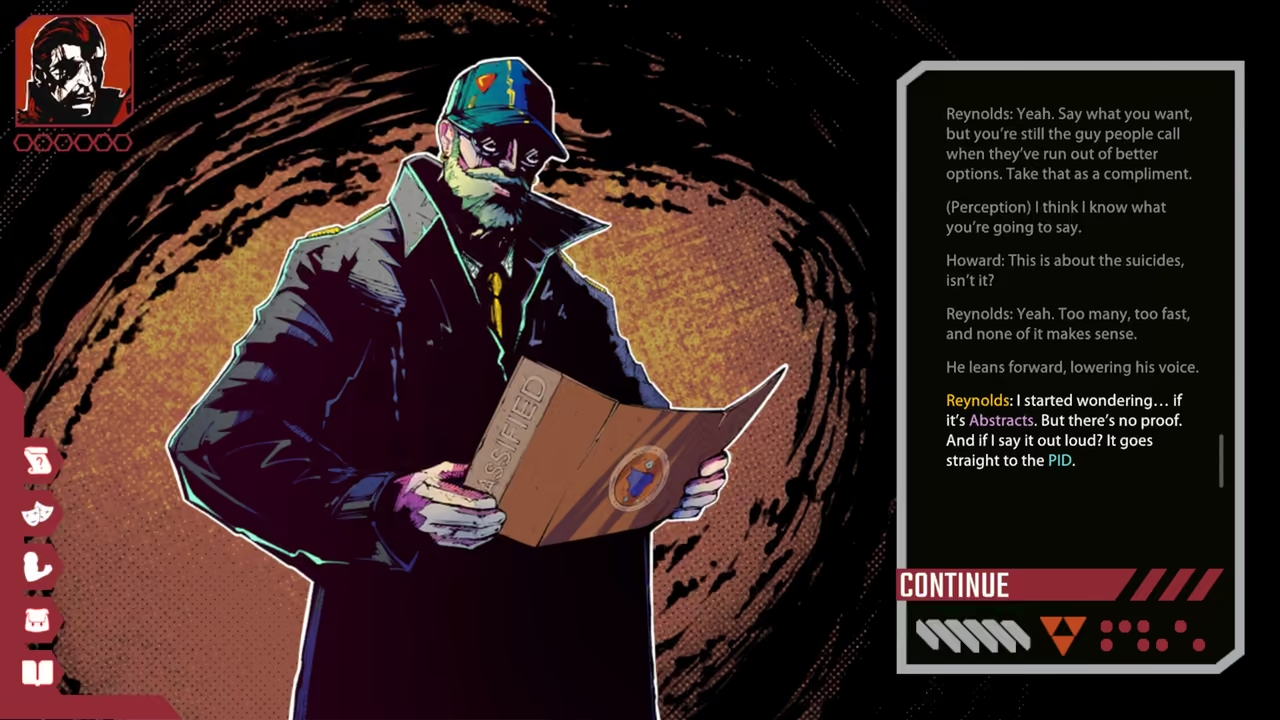
For the visuals, it is complicated, some look good, some look great, some definitely not, some made me rethink if I still want to play the game. But I think the largest offender is the consistency. You can get a screen capture with 3 completely different styles that just conflicts with each other, sometimes 4 if you count the video playing in the back. I would understand if they were complementing each other or had a reason to be different, like using a style for Abstracts to highlight they are different. But you can get 3 different styles of art just for the main character very early in the game, and none looks like each other or help tell the story. It is even worse when there is a small portrait of Howard on the top left, forcing you to think about the difference each time a new image appears. And there are some images that are screaming machine generated, no sane artist would do that “style” in this day and age unless for a clear purpose. But why pretend that a poster was generated by a computer from 2026, when an artist could create their own version of what a computer in their universe would think like?
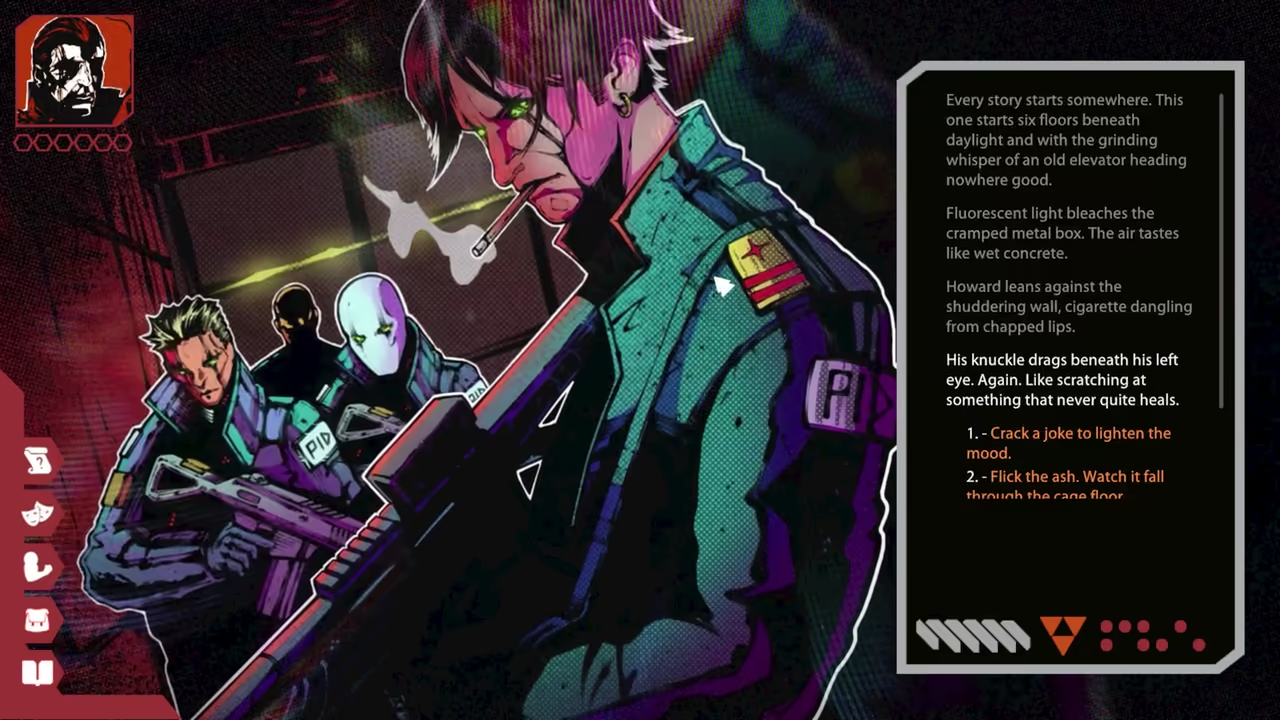
Then we have the story. For me, it was boring. I understand that people like overly descriptive sentences. Many writers have bestsellers like that, but it is not for me. I don’t need details on how the cigarette burns, that is not a Chekhov’s gun. Unless you are John Wicking someone’s eye, or your choice of holding it is foreseeing some future interaction, I have zero interest in meaningless details. Well, unless you are overwhelming the reader to hide the true gun, then great job on the haystack.
I could also use 90% less comparisons and “not only this, also that” phrasing. Dude rubs his face “like a wound that never heals”, I am glad you clarified, I thought it was because of the “like wet cement” that got into his eyes a sentence earlier, as anyone that walked in a construction zone would have felt like. Does it mean that Howard will have a tic of scratching his eyes with his knuckles? No. But expect a lot of farts “like a hot air balloon that is always leaking stinking”.
Because of those, the story moves in a slow pace, even slower because of the tropes and clichés, always there, almost as part of the HUD and failing to fulfill their function. It is cringe. Seriously, tropes are tropes because they speed up the story, not to slow it down.
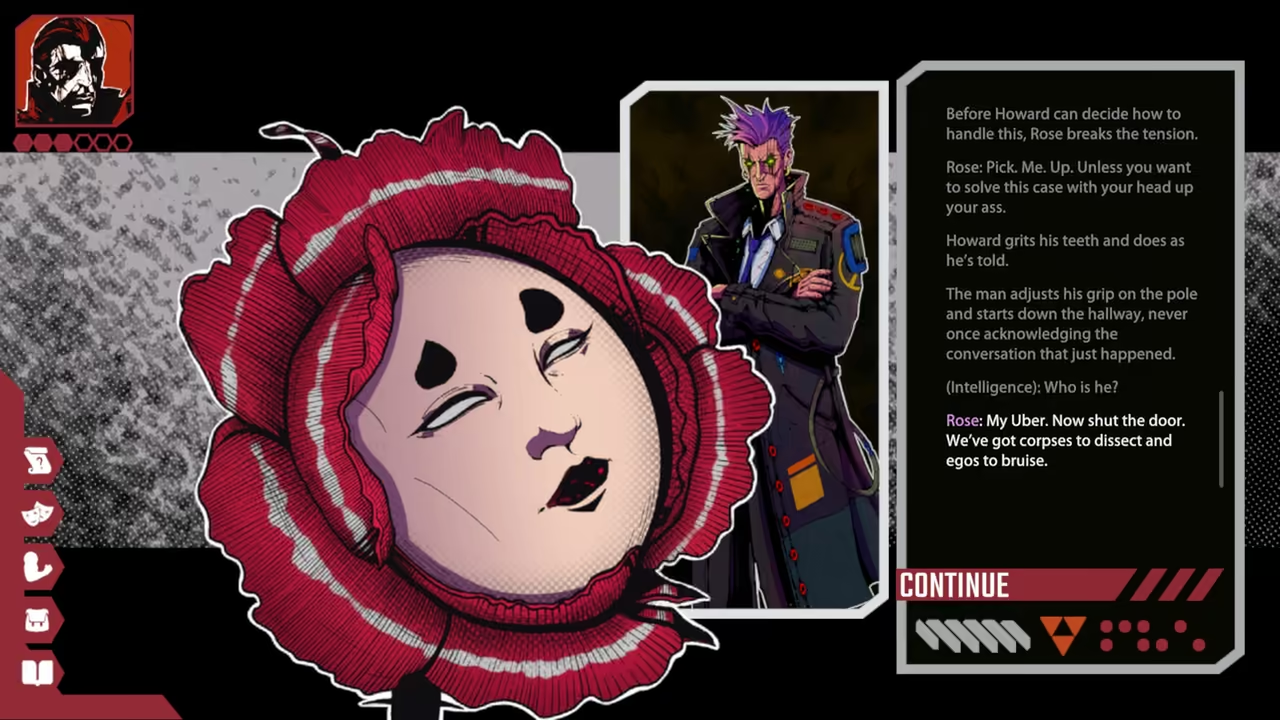
I pushed through that prologue (like a donkey dragging a plow and the farmer) and got a bit of interest in the overarching story. You save an Abstract, there is a 3 years skip, and now you are a private investigator. They say it in the game store’s description, and spent a sentence in the game to put some fear of Abstracts in you with more exposition. You might say: “this is poor writing”, you are right, they could have put some bad Abstracts first to shake your beliefs (you know, that trope) but bear with me. This Abstract is a flower and another Abstract, a gardener, asks you gently to take care of the plant. And you take it with you. Nothing about your character says that he will do or not. So I was curious about a bunch of things:
- Why did he take the flower?
- What happened in the 3 years gap?
- Why did he leave the team?
- What happened to the flower?
My brain was fired up. For once, I was glad I pushed through, some books take a while to warm up. Same with movies, music and many other media. Sadly, truth is, they do not always deliver. And Celestial Return did not pick up pace after. There were some tidbits that got my curiosity up again, but they were few and farther and farther apart, with the fillers doing nothing to help.
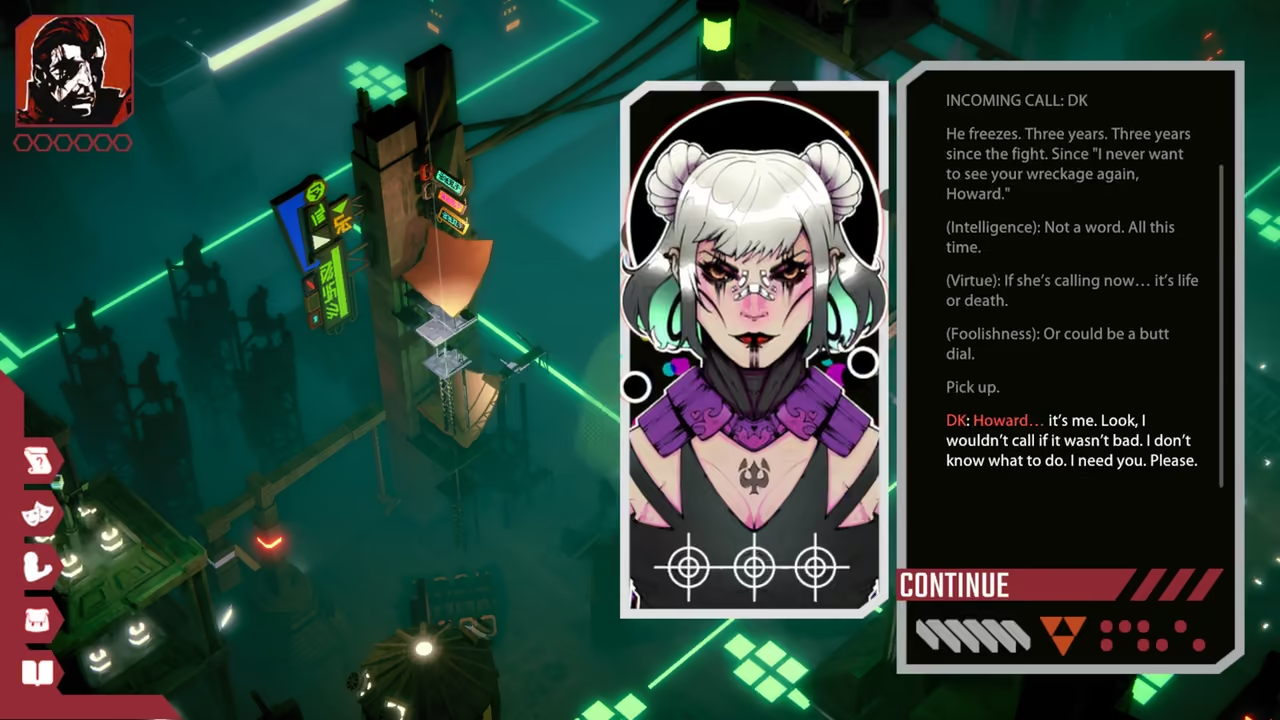
There is no consistency with the story, and it lacks a good flow. The game introduces characters saying one thing, but then it becomes the complete opposite right away. The author warns you about the guardrails in the beginning, but it is less of guard rails, and more of a train ride there is no risk to leave the expected path. One of my first choices in the game was to talk to the first Abstract we met, the nice gardener. The next interaction is someone opening fire to kill it, just like the other options.
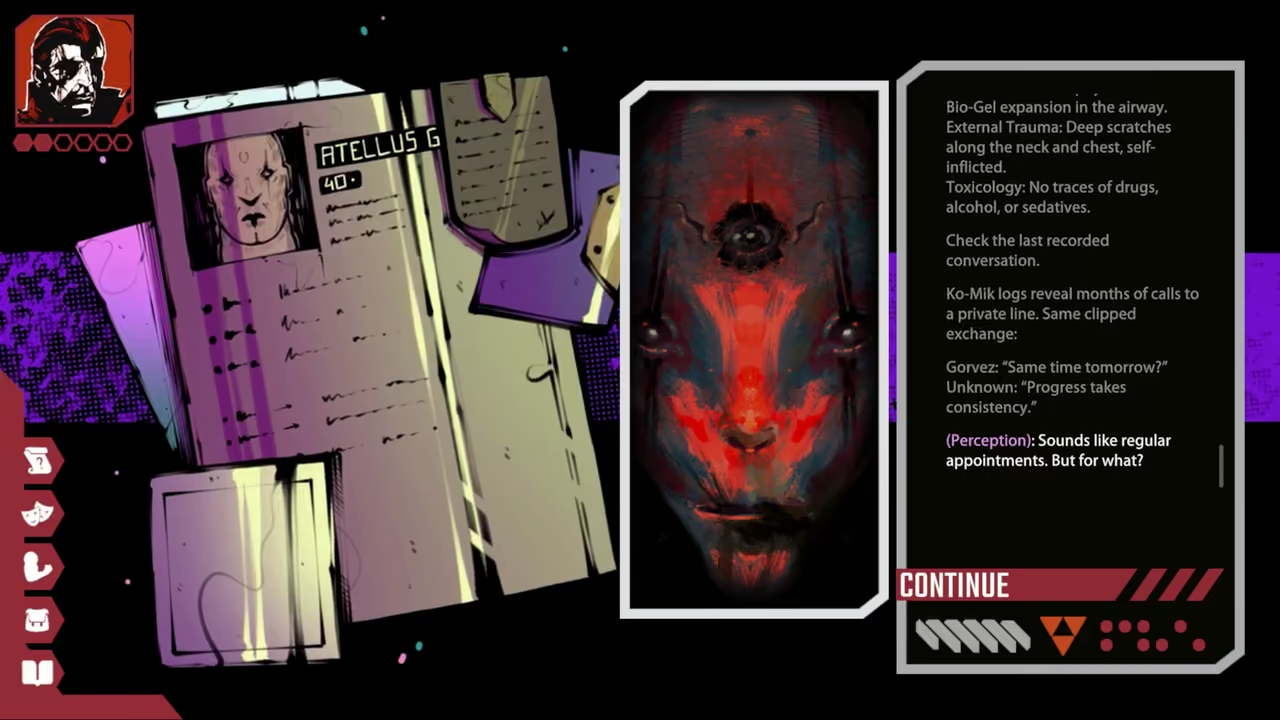
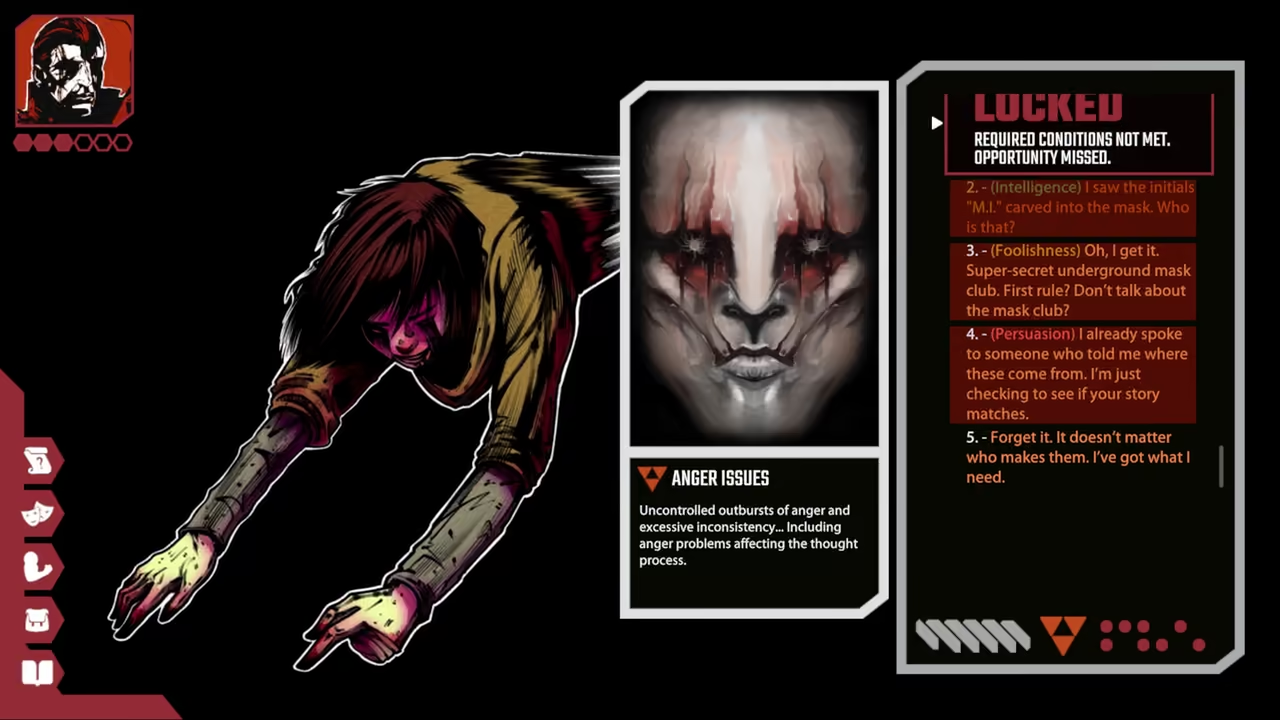
There is also a shoehorned personality system that your stats talk to you. Devs compare their game with Disco Elysium. But if having your ego trait telling you are Disco Elysium was the only thing that was needed, we would have dozens of Disco Elysiums every season. Those personalities add little to the story and do not affect the direction of your train. You know how you set your personality in Disco Elysium and Esoteric Ebb, and they try to influence your decisions as you go or make you to pick a side, yeah, not that. There is no character creation, and traits are very generic with no nuance or persuasion, just pick Virtue and you are set. Want to be the angry guy, their train still starts at the same point and goes to the same station. All of them start with the same level, leaving no reason, either strategic or personality, to pick one choice in favour of another.
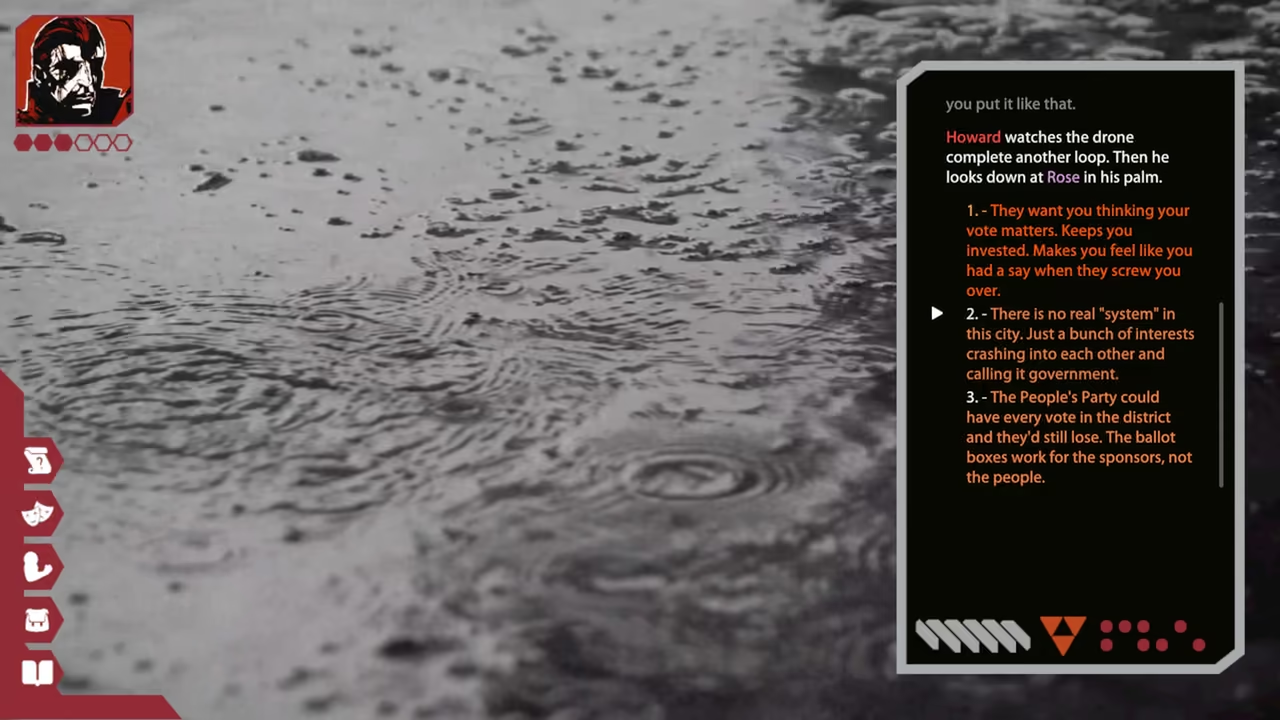
Talking about Disco Elysium, you can talk politics with your flower. Again, the discussions are shallow.
I could go on and on about every bit off problem with the story, but in the end, the game is a visual novel. Neither visuals nor writing were doing it for me consistently, so it cut my gameplay short anyway. But there are still some to talk about.
Gameplay
At first, I found interesting the idea of dice economy. Every problem you face, you spend some dice to overcome a number. Easy problems you can use 1 die, up to 4 dice. The game suggests a number of dice, but if you feel you might need more later, you can risk the problem with fewer. There are also some equipment or abilities that can help with a roll, and some dice comes with bonus for specific situations that might help in different tasks.
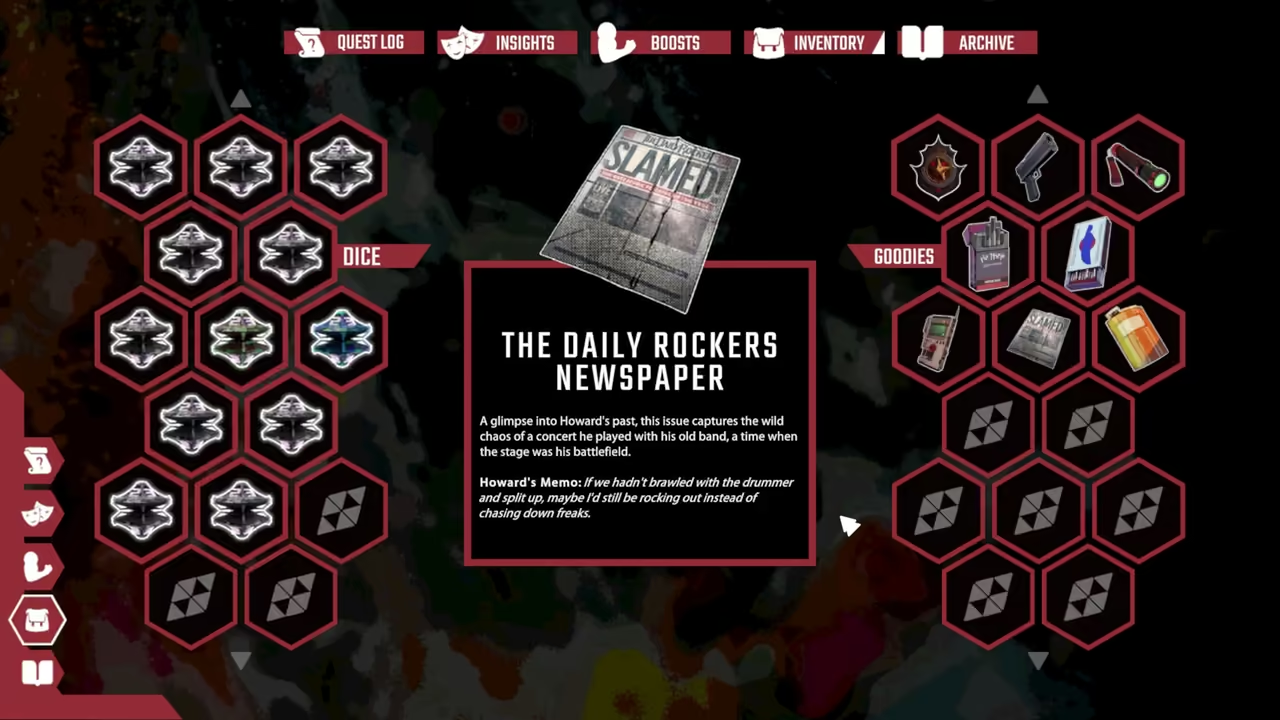
I like the idea behind the dice roll, it gives me some agency on how many I use to solve a problem, and trying to keep some around for a rainy day. Rarely visual novels give you any agency. Unfortunately, the implementation is flawed, and the economy around it problematic. They added more dice rewards from when you explore with updates, inflating the market with dice, but that was far from being the main issue.
Early on, the game was setting me up with a story about some murders. This guy appears to hand you a case to solve, and you have the option to guess the subject. I knew what it was about: the murders. But the game makes me do a check and waste a die. There are so many checks for obvious stuff that is ridiculous.
The very first interaction with an Abstract also has one of those dice traps, you need to roll for the “pacific” option which the gardener is very willing to engage. Add your supposed experience with those creatures, it does not sound like a challenge at all. From the consequences, it seems that the challenge should have been to convince the squad you are leading to not shoot instead.
I would not mind if it made sense story-wise, character-wise and if the story respected the results. But it fells like we have dice checks at random and the consequences insignificant.
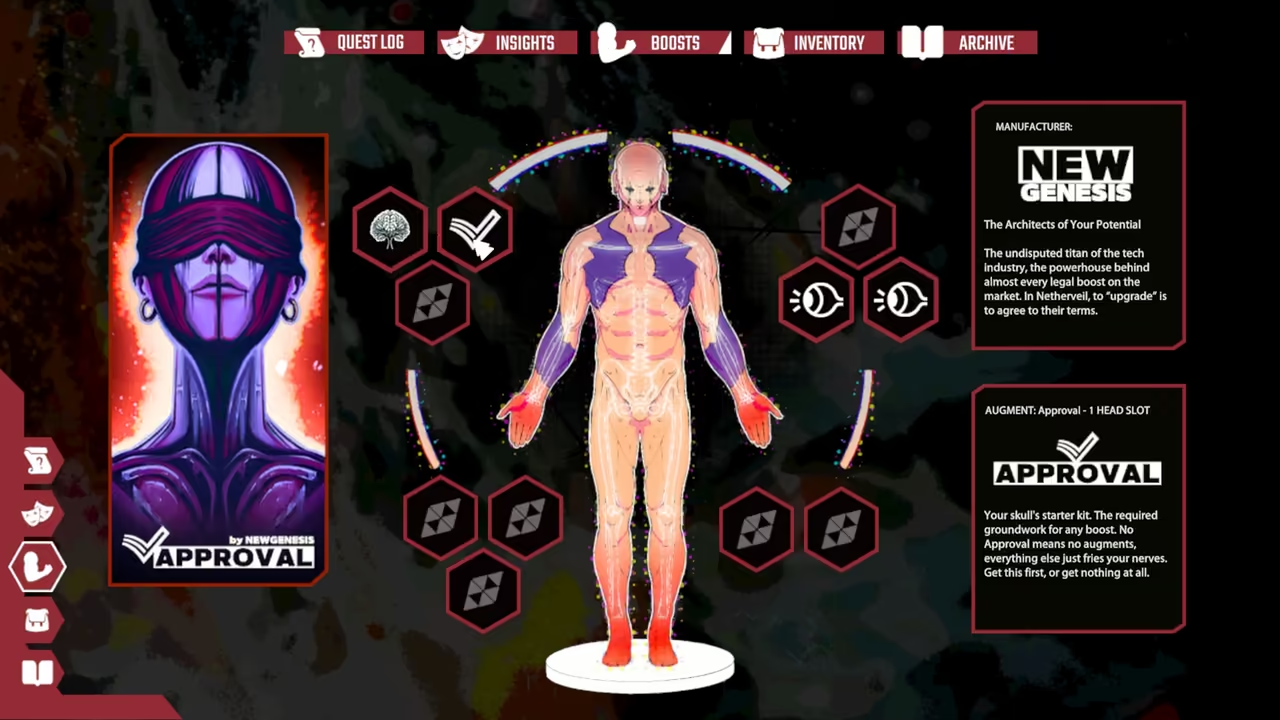
There is a place to spend dice into improvements, some are persistent, others are one time use. But the math is messed up. Like a one time use item that gives you +1 in a specific roll, that you need to declare BEFORE rolling. And you pay with a die that rolls on average a 3.
Well, with inflated dice the only thing that made me feel some agency seems to be gone. I can just waste it and have plenty dice left.
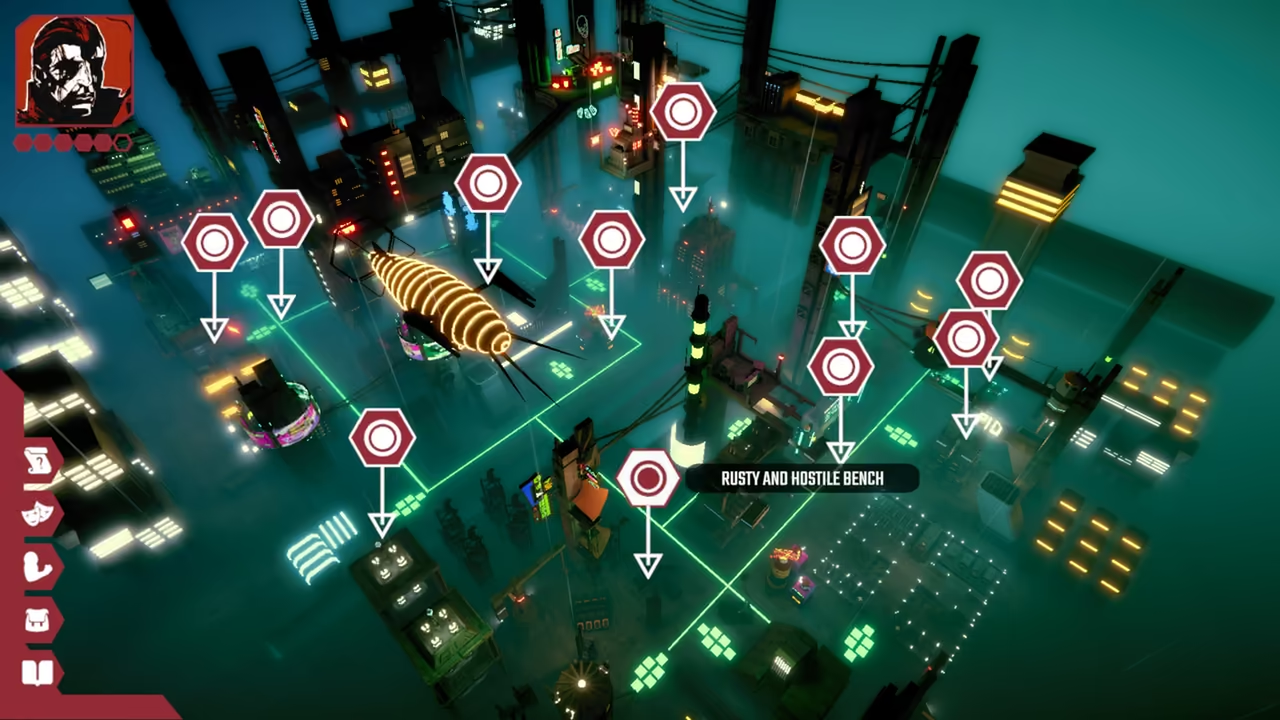
In principle, I liked the idea of the dice. But right away, I did not like the exploration. A map opens up with a completely different art style. And you pick a few locations to go. I saw some opportunities to use it for minigames à la Hitman GO, but I did not see it during my gameplay. You just go from one point to the other.
Each location of the map would trigger a little story, and you will find more dice, or you will progress the main story. One flaw that I found is that there is no distinction of the main quest to the side stories, and when you progress the main, you lose access to the side stories.
Deck and Last remarks.
I did not try it on the Steam Deck, first because it was having performance issues (video codecs, most likely) on my gaming computer. Second because the controller support is not there yet. It is easy to lose track where the controller is operating, and it is hard to get it where you want it to be. Keyboard and mouse is still a better experience.
They also compare themselves with Citizen Sleeper, and honestly I find that more apt. Not in the sense of mechanics, economy, character, or story. But closer in sense of dimensions and agency. And by close I mean 1/4 of the way there. I would say 1/3, once they figure out their mechanics, polish and balance it a bit.
The game is clearly not for me, but if you eat Visual Novels just to enjoy any ride, it might be for you. Celestial Return is available on Steam.
Note: we received a key from the publisher for this review.