
Brigador Killers: Review on Linux and Steam Deck
Brigador Killers is a Sci-Fi top-down isometric insurgent (or terrorist depending on whom you ask) simulator, made and published by Stellar Jockeys. It works great with Proton for Linux PCs and the Steam Deck.
Continuing from the first instalment of the series: Brigador, where you play as some sort of mech pilot mercenary, fighting for corporations trying to retake the control of a colony. Brigador Killers brings the fight back to corporate lands, following the people devastated by the war taking revenge on the Brigadors, and anyone else trying to stop them.
Similar to the first title, the second game was also released with an audiobook. This was the first time they send those for review, and I am thankful for that as I am a sucker for more lore thanks to the old days when games would come with a booklet. The audiobook Brigador Killers Pilgrim is supplementary and independent of the game, but I like how it helps set the tone and expand the lore, and it was nice to listen to it while I was not playing the game. Because of that, and some other reasons I will explain later, I will start with a quick book review.
Audiobook: Brigador Killers Pilgrim
I prefer clear readings with good diction instead of exaggerated silly voices and cartoonish sounds effects. Brigador Killers fits my preference well. The voice actor does a proper job with great narration with consistent and respectful character voices. The editor complements with music only at the start and end of the 3 parts, leaving the clear voice of the actor to do its magic. If I had to point a problem, and a very minor one that might be annoying just for me, it was with the titles of each chapter. They go for that coarse voice that north americans use for badasses in movies and series. It is hard to understand and growing up in a smoker family no one with that kind of voice is really a badass, just someone ill whose voice often faded in a lack of breath.
No performance survive only on the quality of its actors and technical crew. The story here is top-notch with great pace and no wasted words. Recently I reviewed a game which texts were overly descriptive, with nonsense comparison at every sentence. I think at some point people invented the term “word building” and authors decided to describe every nook and cranny of their scene that are mostly useless for the story. I was lucky enough to avoid those kinds of works for a while. Brigador Killers Pilgrim does not commit those sins. I did not know there was a pipe there until a character used it to climb, and I love it for it.
There are some description here and some exposition there, but it is very minimal and well-placed within the story. Like during a planing or recon phase, it might describe what a character is seeing, or a brief description of a route. There is also plenty of gore, again, just short sentences here and there, but it can be a bit overwhelming in some parts.
I usually do not seek action books but I enjoyed listening to Brigador Killers Pilgrim. There is a major focus on the characters interactions and development. Even in the thick of the battle, there are always development going on beyond tactical manoeuvres and explosions.
If you like to listen to audiobooks while doing other activities, I felt that the beginning was a bit hard to dedicate brain power to something else than the book. There are some sci-fi elements early on, or even to get used to peoples names. I needed some extra attention to make sense of things, but have in mind English is not my first language. Afterwards I could follow the audiobook easily while doing house chores, exercising or right before bed (careful with the last one, I woke up a few times for some screaming that was going on).
Minimal Spoiler ahead
The story follows the insurgent group Pilgrim, seeking revenge on the Brigadors. With the mission to infiltrate Mar Nosso as refugees and set operations there. It also changes point of view to Zhe, a Spacer pariah (a sort of aristocrat high-tech faction), whose love interest is a Brigador.
It is broken down in 3 parts, each a different phase of the Pilgrim infiltration days. While in essence each part is about finding and reaching a target, they play very differently from each other’s. It helps to keep it fresh, and somehow reminds me of the progress in a game.
Without major spoilers, I feel the first part is similar to a recon/stealth, it also helps to introduce the character and Mar Nosso. The second, action shooter, while not my favourite, I liked how it sets the foundation for the last leg, and how the author had the opportunity to be cringe but chose to be grounded instead. And last, it reminded me of those levels that there is no turning back, that something pushes you forward. For me was the destruction levels in Sonic or Kid Chameleon, but most recent Dahaka from Prince of Persia Warrior Within, or Mr. X on Resident Evil 2. I liked the last part a lot, how things are tied together, how the destruction level brings balance to the play-field, and how it is dealt by the protagonists.
I also liked how the characters are portrayed. The main cast for example, one moment they are relatable, their ply and their culture reels you in. I usually keep characters distant so I can enjoy the story and their development free of attachments, but it was hard to keep a gap when their language was similar to my mother tongue. But in the very next moment you are reminded that that gap is a chasm. If anything I am closer to the nameless passerby, either from Mar Nosso or Solo Nobre, than anything in the core cast. That also goes to the other characters as well, making them interesting and dynamic, never silly or boring.
As always, I prefer when you don’t take my words for it, if they were enough to pique your curiosity, Stellar Jockeys released most of the chapters on their YouTube channel for you to try.
Brigador Killers, the game.
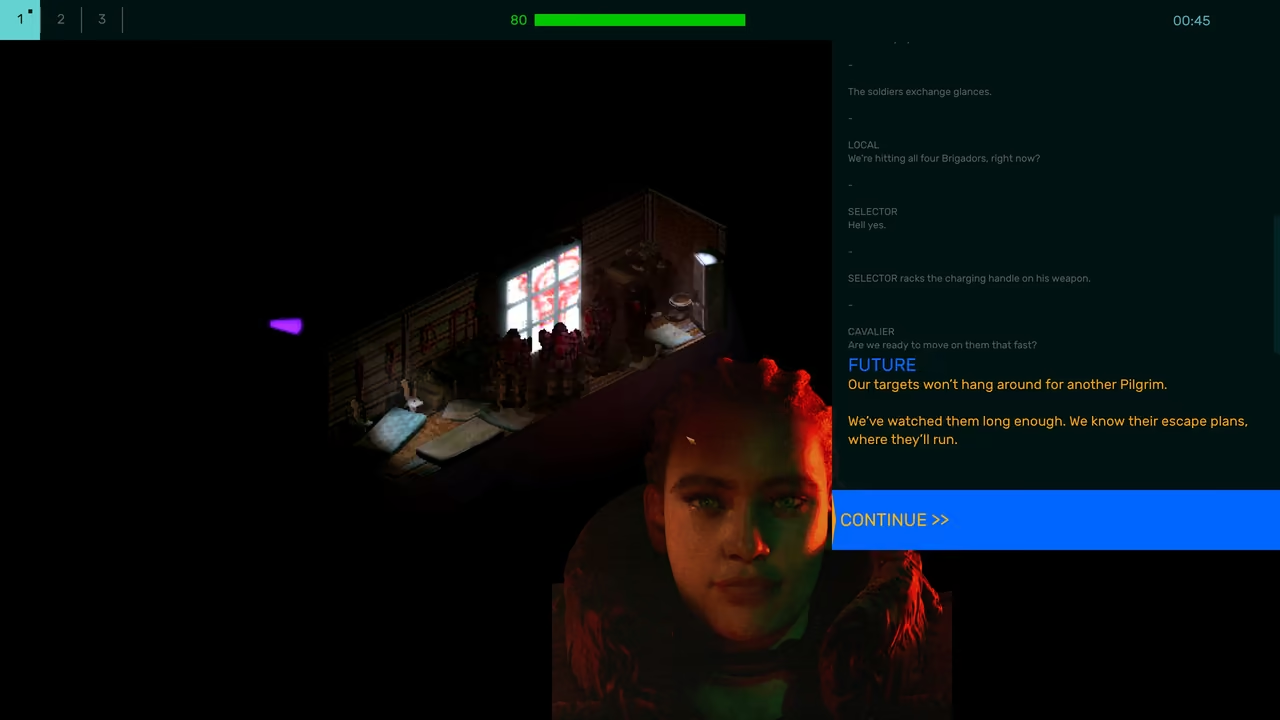
The game prologue goes through 3 points of view: a gigantic ball destroying the city, another insurgent group, and a passer-by that was trying to bring the delivery guy to medical assistance after being shot by the police. And concludes on how their life crossed paths.
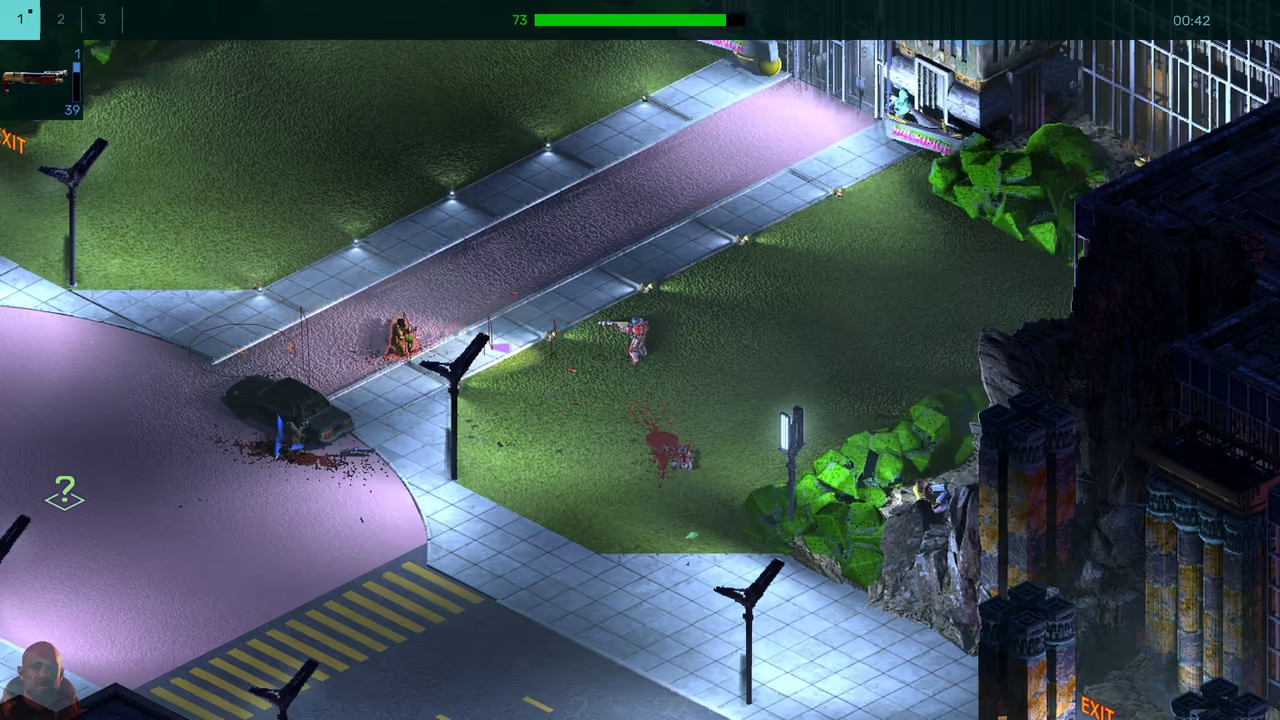
This intro serves as a nice tutorial and a way to highlight the many mechanics of the game. Killing a Brigador is not just about pulling a trigger, it can involve car bombs too, and well-timed actions in this real-time combat.
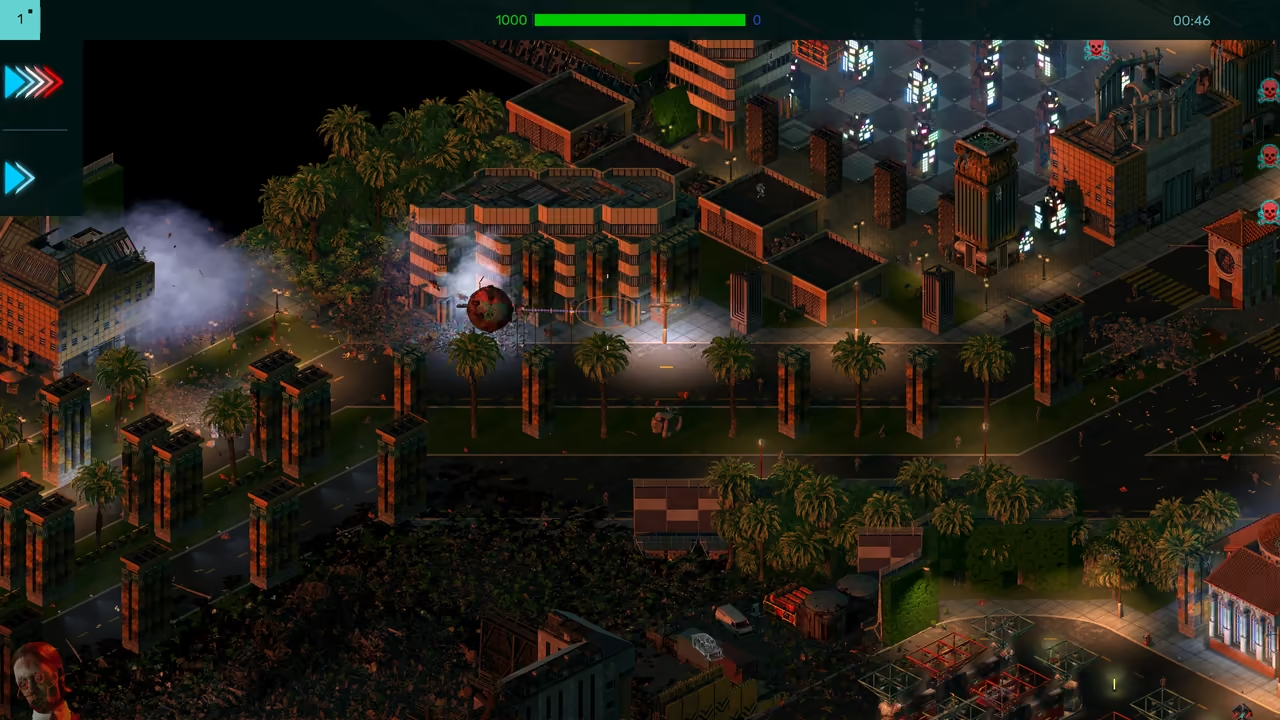
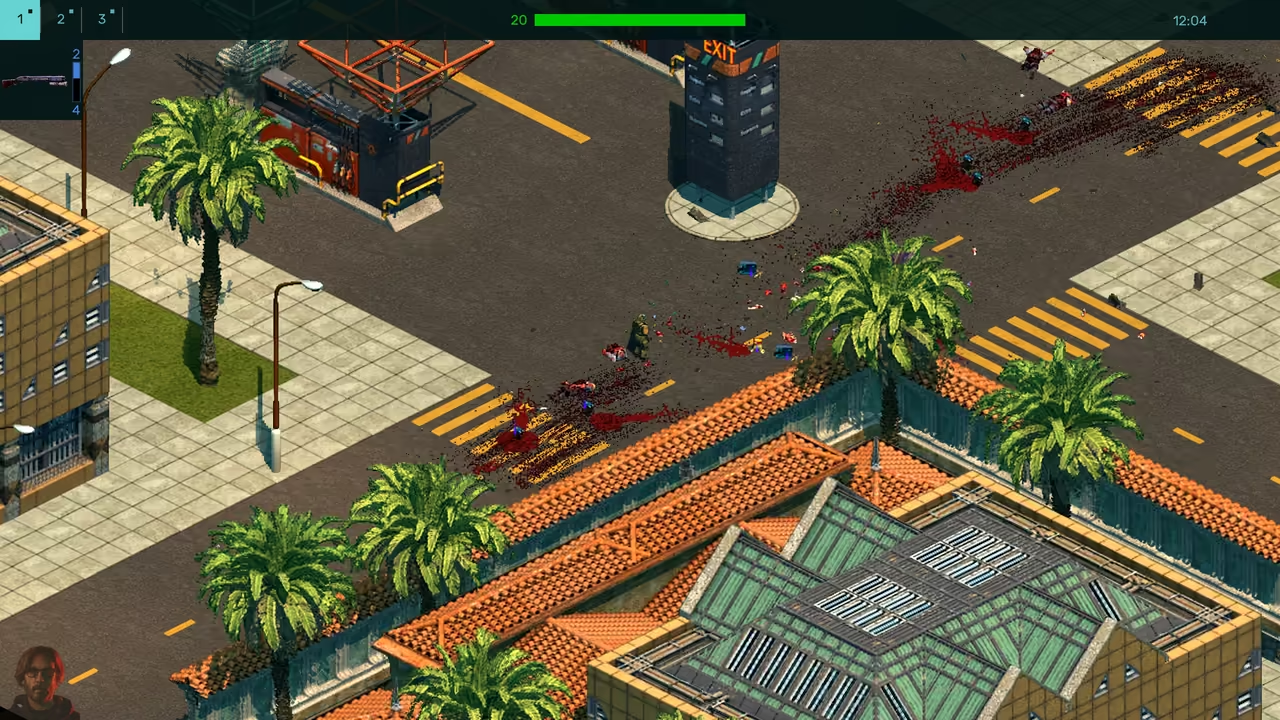
Playing as the gigantic ball serves as an intro to the controllers, it highlights the scenario destruction as you plough through the city with no regard for collateral damage. It also introduces you to the physics of the game, the ball keeps inertia, and so does other vehicles in the game (some feels like soap sliding on the road).
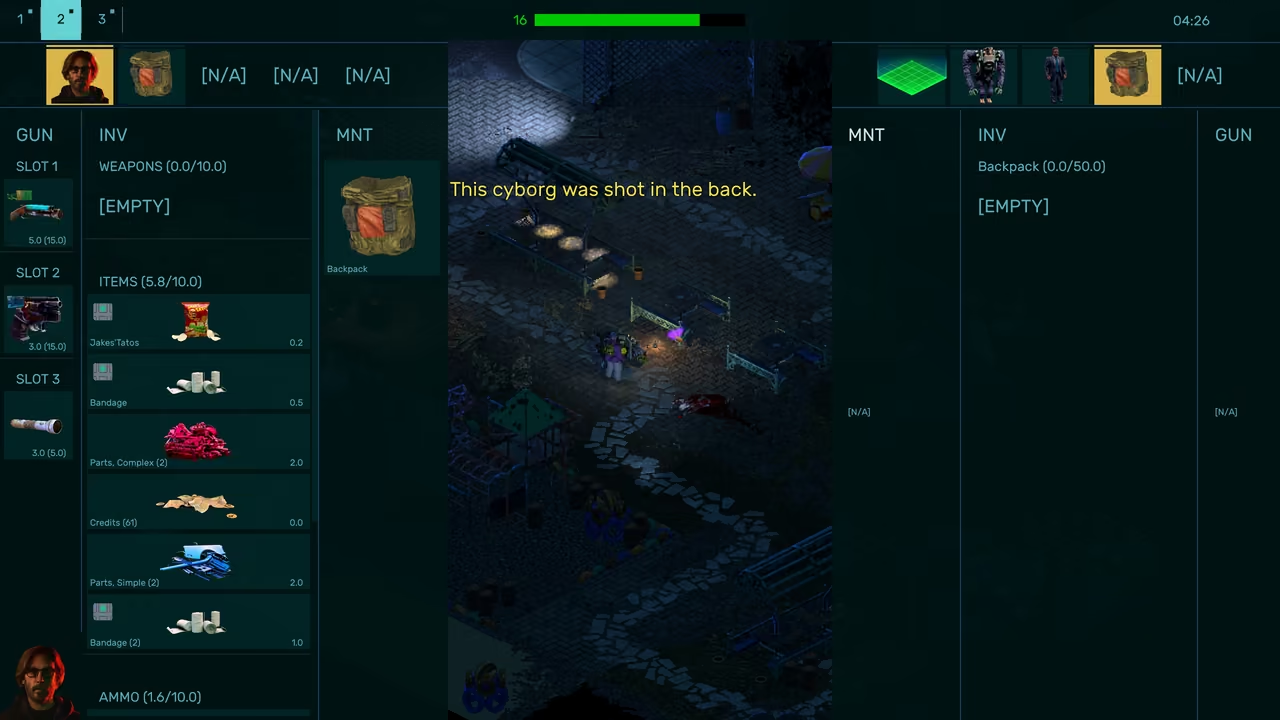
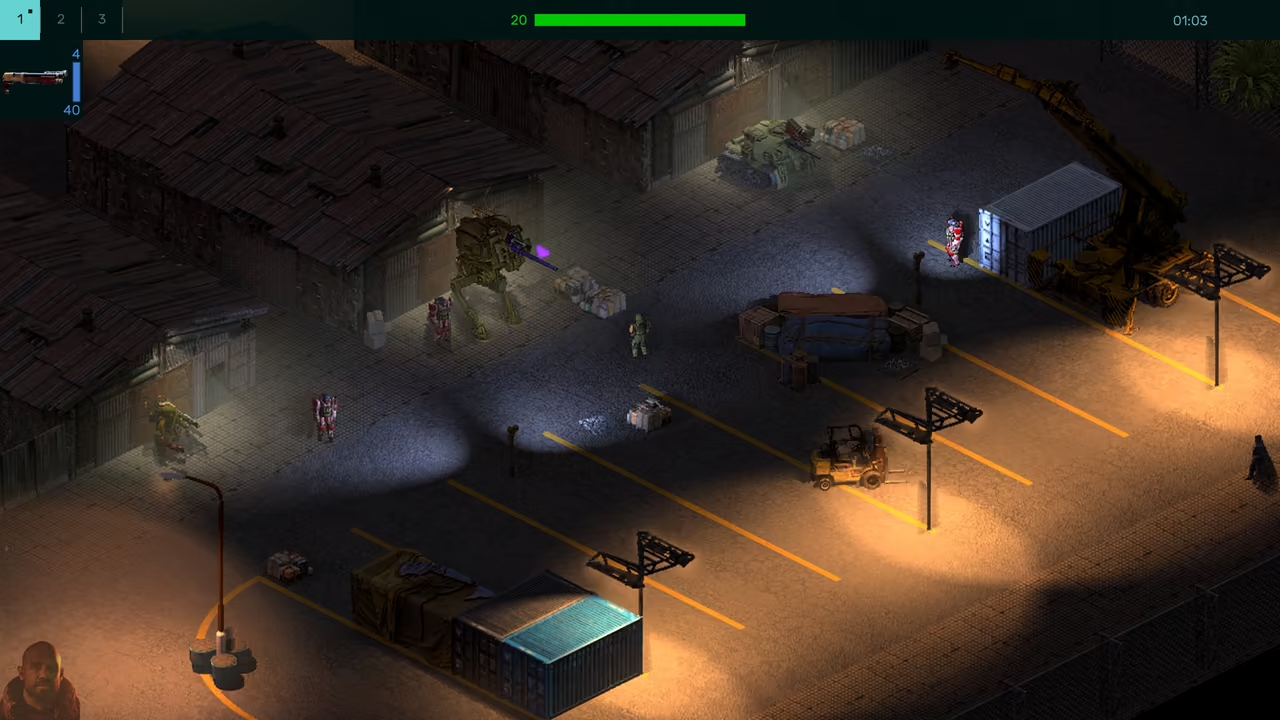
After, the point of view changes to the Team Anchor. Originally just a scout team, they got too tired to wait for “another Pilgrim” and decided to carry on with the executions after the ball attack. The scope of the maps change a bit, now you navigate thought the streets, rather than in a building size ball, fighting security forces head-on or going stealth. Here the missions are a bit more tailored and less open-ended. Destroy a motorcade with an already set trap, or snipe a Brigador waiting for a call. I do like the tailored missions a bit more, because they expand the story and there is always an extra challenge rather than just the fighting enemies and looting the level.
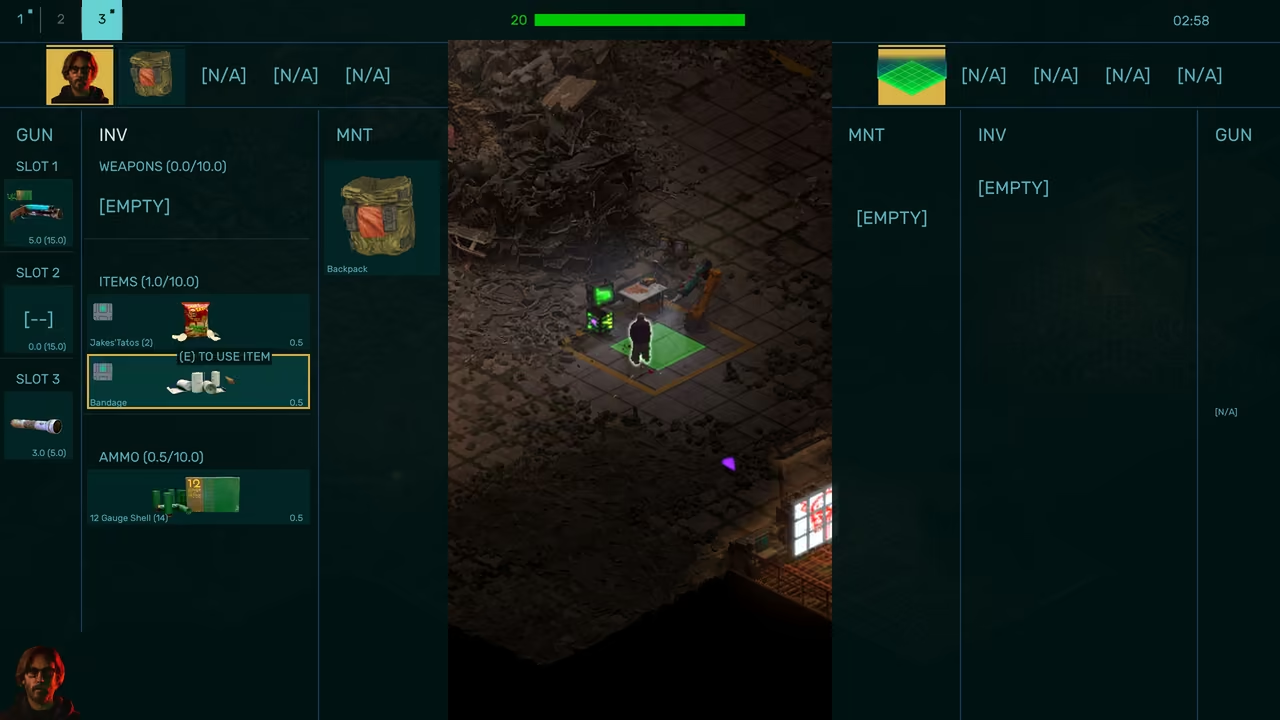
What is new from when I recommended the game during the most recent Steam Next Fest is the passer-by and some more story missions. After you had your fun with top tech of the insurgents, the game kind of “resets” and leaves you with nothing and by nothing I mean picking up stones from the streets to throw at enemies. Well, I do not recommend you to do that, while it took me about 2 hours to see all the current story of the game, most of it was by dying in stone fights, it is better to just run and kick enemies instead. Until you can get your hands in some weapon.
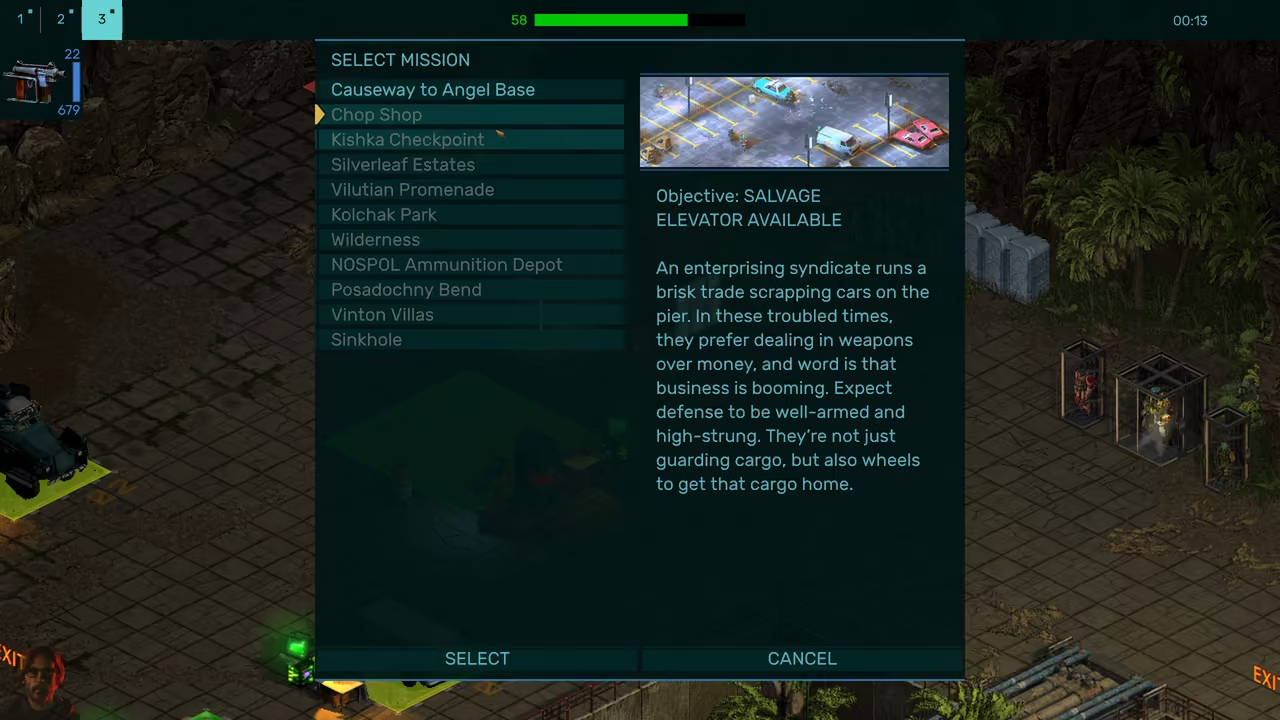
After that, the game becomes some sort of mission oriented extraction shooter. The sandbox map will have your target, either kill, destroy, activate, loot something or someone. How you do it, is up to you. There are not much information beforehand. The dossier feels more like a flavour text, but for some mission it warns about armoured enemies (and you might want to pack some rocket launchers).
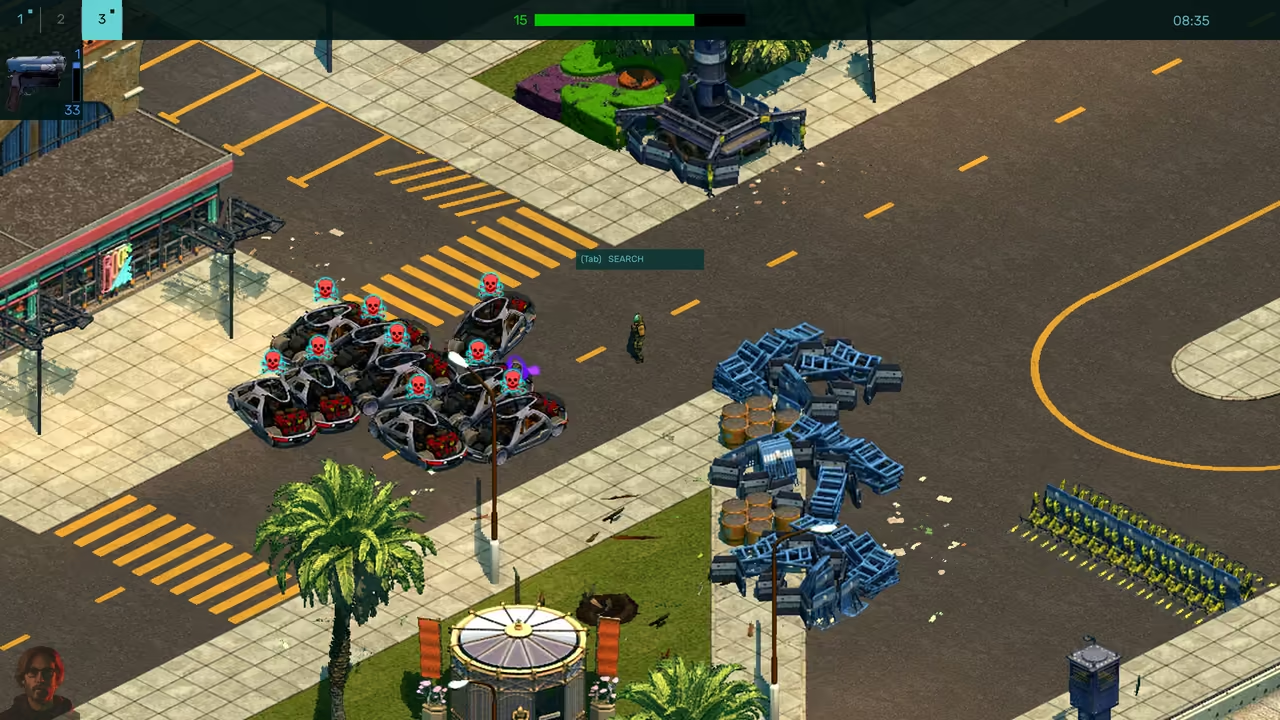
For example, you go on a mission to destroy some targets, and maybe you can get your hands on a nice weapon, or some materials to improve your base or components to build/maintain vehicles.
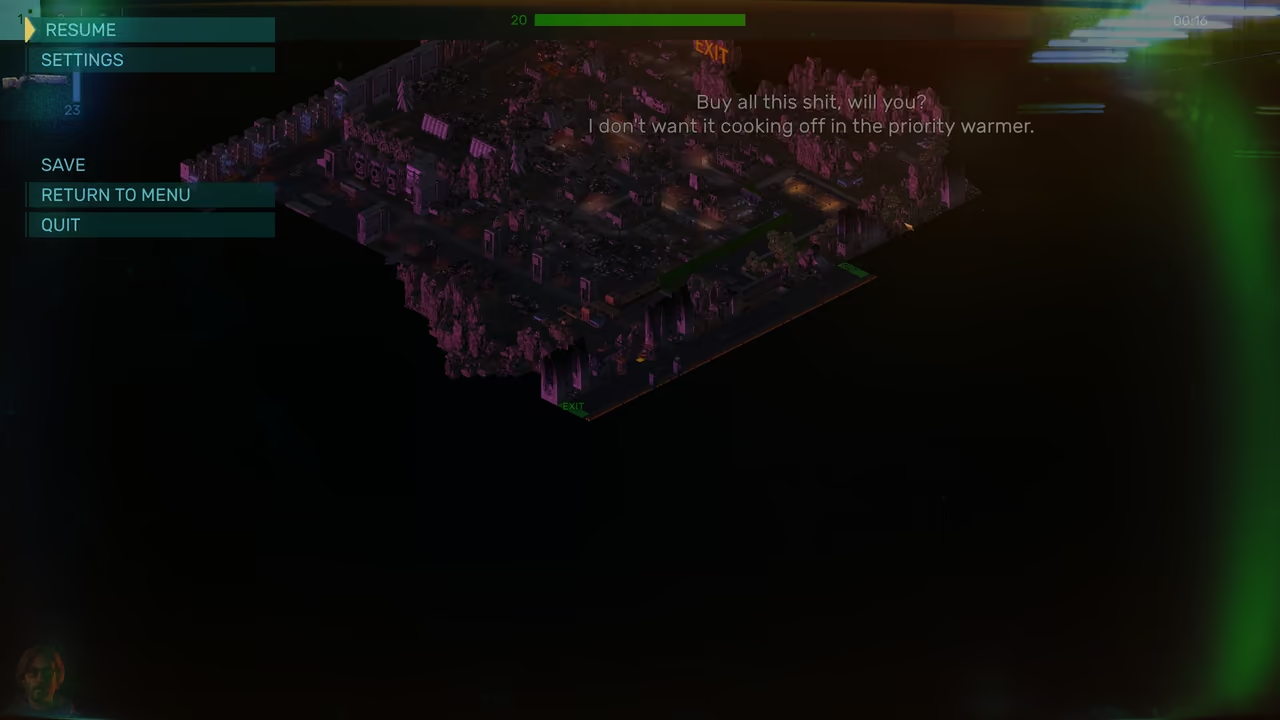
Some maps might have a twist to them when you replay. You start in a different place than before, the available loot is always different, a path might be blocked or an exit inaccessible. In one of the early maps I saw different enemies, from another faction. I liked this one map when the first time I played there was a truck crashed on the street, and the second time there was an arms deal going in a back alley.
But once I finished the story bit I felt less interested in the game. Another reason I started this review with the book, the game is in early access and does not have much story content yet.
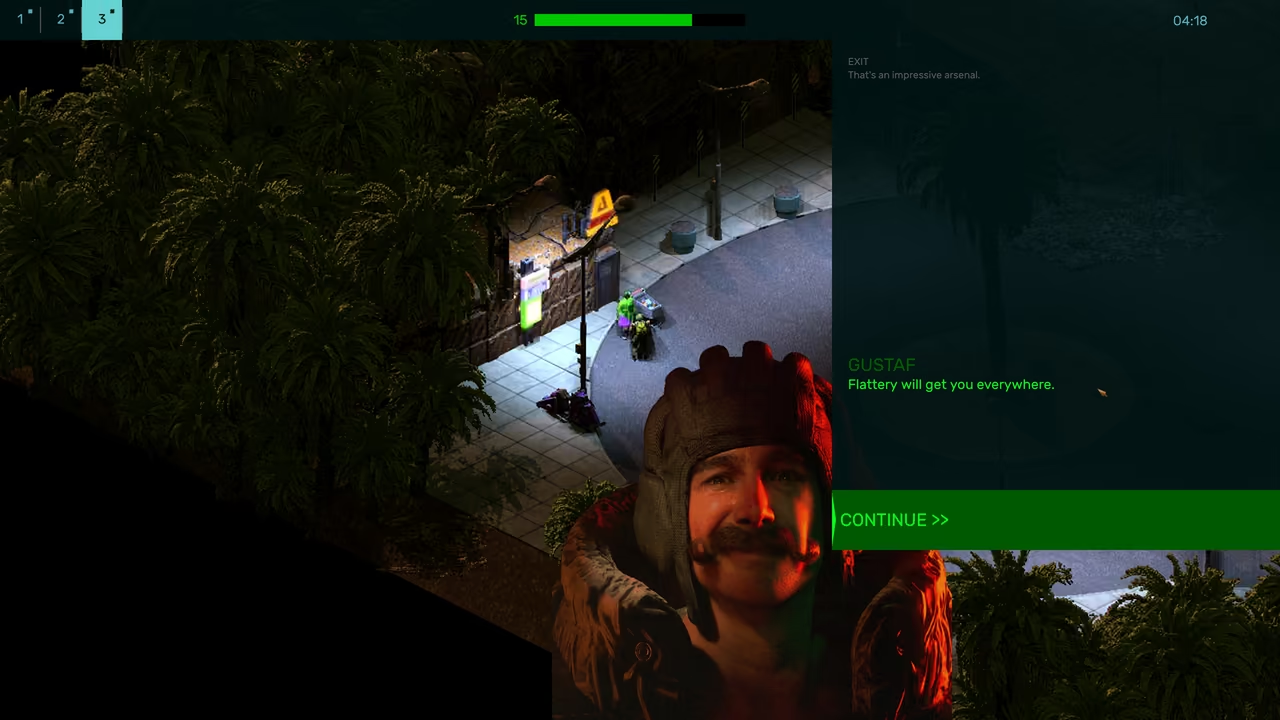
Don’t get me wrong, there is some progression but more in the arcade sense, as you finish missions things unlock but with not much correlation or causation. After completing levels a new armour appeared in the base. I am not sure what happened every time something new appeared as not always there was an explanation.
The arcade-y missions do not seem to have a memory. You can repeat without consequences, like looting the police warehouse, you can just keep coming back. While most of the maps’ replayability were about looting, one map is good for finding a type of weapon, other for gathering money, another for stealing vehicles, there were a couple of maps I replayed just to try different ways to complete. Those challenging maps are great to test your skills or to try new stuff you acquired.
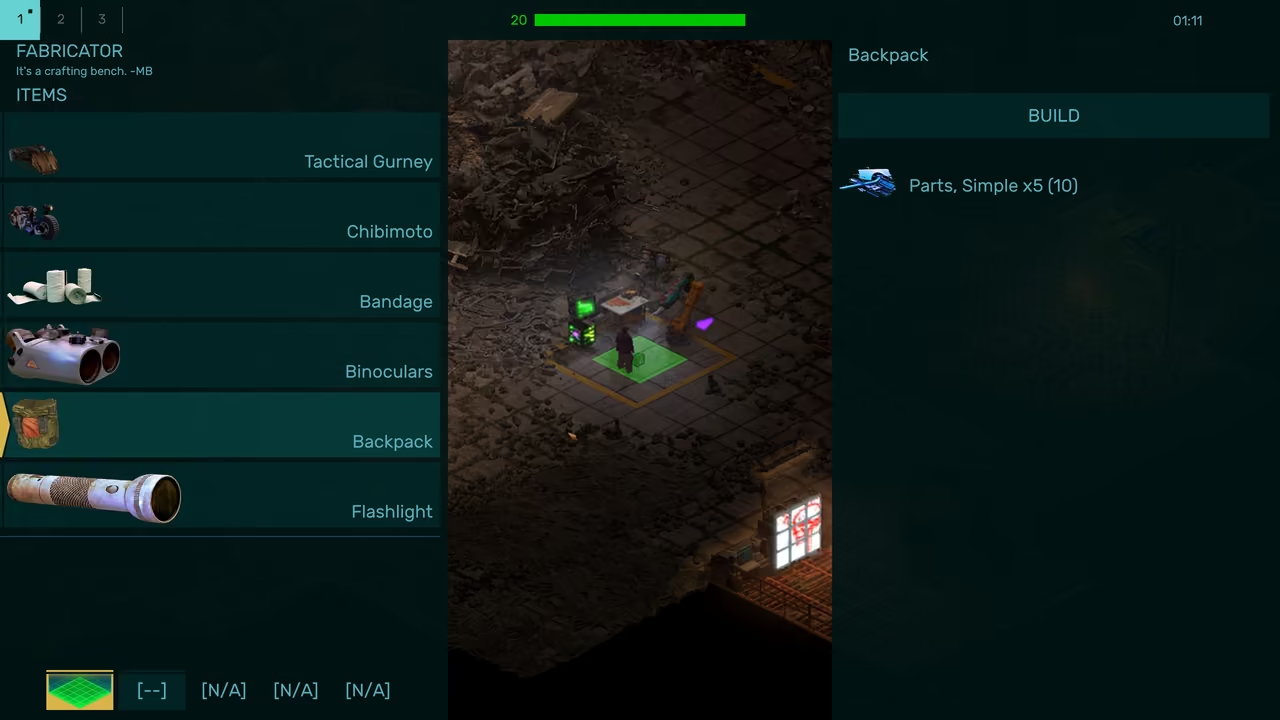
As you advance in the missions, you will be able to get more powerful weapons and robust vehicles. There is a huge diversity of weapons and ammo, I think it will fit most people play styles. But because of the current state of the game I could not get much info on the guns. Later the game teaches you about inspecting them, but some are still just the placeholder. On the bright side it forced me to get into some empirical tests to find the ones I enjoyed more.
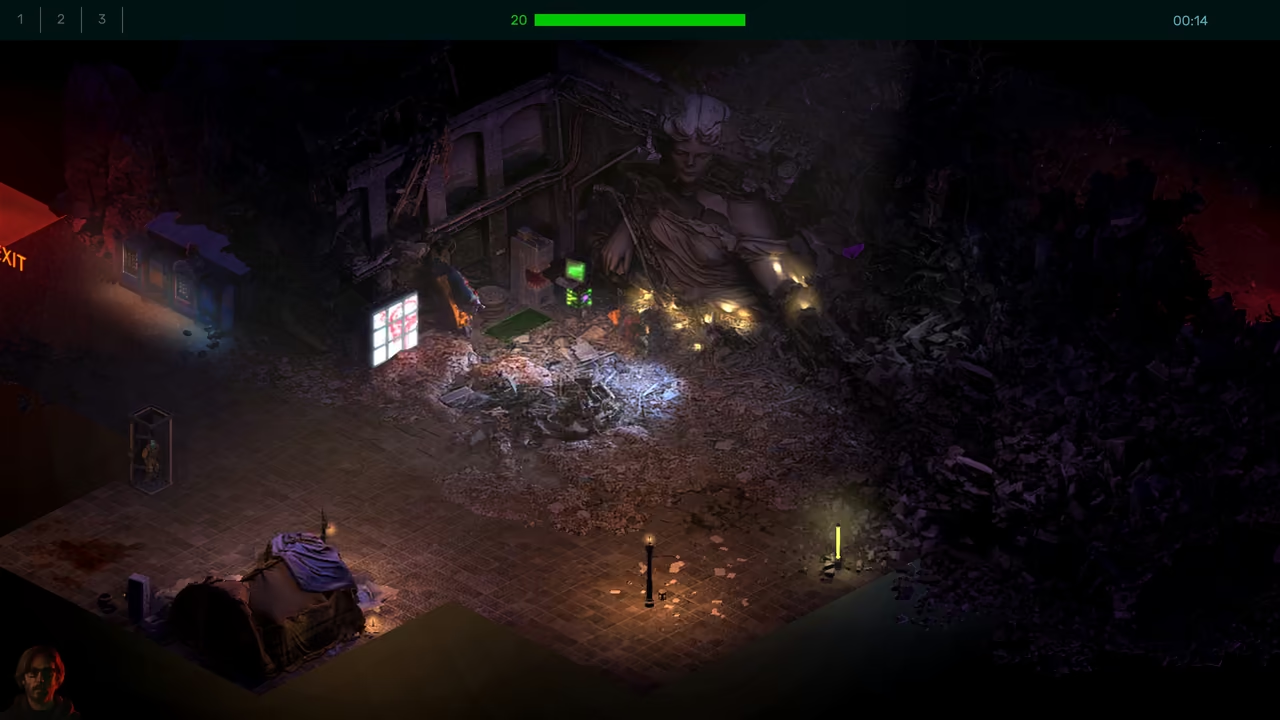
The game does not shy away from giving you powerful guns early on, you might struggle to find proper ammo for it in early maps but noting is stopping you from punching above your weight. That said, the shotguns were very satisfactory to use, the sound FX, the recoil, the time between shots, the reaction of the enemies. It just feels great. I was using even when enemies were basically immune to it. I had to do 2 shots, they fall, I step on their heads. The only time I switched to another weapon were to deal with armoured vehicles, but if they had a shotgun that could put holes in tanks, I would be using that too.
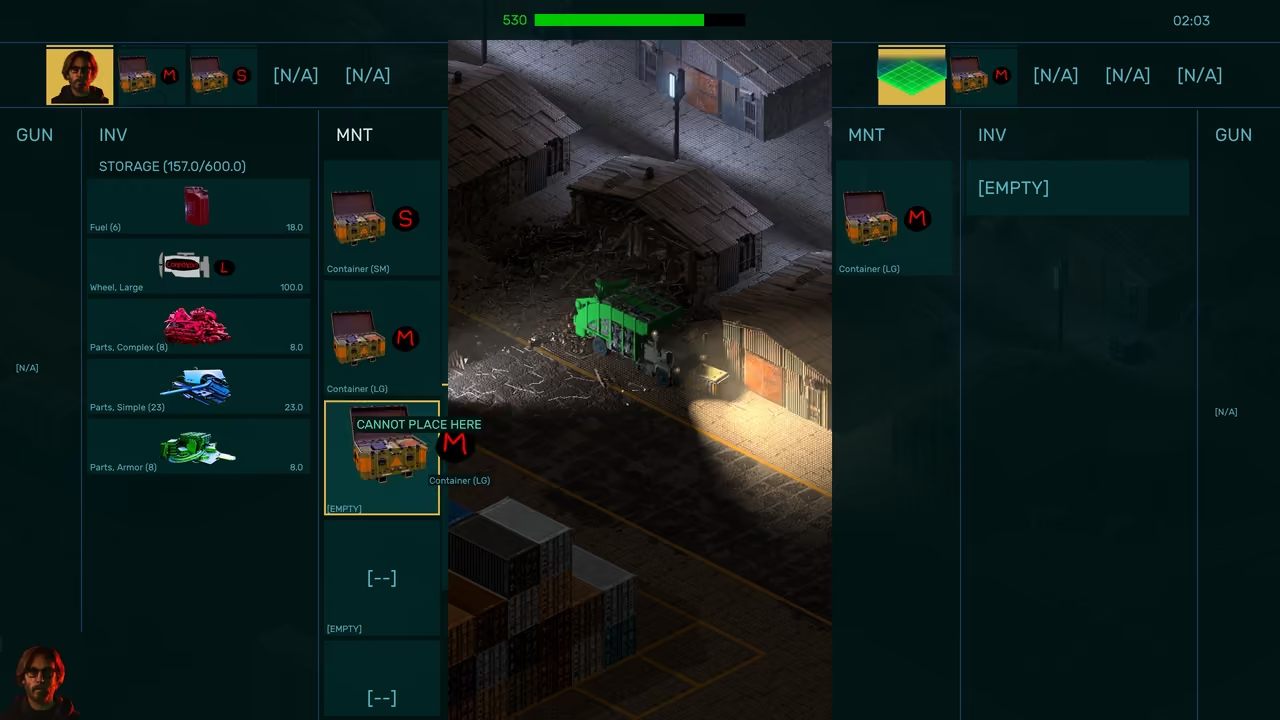
The vehicles are fun, some allow you to equip weapons to them. So far every weapon I found that a character could shoot, I could put in a vehicle. But, as things are still half-done and not fully explained, there are some stuff not clear about the vehicles. Like the MNT slot. On the character it is quite obvious that you can use a backpack, but not a large steel crate on that slot (but I tried it anyway). On the vehicles you can add some crates, but it is not clear which, or in which slot. On the garbage truck, I was able to put a crate with an M in its placeholder image, strangely named Container (LG), but only on the second slot, every other MNT fit an S - Container (SM).
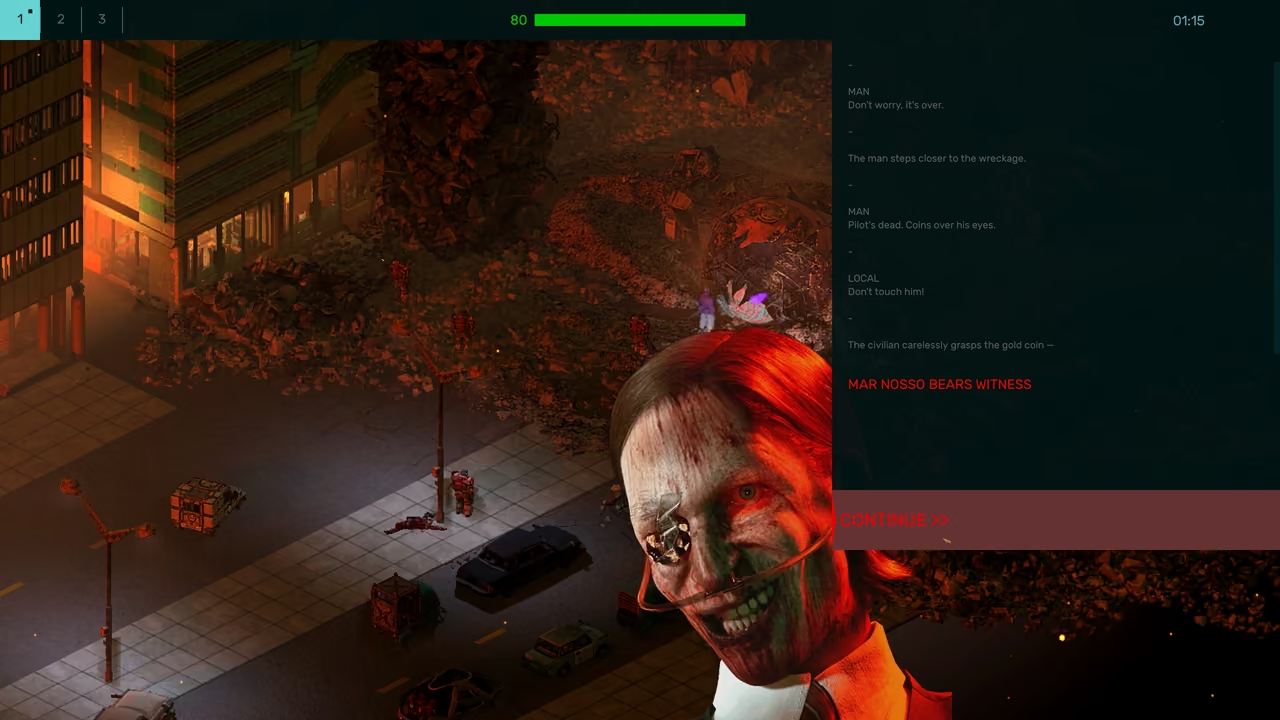
There are also some factions, and different people on the map. Each with their own dressing style and equipment. If you are going to fight in a map full of cops, you know that .45 ACP ammo will be easily available. I think here is where the audiobook helped me a lot to get a grasp of the factions, and why it was so satisfying fighting some of them.
It is not like the arcade part is devoid of story. Items and mission descriptions still give you a general idea of the universe. The actions you are taking seems to progress the world a bit. But it is not connected with the narrative of the ball, Team Anchor, and the normal guy.
Early Access
The game has a lot of stuff, but there are still many placeholders and needs polish. The HUD is quite hard to use, and some clunky mechanics (throwing stones for example) make for a rough experience. But I did like the story so far, the art and music are also good.
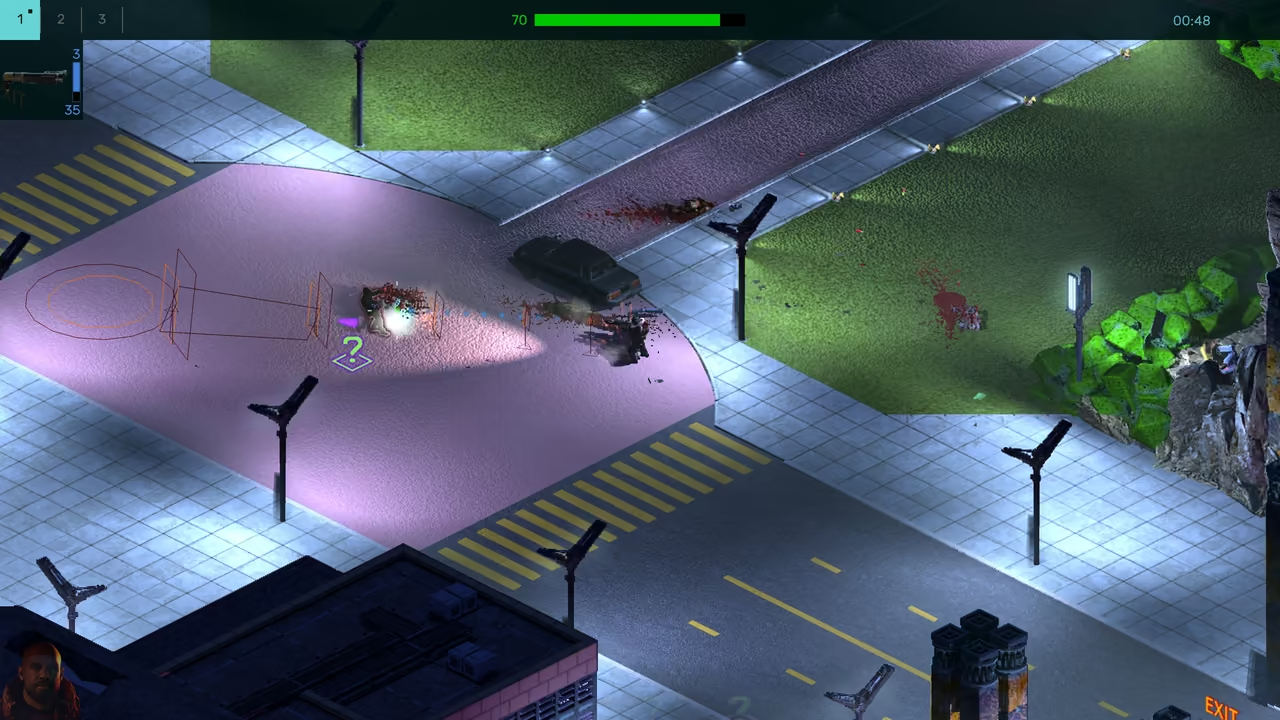
I am curious about the faction behind the gigantic ball, and I think it was a great touch adding the passer-by to contrast with the more prepared insurgent group. The maps have an enjoyable progression to it, introducing factions and highlighting the way of living in corporate land.
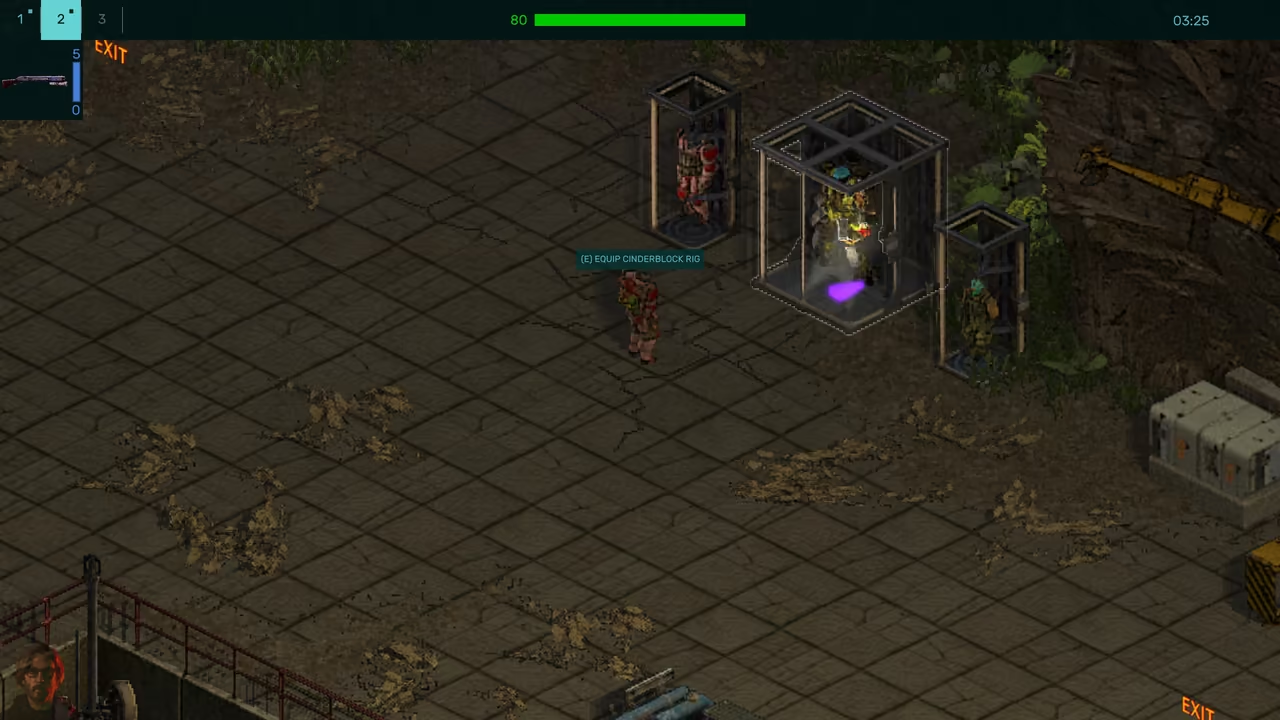
I liked the art a lot, isometric. It reminded me a lot of games I enjoyed growing up like Commandos, Fallout 1 and 2, but I think the closest would be Syndicate, but with a single character. It kind of feels 3D, but it is all 2D and made with their on engine that uses SDL 2 and C++, the performance was great. There are so many games being released with poor performance, that when I play one taking it in account it feels premium, when that used to be a given 10 years ago.
They have some articles showing their production process to achieve that quality and performance. On that note, they seem to be using Linux to make the game, but currently only supporting Windows (the game runs well with Proton). The original Brigador was released on Linux, maybe they do it here again, or at least maintain the game in a condition that runs well with Proton/WINE.
While the art is great, I struggle a bit with the level design. The first couple of levels after the tutorial were in a poorly illuminated cave system meets factory, and it was hard to navigate and figure out where was walkable even with a torch or flares.
Similar note towards the sound design. The sound effects and soundtrack were nice. The music has that 70s~80s synthwave vibes, as cyberpunk as Robocop can go but with no memorable tune you would be humming later. Maybe one of the reasons the combination in game is not clicking right yet. There is a music that play on the map, and some sounds effects that plays on actions. But I wish they would match a bit better to what is going on in the map, and have some tunes to highlight those moments.
Mechanically, it is not far off. There are some things that just feels great, like the prologue. Driving is fun, depending on the car. And driving combat is awesome, I imagine from the experience coming from the previous game. But walking around feels a bit clunky, there are also some inconsistencies here and there. On the very last story mission available in the Early Access when I was playing, there was a moment a could not run over a fence with the vehicle I had, something that was usually not an issue. I then remembered a part of the prologue where I had to kick a fence, and that ended up working.
It works great on the Steam Deck, but while there is a controller support, it is not adequate yet. It does not help the game has these weird HUD, and terrible looting mechanism akin to extraction shooter games where you have to drag things from one side to the other with no clear warning to where you should be dragging with no explicit shortcuts. There is also a problem that your cursor needs to be on top of the things you want to interact with. You need to use the movement analogue stick to get close, and the aim analogue stick to hover over the thing you want to interact with. You need to get close to the vehicle you want to get in, then move the cursor over it, then press the right button to get into the vehicle.
From what I understand of the game developers’ plans, and their track record, it seems that it will turn out to be a great game. Well, I paid more for games with less content and not as polished as the current state of Brigador Killers.
Right now I can recommend, without a shadow of doubt, the audiobook. I have high hopes for the game, and it seems that the devs have good reputation. But, while I had fun playing the game, I suggest you to follow the game and wait a couple of updates before committing to it, or at least try the demo first, so that you know what you are getting into.